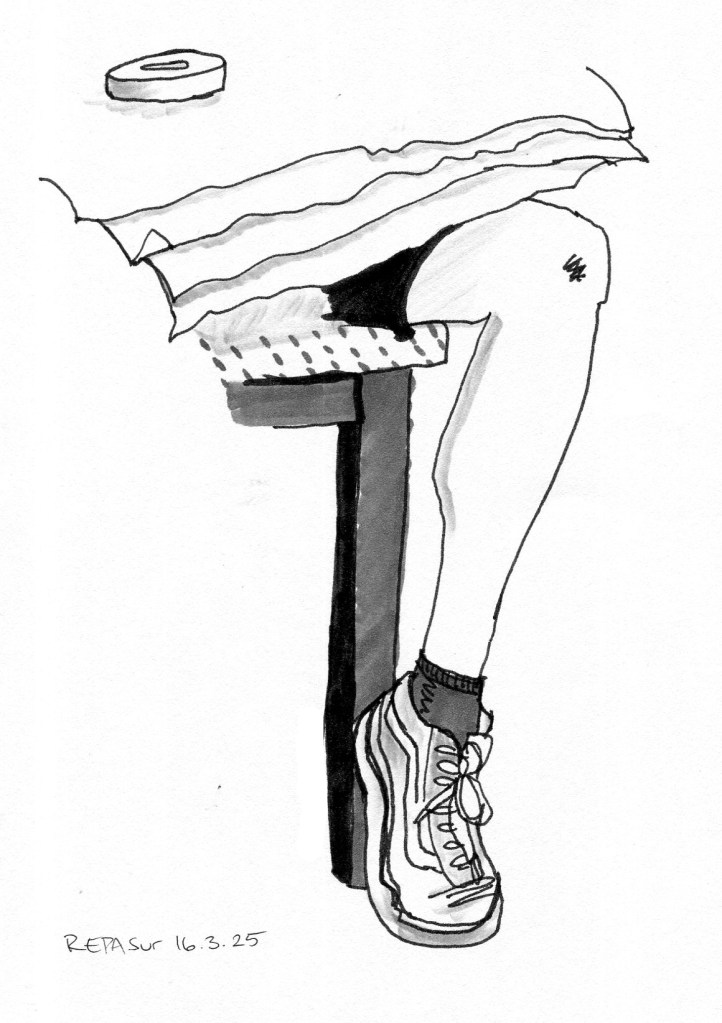

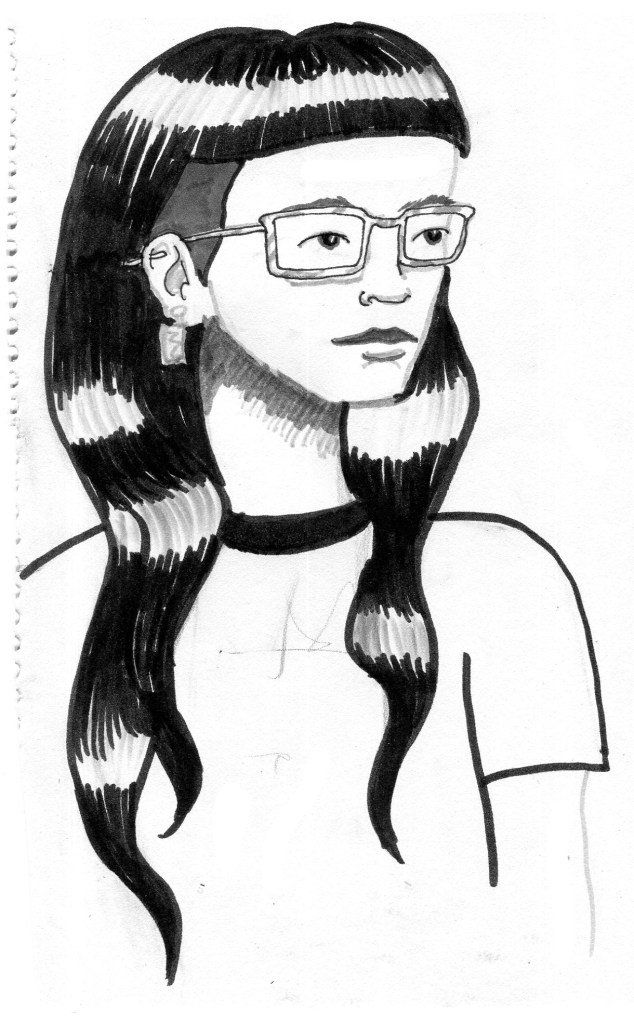
Sketches from the local makers’ network planning meeting.

Sketches from the local makers’ network planning meeting.
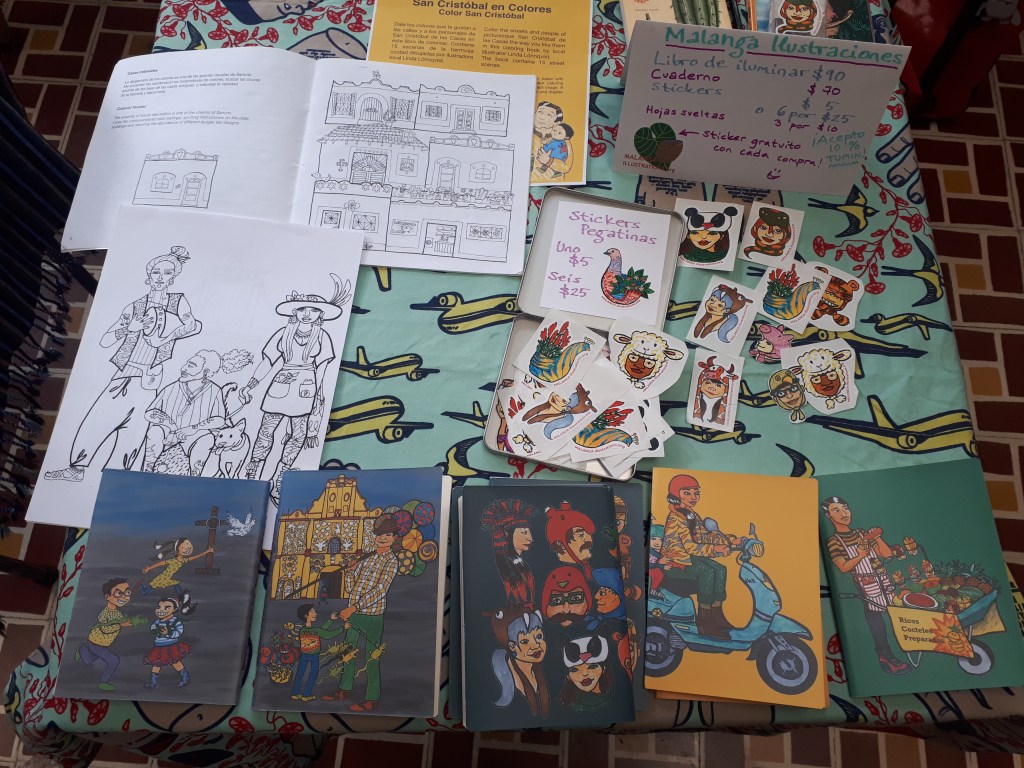
San Cristóbal is a good place to be an economic activist: there are several farmers’ and makers’ markets and shops, veggie basket schemes, independent businesses and neighbours selling each other local produce. I’ve been active in REPASur, a solidarity economy network that also organises a market (known as a tianguis in Mexico) every two months. Malanga Illustrations has been selling colouring books, stickers and notebooks and I ran a collaborative colouring workshop too. Fun!


It feels wonderful to have an idea, a vision and juicy markers and paints for making it happen. Here’s a sneak peak of my project for 2025!

A small and delightful project: drawings for the office swap meet (which I’m also organising). My dayjob office is by far the most diverse place I’ve worked, but there are still subcategories of colleague. So I wanted to draw people who’d look like real colleagues… but not exactly like any one colleague. I think one or two (or three) did end up being very close to real individuals. I’ll see if they spot themselves!

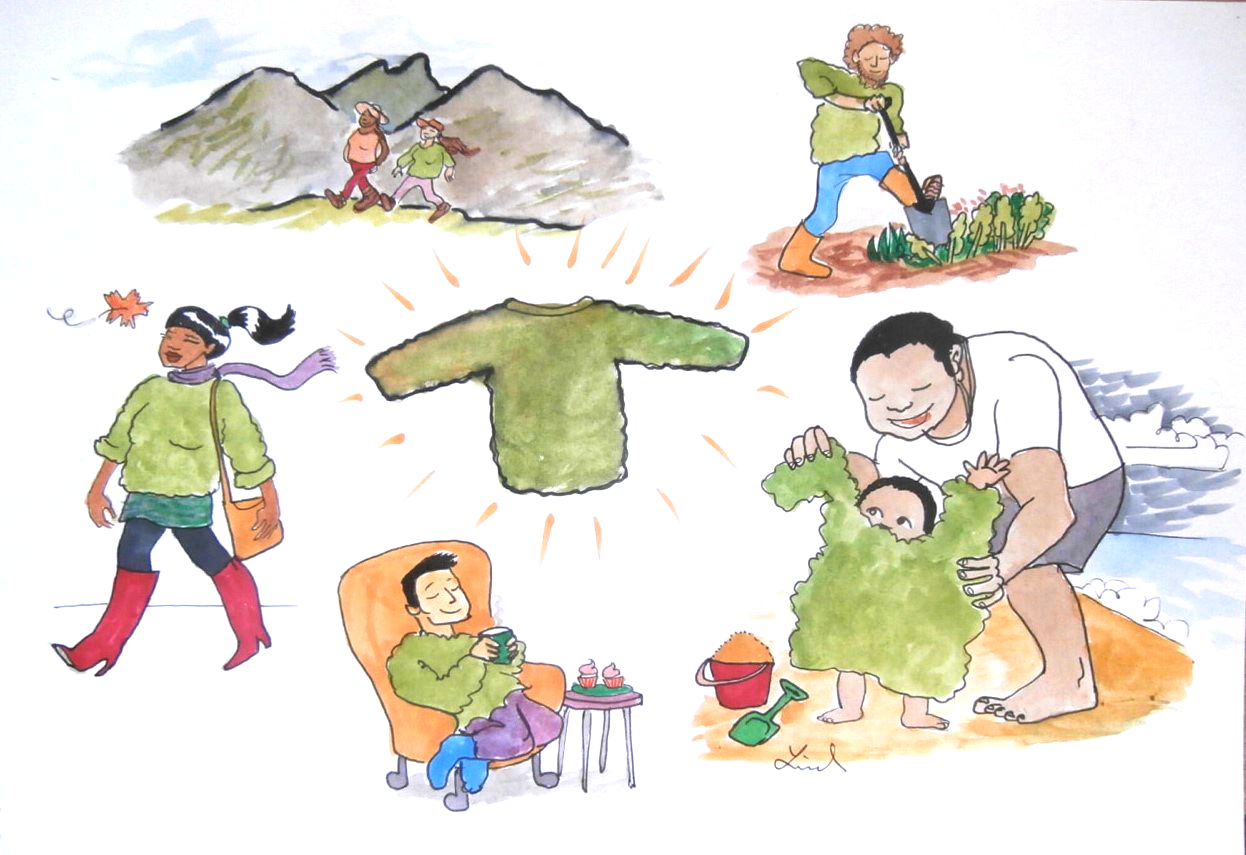

Mo tools, mo joy!
Some sketches from the art festival CompArte at the zapatista centre Caracol Oventic. The festival took place for a week at the campus of CIDECI with concerts, changing art shows, workshops, documentaries and theatre; and at the weekend there were performances at Oventic too.

EZLN soldiers holding the crowd barrier
An intrigueing experience for sure. This time I had a bit more time for sketches as most people stayed put watching the performances of theatre, dance, poetry and music.
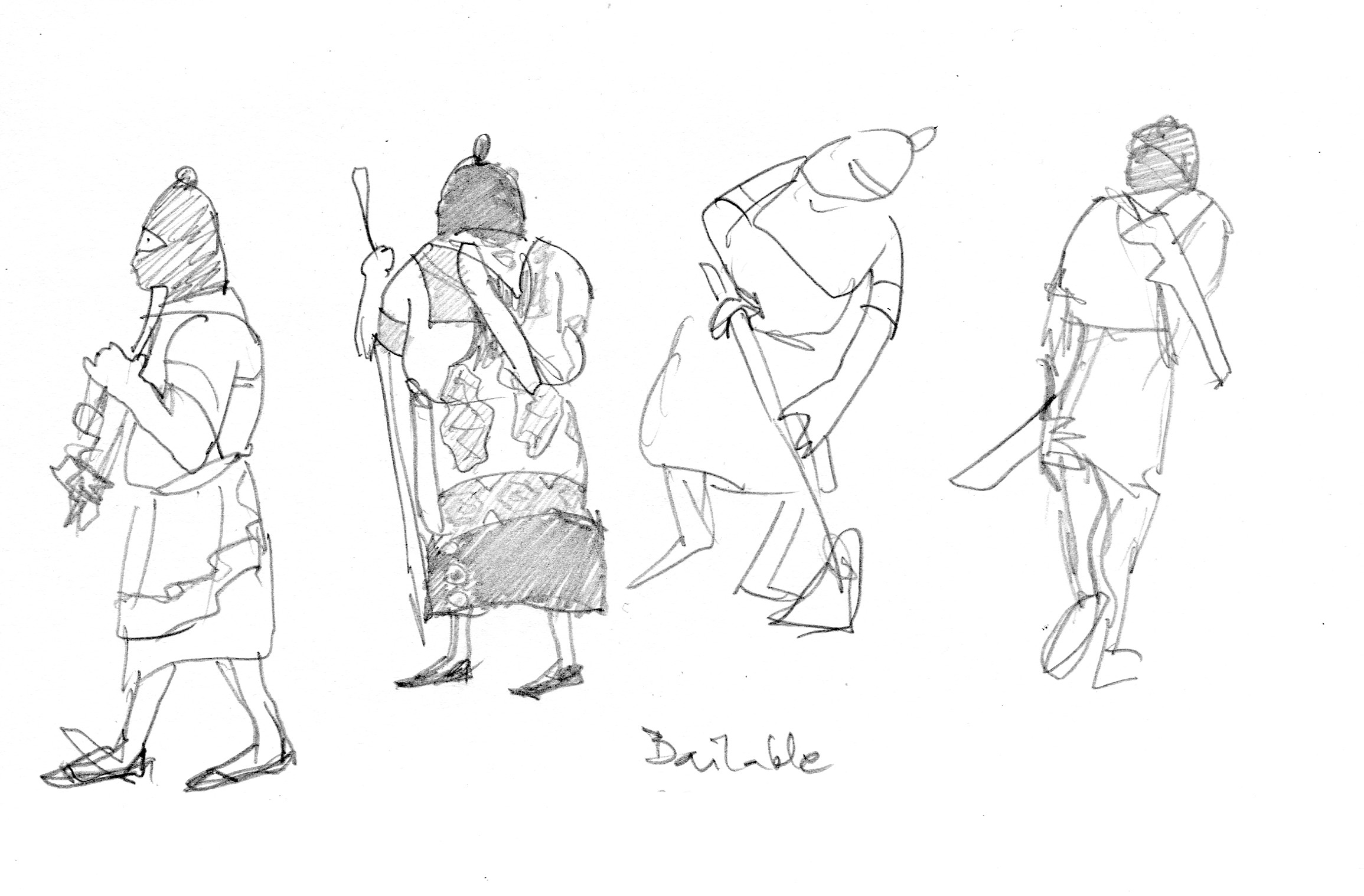
A “bailable” dance
The girl band – like all the zapatistas, wearing Indigenous traditional dress and balaclavas – were a riot of energy and power.
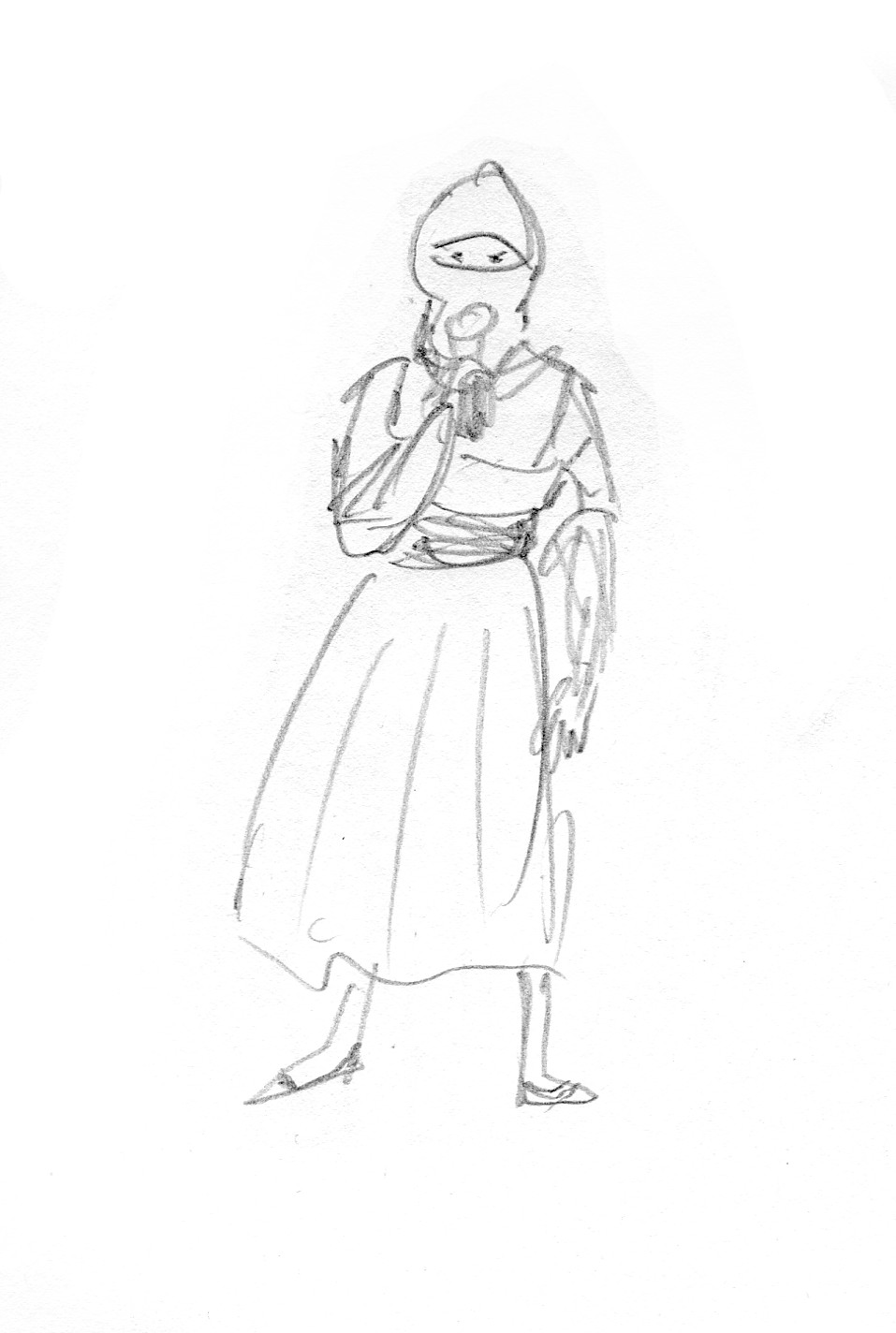
Zapatista girl band singer
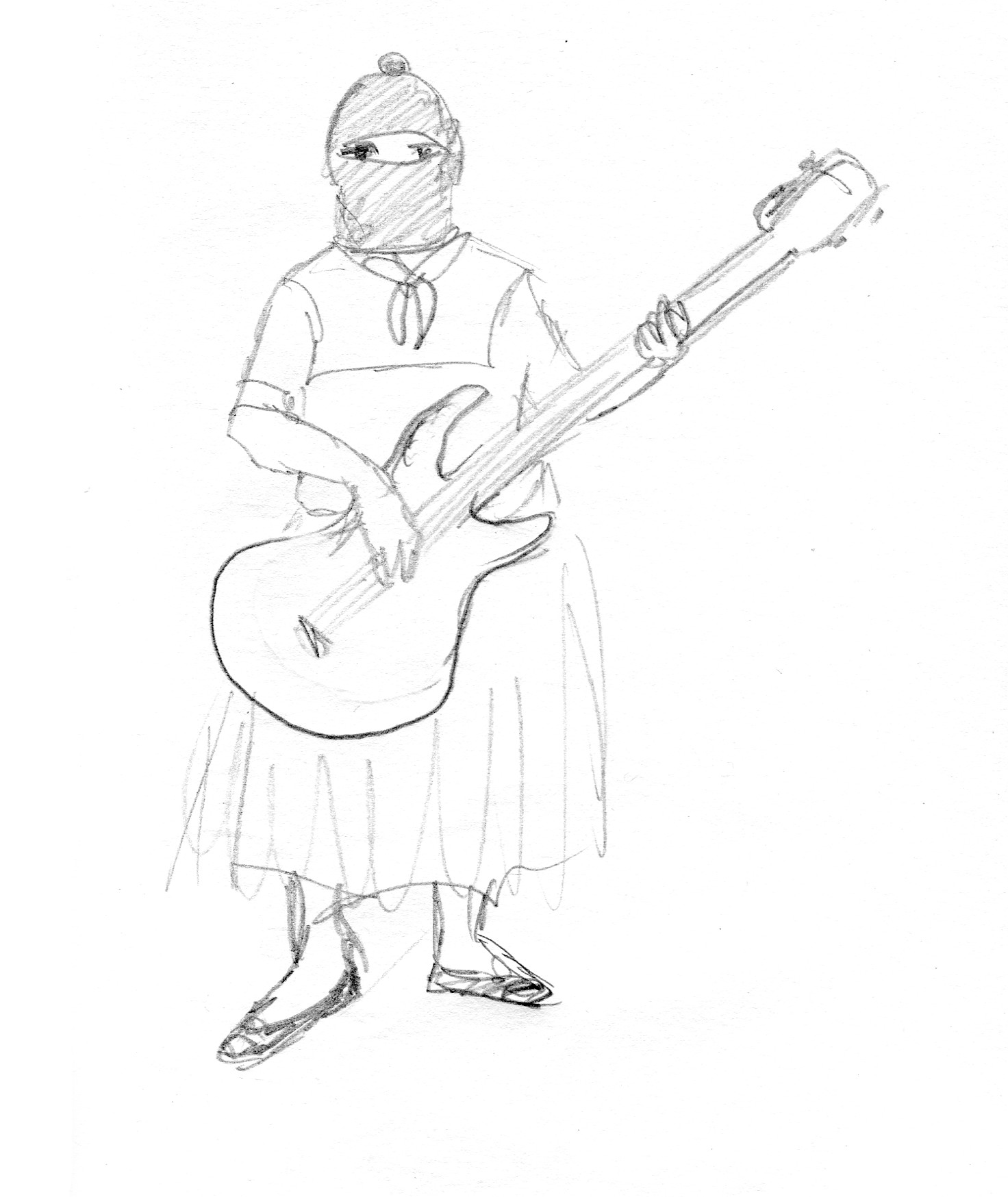
Zapatista girl band bassist
As always, people couldn’t resist filming instead of watching. Or, in my case, drawing.

Filming

Spectators

Ears
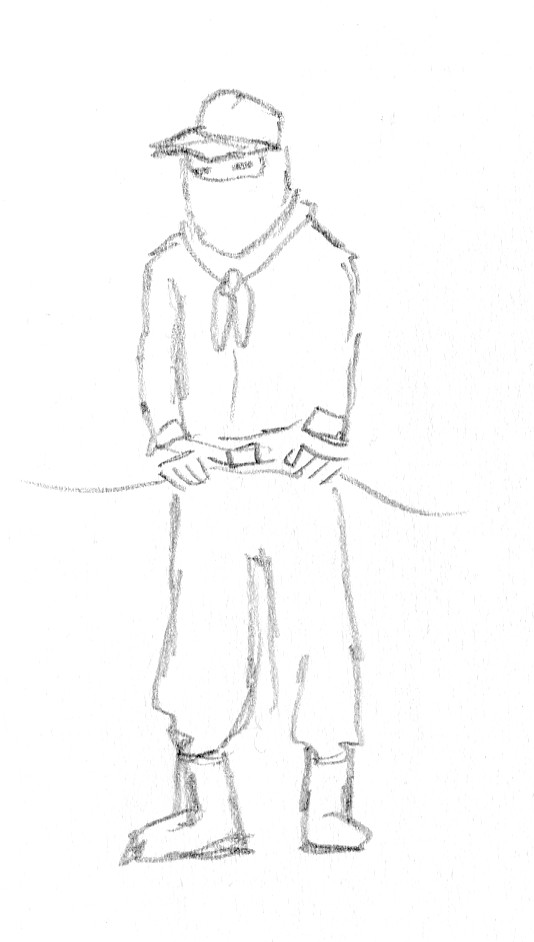
EZLN soldier holding up a crowd barrier
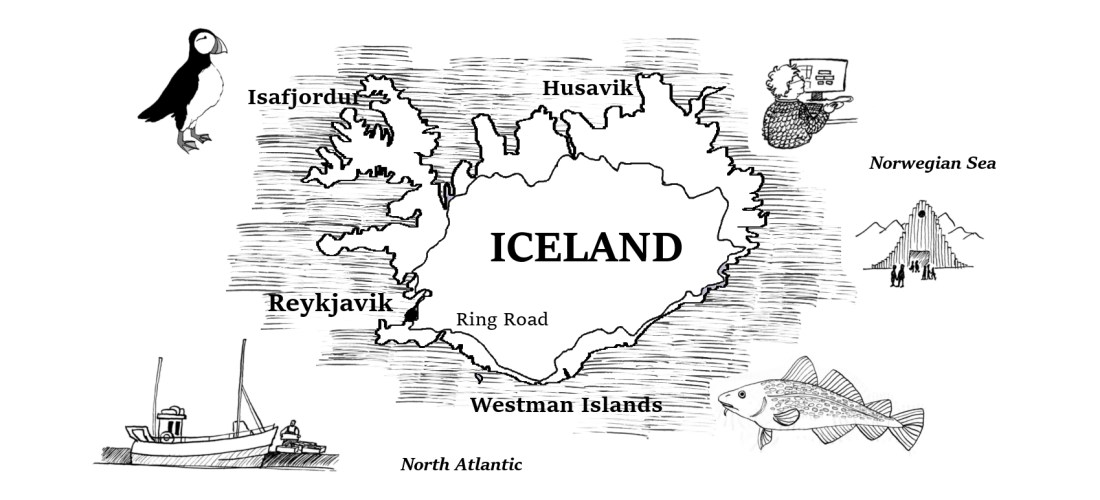
It’s been a real pleasure and a privilege to draw and illustrate maps for a friend’s forthcoming book proposal. The book is about coastal communities that manage their marine resources in sustainable ways. It was a pretty excting and positive read. Fingers crossed that it finds a publisher!
Meanwhile, here are some sketch versions of the illustrations. They’re done in nib and ink. Just imagine the book that includes puffins, otters, coral reefs, electronic fish quota swaps, a successful protest movement 40 years ago for the right to access the coast, whales, and seafood harvesting. You want to read it right? Yes!!

Mussel harvesting

Kelp

Fishermen 1

More mussel harvesting
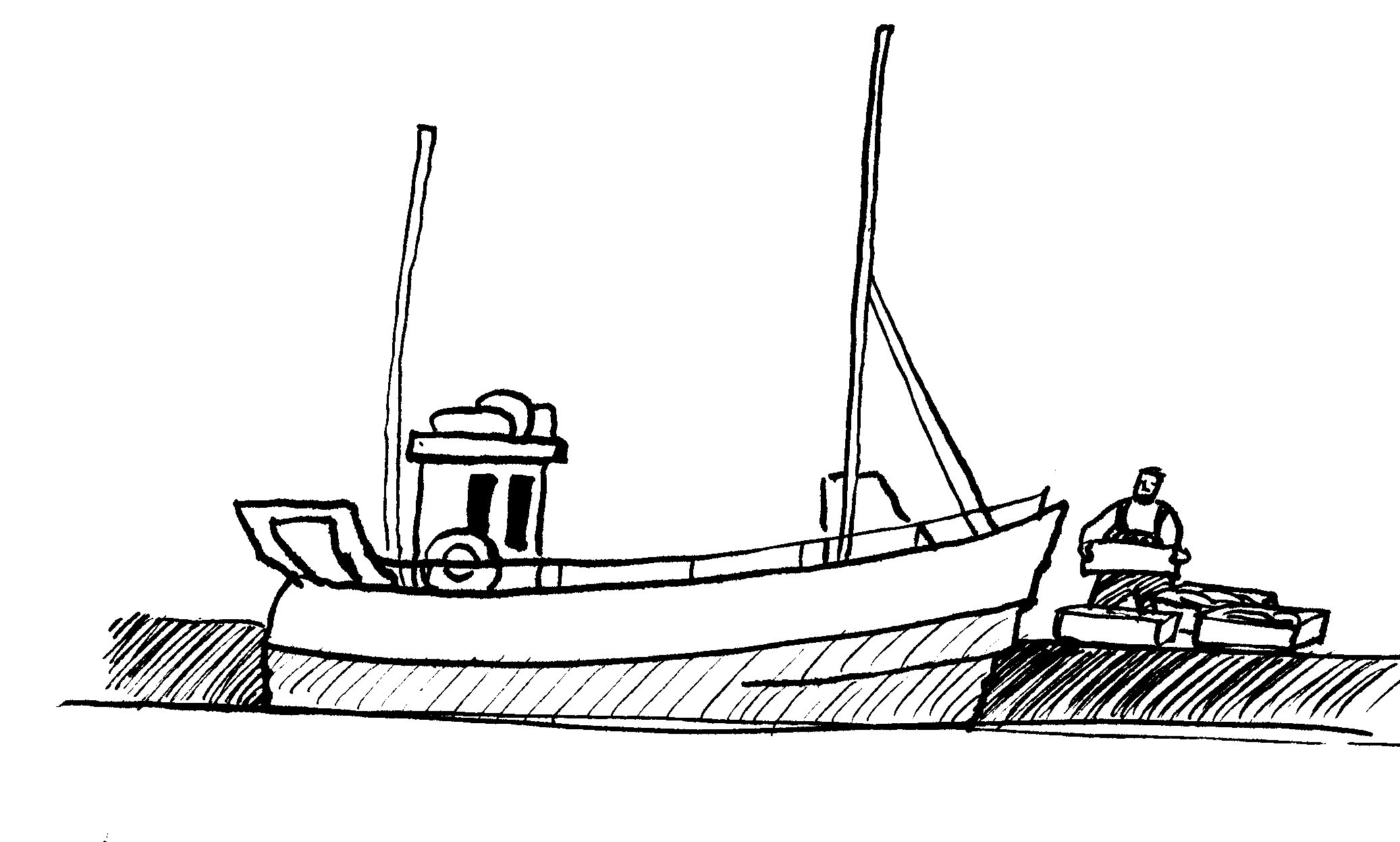
Other fishermen

A puffin.
In honour of the US American Thanksgiving holiday coming up, here’s a sketch of turkeys! And the small boy who was chasing them gleefully. 
These two black turkeys came high-stepping down the path like they owned the place. They were not much smaller than the smallest kids playing football on the path, and for a minute I was worried about how the beak vs cheek contact would go. But the Southside Team goalie stepped up and chased the turkeys back the way they’d come with an exuberant series of sideways leaps, as if he was swinging on invisible lianas or vaulting invisible fences. At one point he did go splat on the ground but the turkeys looked at him indignantly and beat a dignified retreat.
Turkeys are called guajolotes in Mexico and are one of the few animals to have been domesticated in Mesoamerica. Provecho!

At the SOCLA agroecology conference in La Plata.
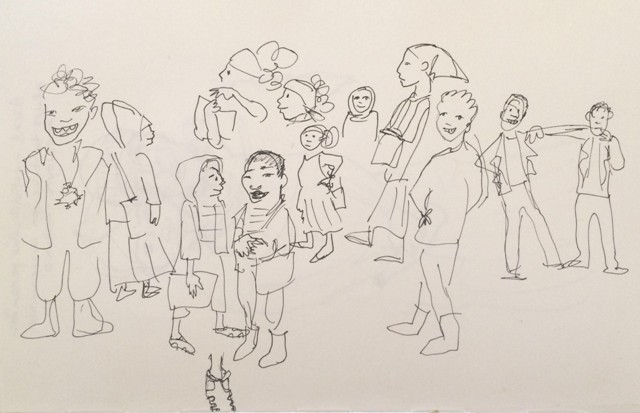


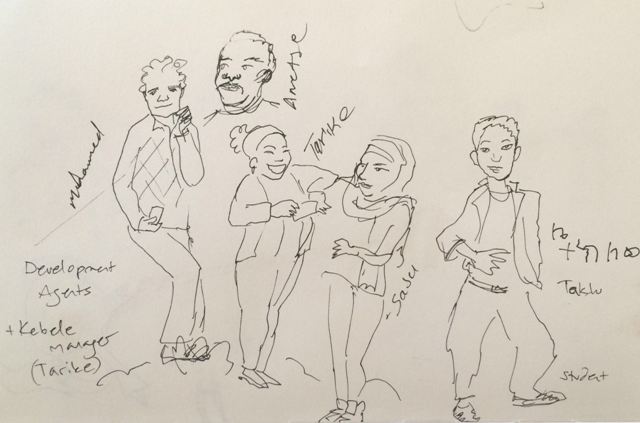
These guys were watching us visit the beekeeping centre. They work for ADHENO, but Tarike is the kebede (village) manager.
The All We Can partnership conference involved a field trip to two of their Ethiopian partner organsations. I went to ADHENO’s project where they’ve spent twelve years developing conservation agriculture and reforestation. We saw beekeeping, the fuel-efficient stove workshop and the church where the project began. A great day with great people.

Friday saw Development Cartoons amid professors, farmers and students, and combinations of all three, at the 5th Latinamerican Conference of Agroecology, SOCLA. I provided the graphic recording for the agroecology team from ECOSUR in Mexico during a brainstorming session about key factors of success in agroecology projects. Here’s the result!
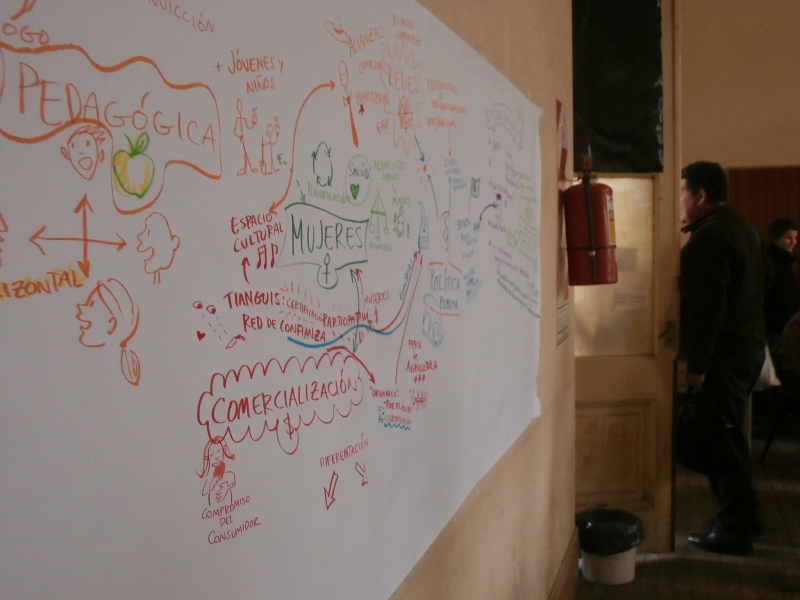
Drawn during the ‘sharing in plenary’ stage of the workshop.

With the ECOSUR team post-workshop

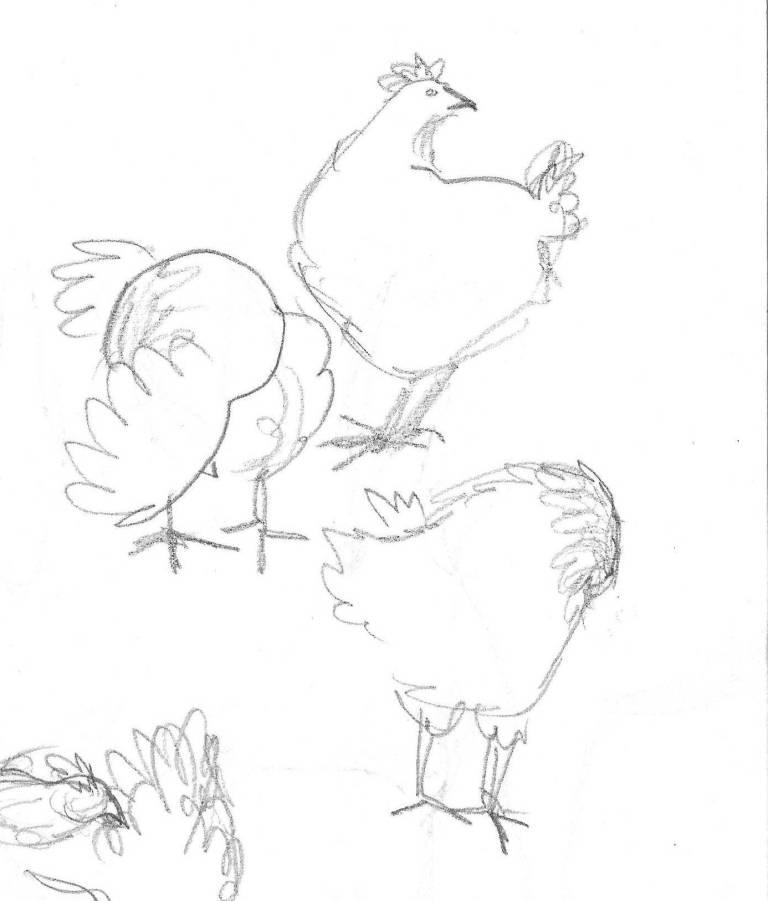


From the sketchbook: Do these featherballs look like chickens? No. They look like fluffy knots. Plus, they produce delicious fresh eggs and do the work of a compost. My views on the marvels of backyard chickens are expounded here!
 Malanga Illustrations