
The young agroecologists in our learning community CAJAC made promo videos about their products… but how did we want to spread the word about them? We wanted people would see the videos, and ideally make contact to buy, for longer than the couple of days that a Whatsapp message circulates. We decided to publish a wall calendar, with links to all the videos and their project social media, and with illustrations showing their work. This way people would have the QR codes in front of their eyes, on the wall, for at least the year 2024!
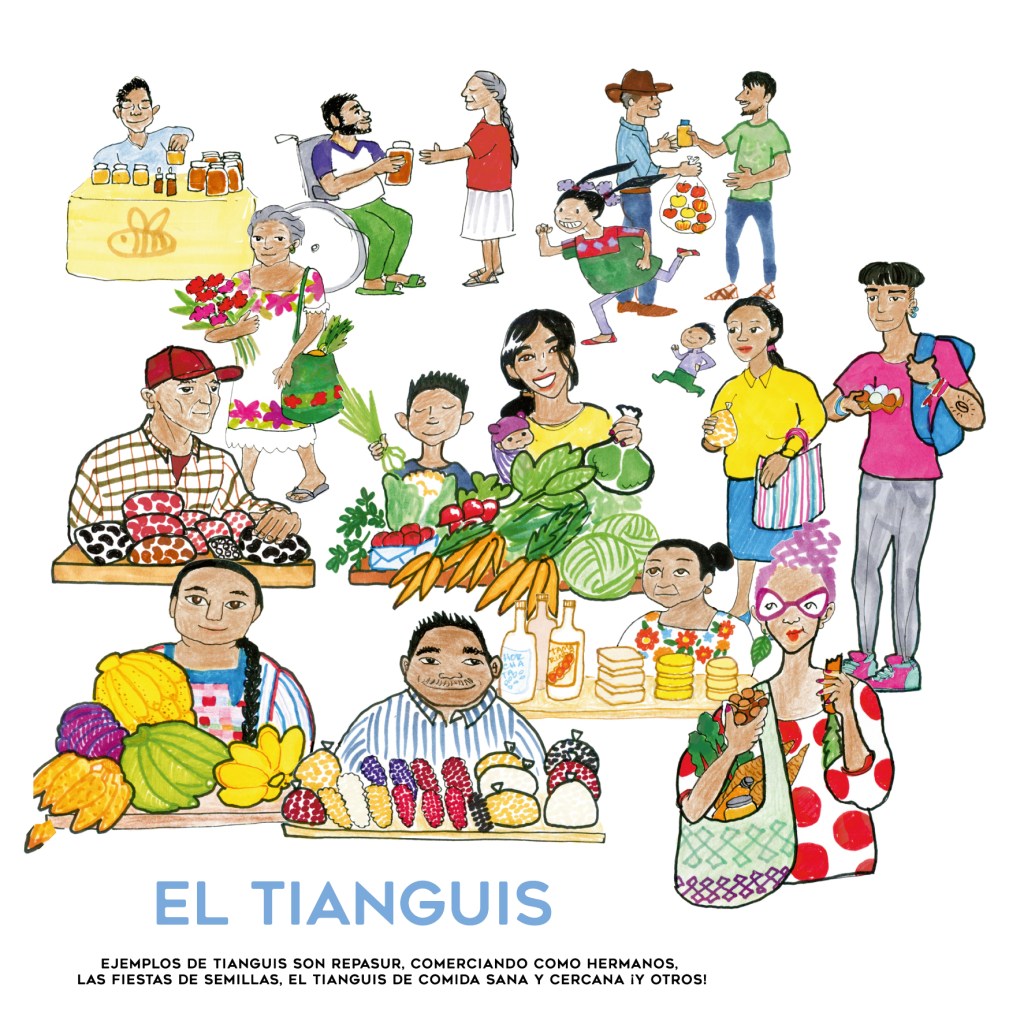
A tianguis is a market. In Southeastern Mexico they are often established in one town on certain days, but alternative markets and seed exchange fairs also often organise themselves in this way.
I’d been working as Chiapas coordinator on the learning community and was now also able to illustrate the calendar so, that was a joy! I’d been following the young participants’ progress in defining their product, working out their cost-benefit analysis, building chicken coops and designing labels for beeswax cream… and it was a labour of love to depict them in drawings.

Here’s the February calendar page for the beekeeping group Xjononet – meaning “buzz” in tsotsil!
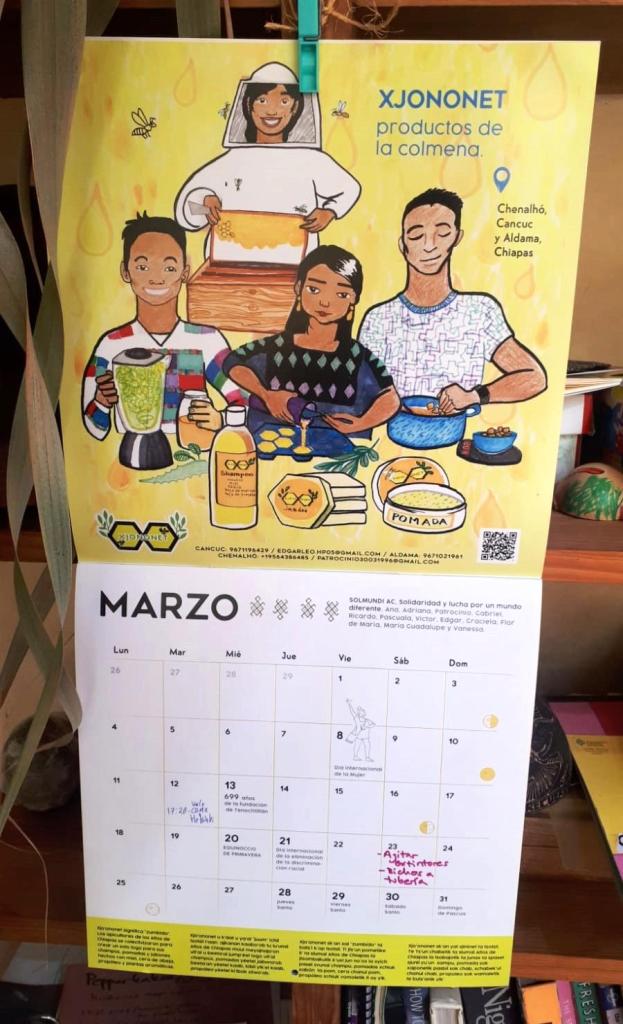
The calendar in action…

…and Edgar from Cancuc selling Xjononet shampoo with honey and herbs at the REPASur solidarity market.

The December drawing references the Maya altars that we had been using in CAJAC learning events to celebrate Indigenous culture and agriculture. The altars arrange produce, candles, leaves and flowers in the four colours of the compass, but for this drawing I depicted eight of our participants from the four participating states: Yucatan (north), Quintana Roo (east), Chiapas (south), and Campeche (west).
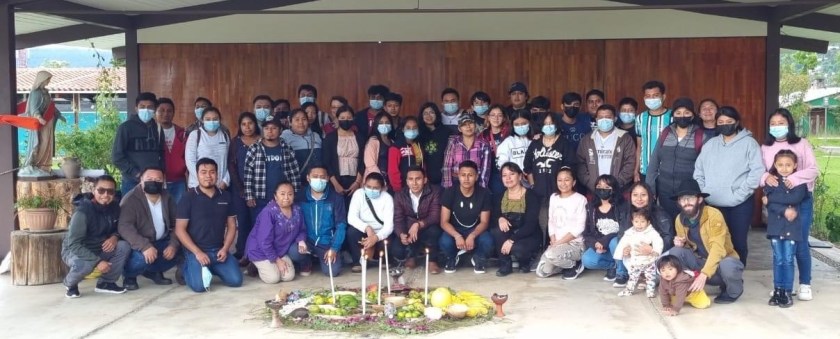
This is what a few of our real-life altars looked like… everyone brings something for the altar, and at the end of the event you get to take something home.

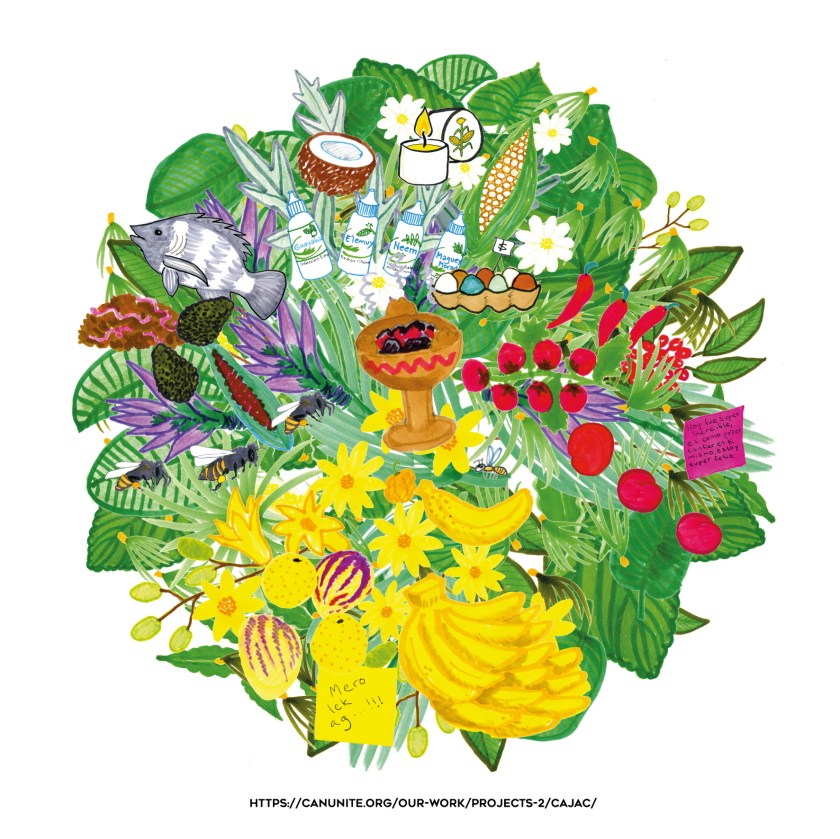
An altar is also the calendar´s January drawing, featuring some of the CAJAC products, too!
 Malanga Illustrations