

I’ve been pleasantly surprised by boys throwing themselves at my Sancris colouring book. “Are you painting???” they might say and of course I offer to share and they take over the “Merry-go-round” or “Zinacantan”picures.
#SancrisEnColores
Colouring Sancris: kids
Book, Colouring-in, Finland, Inclusion, kids, Mexico, Publication, Sancris en Colores, Sketch, Street scene, Suomi, Värityskuvat
Age 5 in Brighton 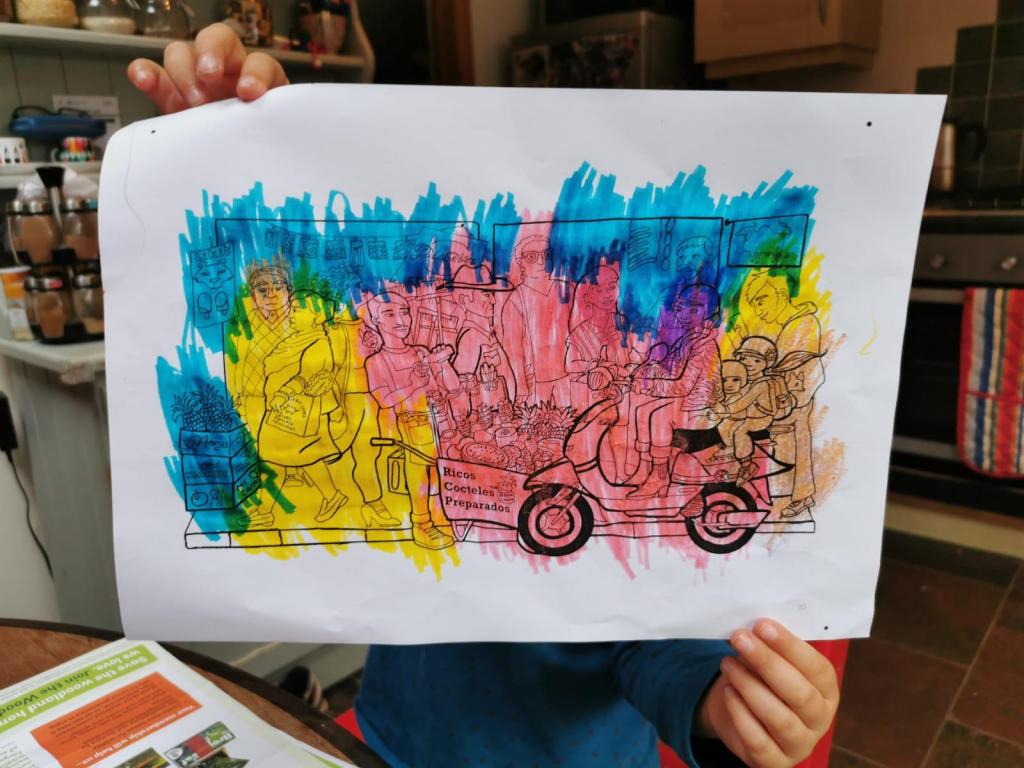
Age 5 in Brighton 
Age 4 colouring in Helsinki! …no colours no problem. 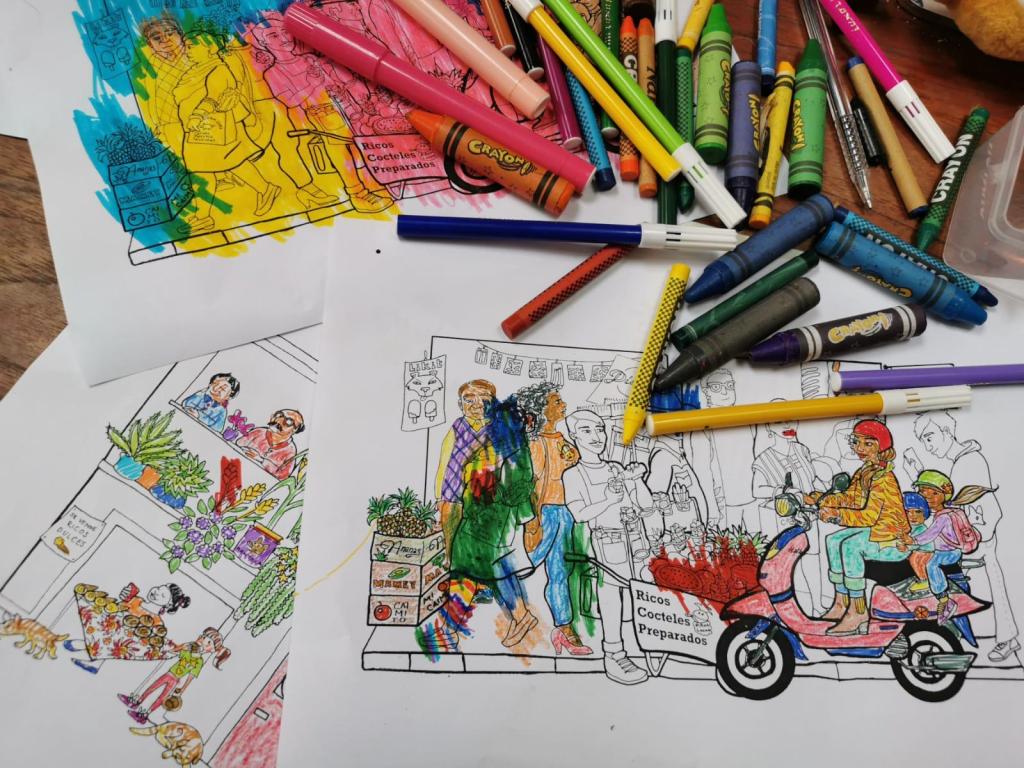
Dad-daughter collaborations 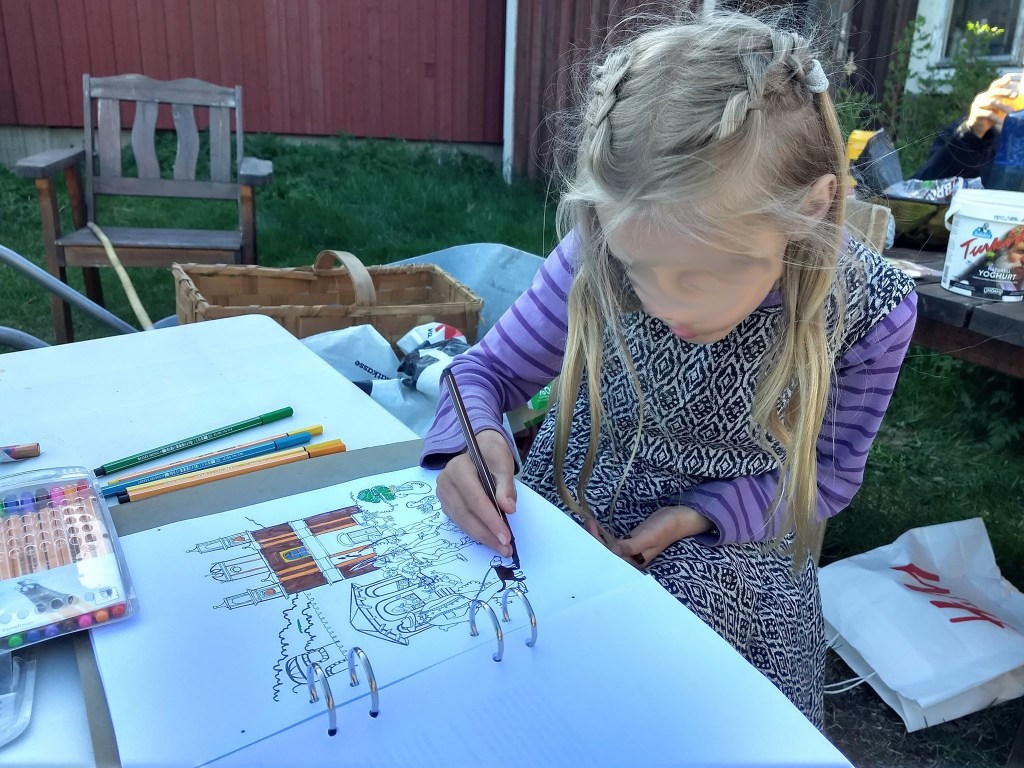
Age 11 in Umeå 
Age 10 in Nepantla 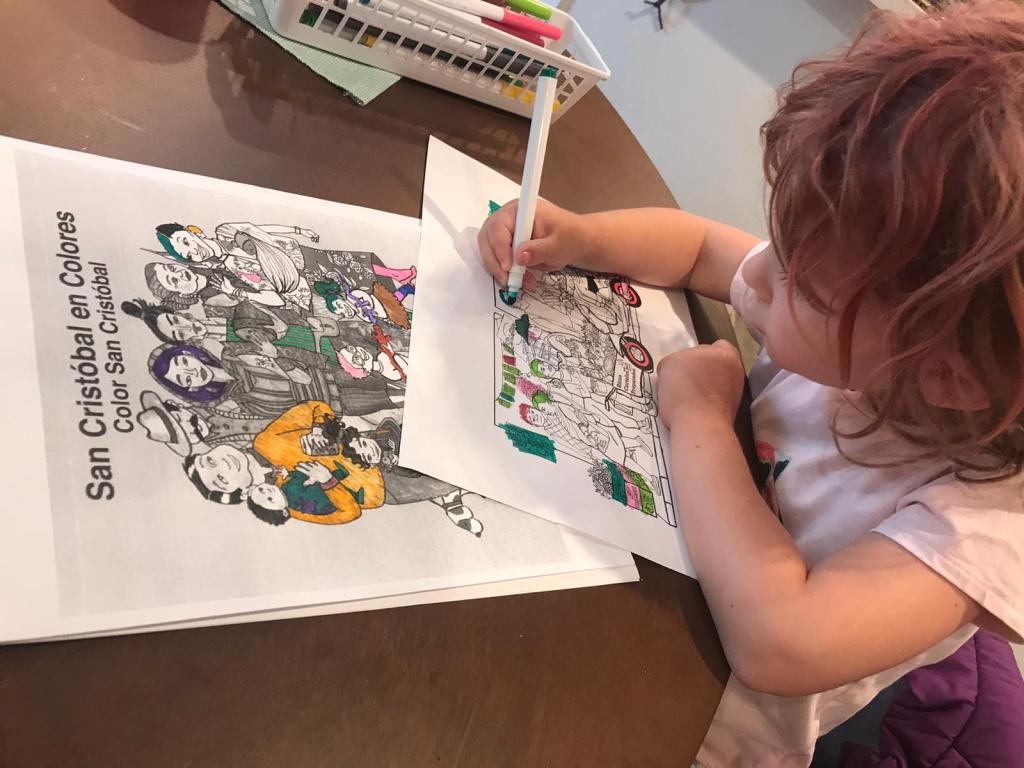
Age 4 in San Diego
Children typically throw themselves at the colouring book – I’m not exaggerating, it’s surprised and delighted me each time. In the case of Luana, age 4, nobody had colouring pens to hand when she received hers… but luckily my partner had a pencil and with this she started happily colouring the merry-go-round picture grey.
Another nice thing is that most kids can find “themselves” in one of the drawings. Buying sweet buns, riding a dolphin, chasing a pigeon, on dad’s shoulders, wearing a silly animal hat or teasing their brother – just look carefully and you’re in there.
Colouring Sancris: 1
Colouring-in, Finland, Just for fun, Mexico, Sancris en Colores, Sketch, Suomi, Värityskuvat
In Mexico City, four people colouring “Vespa and fruit” 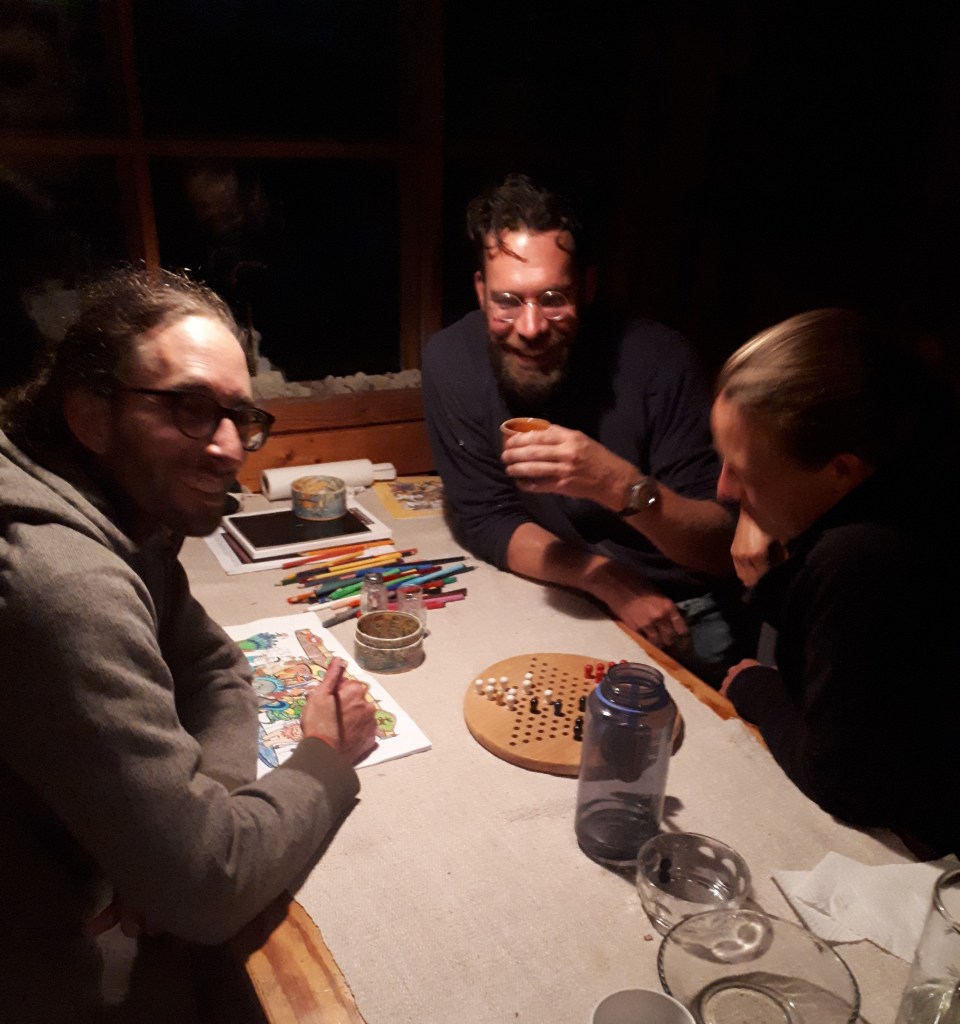
In Sastamala, colouring “Carrusel” 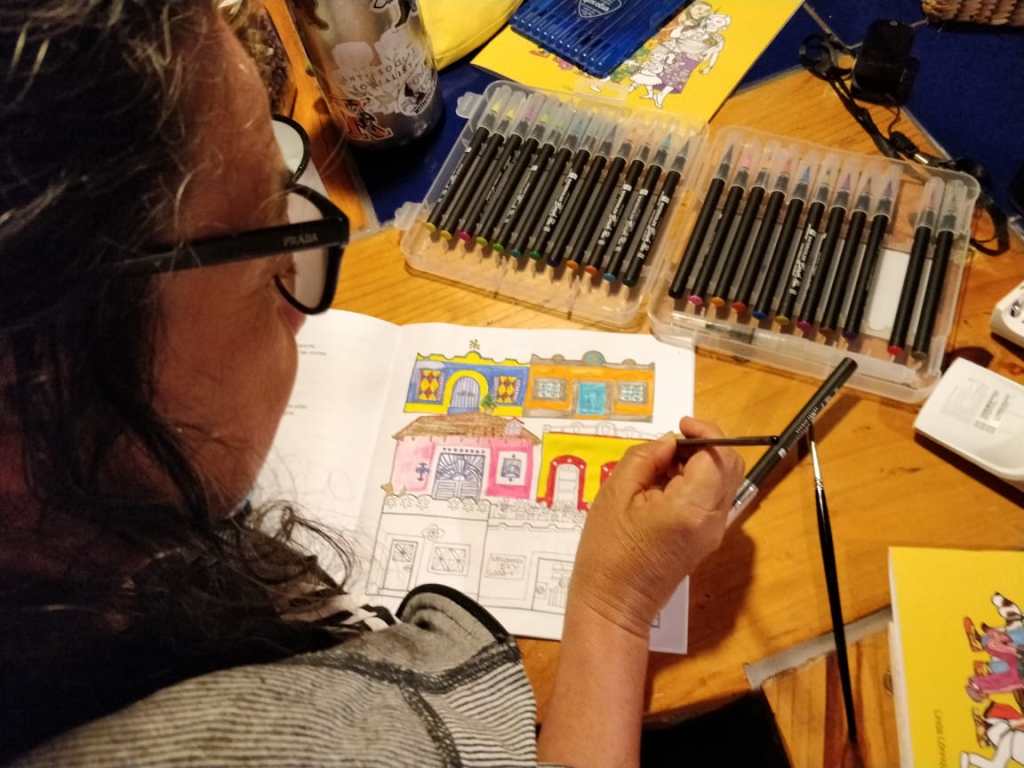
In Sancris, colouring “Calles Coloniales” 
In Sancris, colouring “Felt animals” and “Decorations” 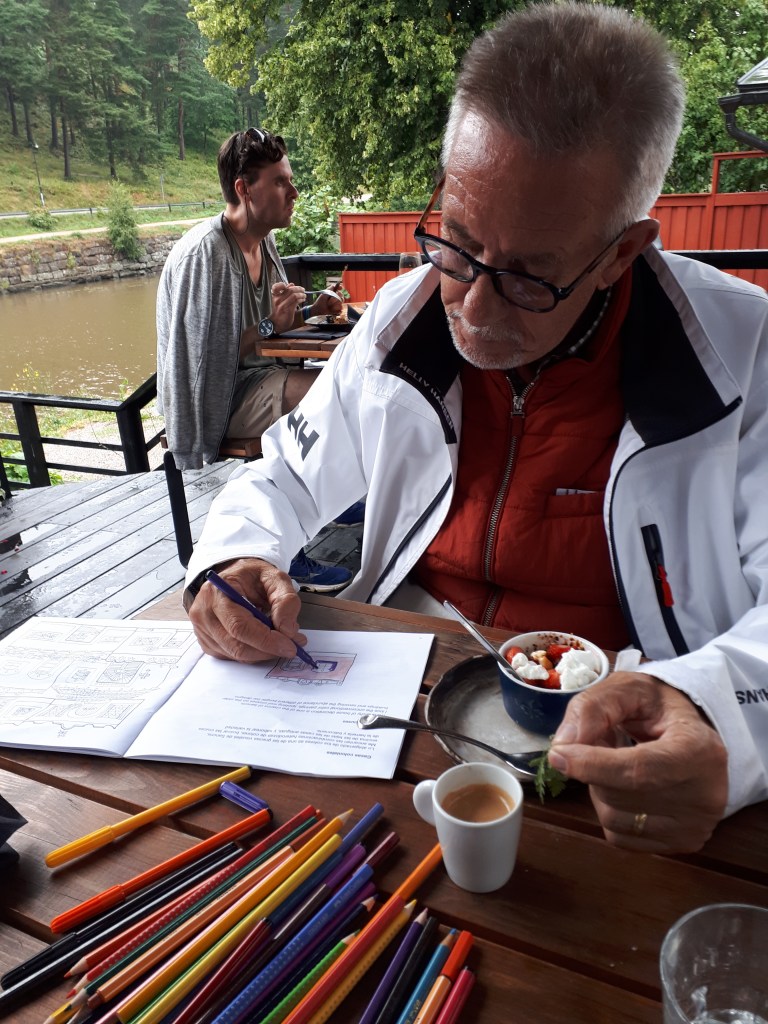
In Borgå, colouring “Colonial houses”.
Check this out, grown people from the ages of 22 to 72 having a whale of a time colouring in Sancris street scenes! Accompanied by tea, mezcal, campari, espresso, chocolate and fruit panna cotta, but most importantly by good people!
Real vs drawing: fruit, vespa
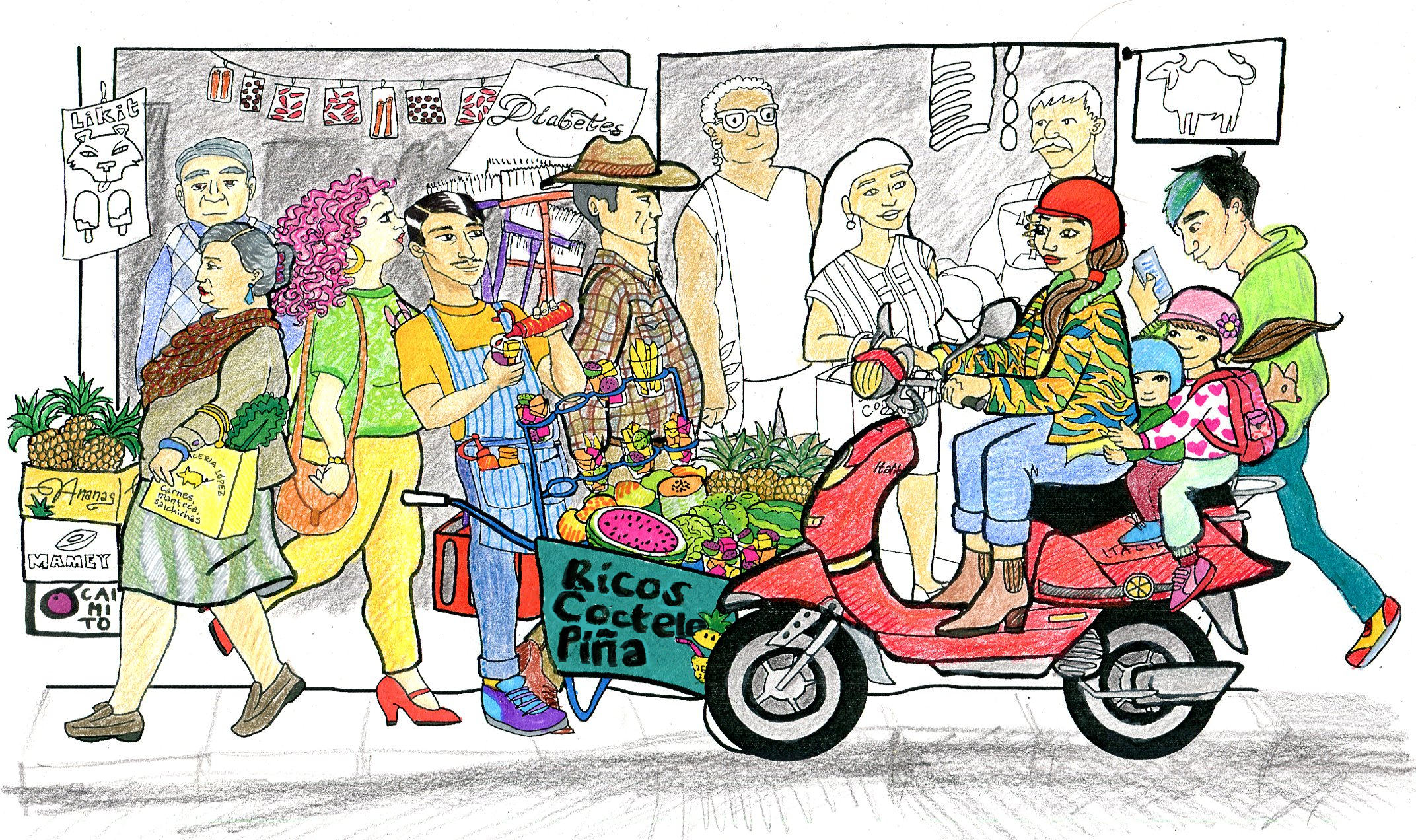
Book, Colouring-in, Mexico, Sancris en Colores, Street scene, VärityskuvatThis double-spread image for my colouring book shows a typical street. I had in mind Almolonga here in Sancris, with its verdurerías (greengrocers), carnicerías (butchers) and abarrotes (corner shops). I also wanted to draw someone who pulled up next to me at a red light once: a young mum with her two kids, all on one Italika vespa, all wearing their favourite helmets. It’s typical here to see whole families on vespas but normally the driver is a man and nobody has helmets on.
And the third element is the fruit salad guy with his portable stall (a tooled-up wheelbarrow). You see these guys on street corners selling varieties of fruit in a cup. The jicaletas in the picture are slices of jícama on a stick, with a lick of jam or chili. You see juice guys, the orange-juice people with a nifty little orange-lathe for peeling. The mango seller uses a useful no-hands innovation for mango peeling: you stick a sharpened screwdriver into the base of the fruit and peel.
This is what the drawing looks like in the book; what it looked like when I was halfway through colouring it, and the final product.
You can buy the PDF print-at-home version of the whole colouring book on my Gumroad page.
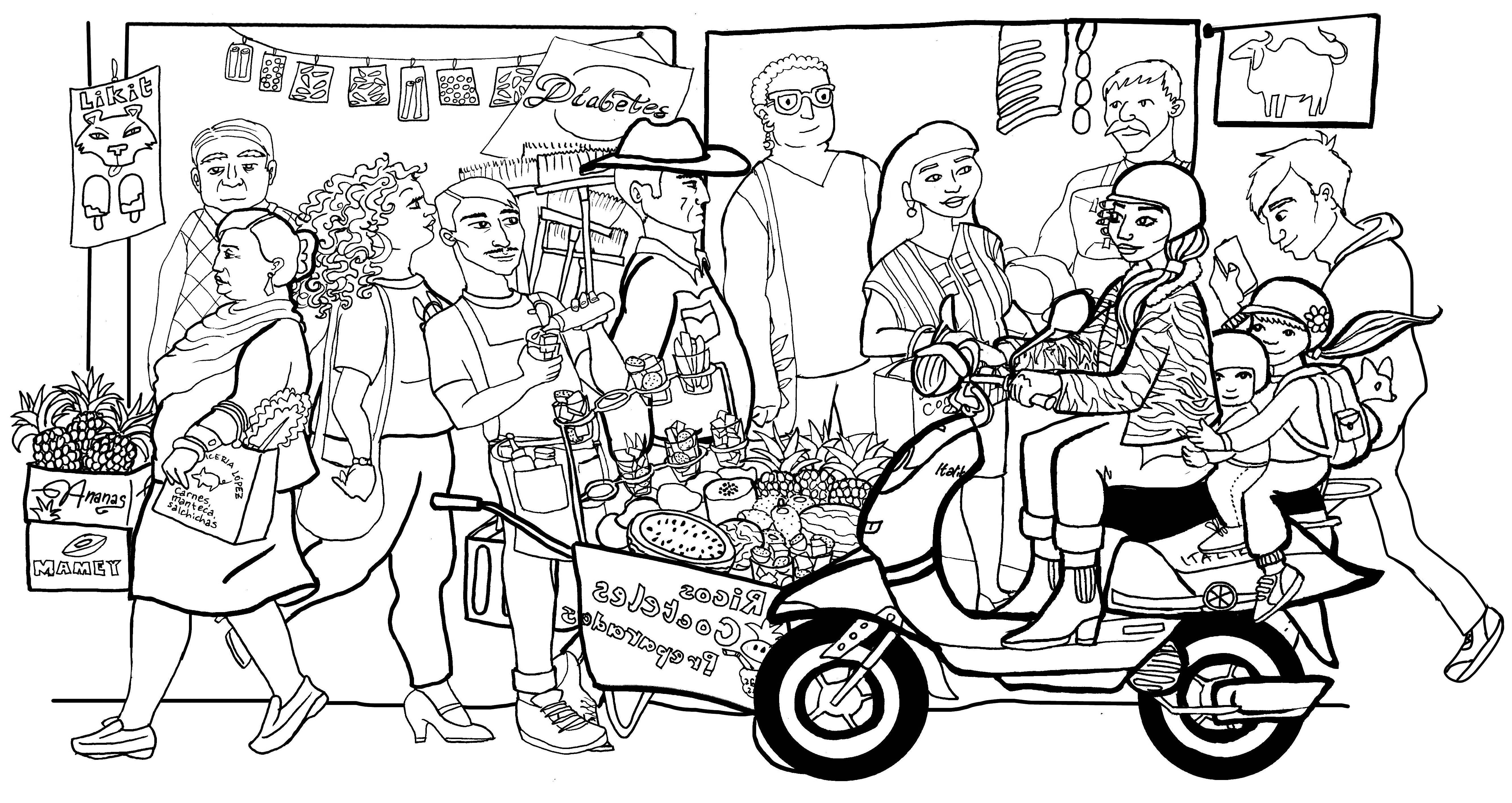
The B/W original
My partly coloured version

My fully coloured version
Fave Sancris books
Academia, background, Book, Mexico, Sancris en ColoresJust because I’m publishing a colouring book doesn’t mean that it doesn’t come with references!
I’ve found in-depth background for my drawings in these excellent books. (You can find many of them at the bookshop La Cosecha.)
Aubry, Andrés: San Cristóbal de las Casas. Su historia urbana, demográfica y monumental 1528-1990.
Segunda edición, Colectivo Bats’il K’op, San Cristóbal de las Casas 2017. This is a masterpiece about Sancris, covering the city’s history through its architecture, using poetic language and solid sources. Although it doesn’t try to entertain it often does, with anecdotes like the fine ladies’ church strike when the Bishop tried to stop them drinking hot chocolate during Mass. I used it for points about the orientation of the town, San Nicolás being the church of the black residents, the eggs in the stucco of the Cathedral, and la Merced (including the detail about the disturbing-sounding institution for detaining “obstreperous women” that was run on the square in the 1700s.) A lot of the decisions taken here at the city’s initial founding are still relevant today, such as the orgins and crafts of the different barrios. Since Sancris is an old, colonial city (only the second founded by the Spaniards in the Americas) we tend to look around the pretty centre and think that this is what it’s always looked like. But Aubry writes about things like the shifts in colour from the mudejar (Moorish) to the Neoclassical styles, reminding us that nothing is immutable.Morris, Walter F; Martínez, Alfredo; Schwartz, Janet & Karasik, Carol: Guía Textil de los Altos de Chiapas, A Textile Guide to the Highlands of Chiapas.
Segunda edición, CONACULTA y Na Bolom, Ciudad de México y San Cristóbal de las Casas 2014. This photo-packed book charts the different local indigenous weaving styles with a tongue-in-cheek commentary that comes from real earned insider knowledge. I especially enjoyed the tidbit about the cardigan being introduced to Chamula by evangelican fanatics trying to bribe their way into peoples’ faiths. I used the book for the information about the embroidery from Zinacantán. Morris et al tell us that the striking Zinacanteco flower embroidery was inspired by Guatemalan refugees who came through in the 1970s. Again, you look at something that looks traditional and assume it’s always been that way… The flower designs on the Zinacantan family’s clothes in the colouring book are my own improvisations.Guess, Virginia Ann: Spirit of Chiapas: the Expressive Art of the Roof Cross Tradition.
Museum of New Mexico Press, Santa Fe, 2004. I came across this scholarly book in Oaxaca and bought it for big money. Guess does a great job of cataloguing San Cris’ roof crosses and talking to their owners and blacksmiths about them, but she doesn’t actually manage to get to the root of where they came from and what they mean.Montaña Barbano, María M., Huicochea Gómez, Laura, & Mejía Lozada, Diana (2015). Being “coleto”: plants inside the houses of “El Cerrillo”, San Cristóbal de las Casas, Mexico.
Culturales, 3(2), 181-207. Instituto de Investigaciones Culturales-Museo, Mexicali Here’s an article about Coleta women talking about their houseplants. Coletos is a name for the locals, but it’s fraught with meaning: it refers to the dominant class who’ve lived in San Cristóbal for centuries and claim Spanish ancestry. When the Zapatista rebellion took San Cristóbal in 1994, three civil society movements arose in response: two in favour, and the grouping los Auténticos Coletos, against. Our other neighbours are known as Sancristobalenses, meaning locals who don’t consider themselves coletos, and foraneos, or “outsiders” like me who come from other parts of Mexico and the world. The article about the plants also gives insights into how traditional houses are organised, with their central patio for decorative flowers and their backyard “sitio” for urban farming – and how the subdivision of houses as families grow makes this trickier.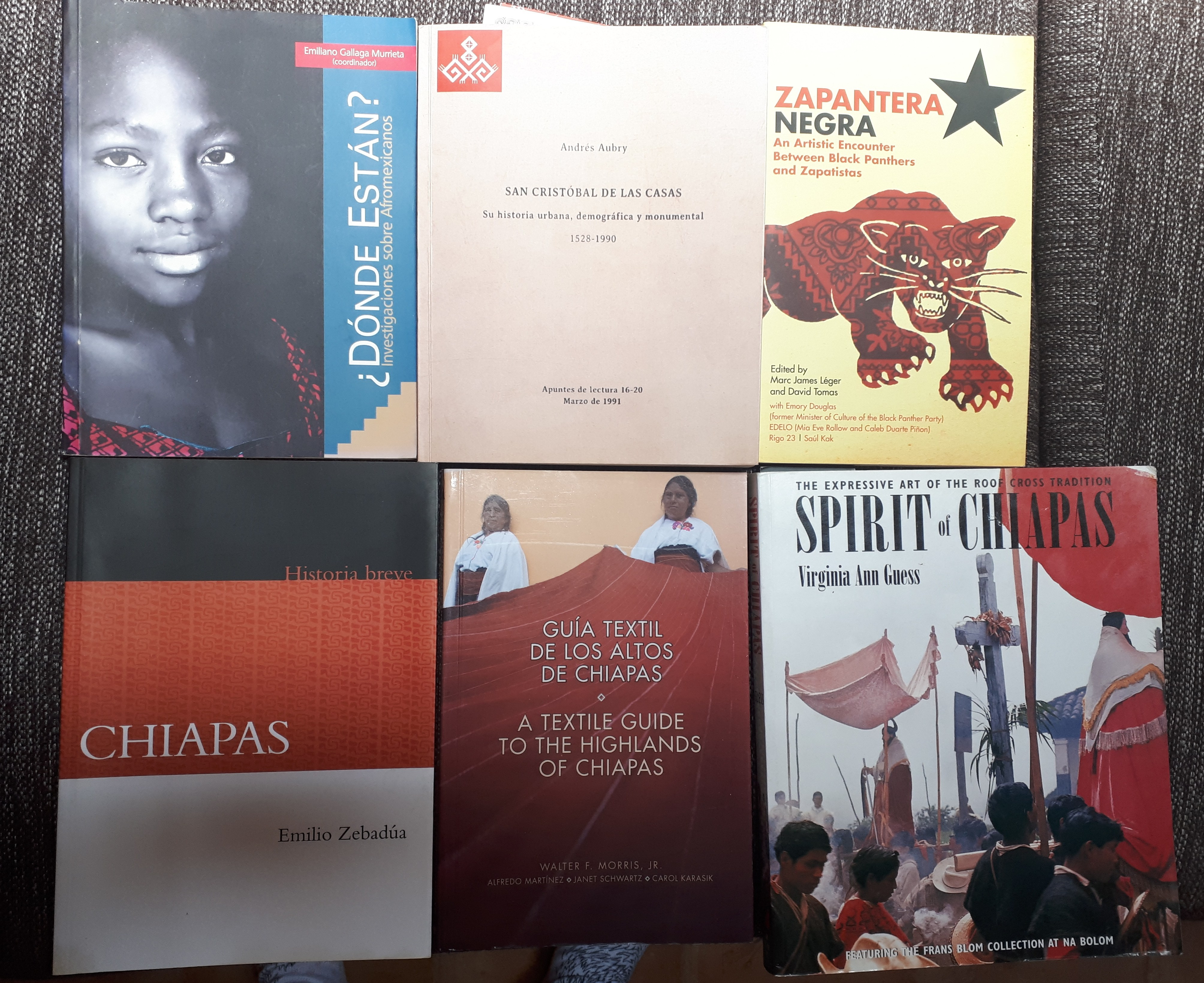
I haven’t read these other books yet but they are very intriguing. Zapantera Negra contains stories by Black Panthers who have visited the Zapatistas in solidarity – the urban-rural clash came out very vividly in one of the testimonies I read, with the aged Black Panther being expected to ford streams and balance on narrow mountain paths. ¿Dónde Están? or Where Are They? is about Afromexicans.
You can buy the PDF print-at-home version of the whole colouring book on my Gumroad page.
Real vs drawing: Animal hats
Colouring-in, Mexico, Sancris en Colores, Sketch, Street scene, Värityskuvat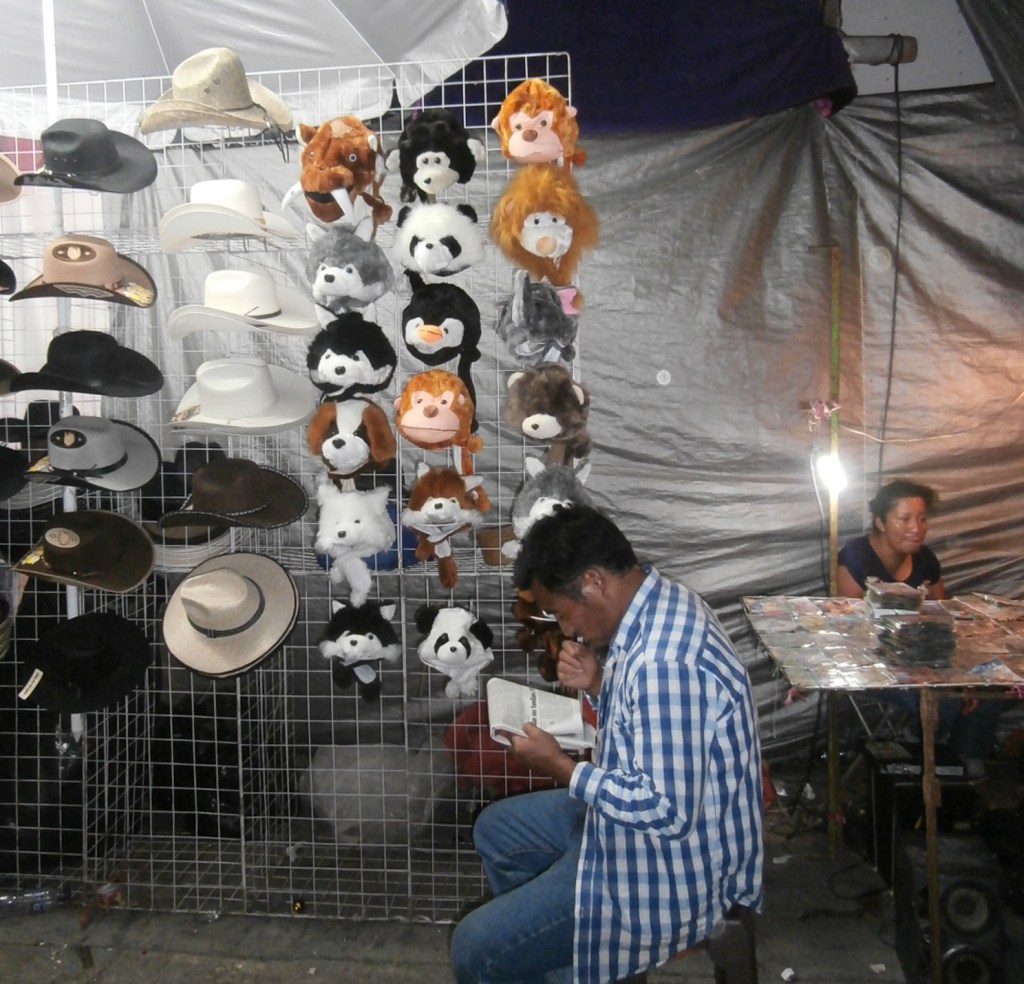
Selling animal hats in Chiapa de Corzo 
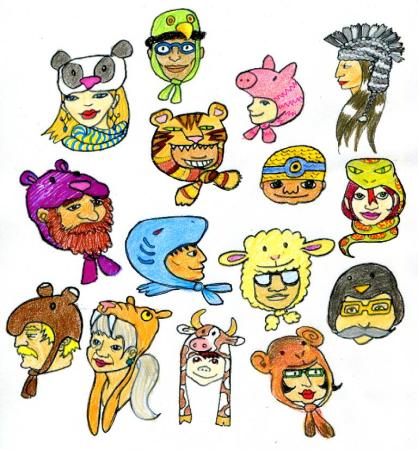
The “Hats” image in the colouring book 
Animal hats in Sancris
Here in San Cristóbal de las Casas, 2200 m above sea level, when it gets cold it gets cold. The locals seize the opportunity to sell shawls, hoodies and knitted hats to the unwary tourists who left home in the sunny afternoon without enough layers… well, knitted goods and these synthetic, imported animal hats. You sometimes see whole families where everyone’s bought a different hat. Very sweet! I wanted to include this in my Sancris colouring book and now you can also decide which colour the sheep, canary and snake hats will be.
You can buy the PDF print-at-home version of the whole colouring book on my Gumroad page.
Real vs drawing: Sancris felt animals
Colouring-in, Mexico, Sancris en Colores, Sketch, Street scene, Värityskuvat
A classic felt bovine getting its portrait drawn 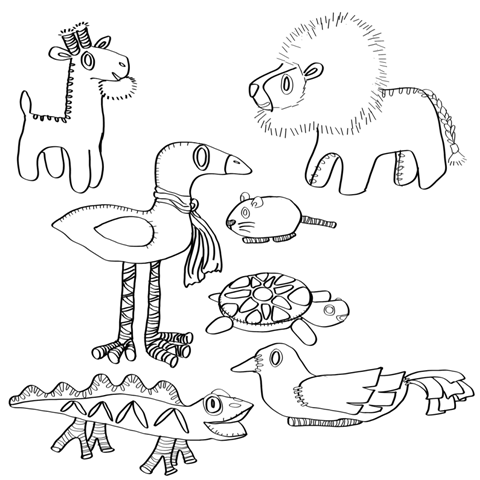
My interpretations
These felt souvenirs, made in neighbouring Chamula, are a ubiquitous sight here in San Cristóbal de las Casas. I find them very cute and endearing, even though they aren’t exactly cuddly. I prefer the ones made from rough woollen felt rather than the bright synthetic felt you see more and more. The animals sometimes have bright red rings around their eyes, giving them a hungover or even deranged look. As part of the great Sancris colour anarchy, you can colour these in any (and I mean ANY) combinations you like, each panel a different hue, and remain totally true to the original style. I wanted to include these animals in my Sancris colouring book – I originally got the idea of the colouring book when I started notcing the subtle differences in the Sancris felt giraffes, and thought that it would be fun to be able to colour them to my liking.
You can buy the PDF print-at-home version of the whole colouring book here on my Gumroad page.
 Malanga Illustrations