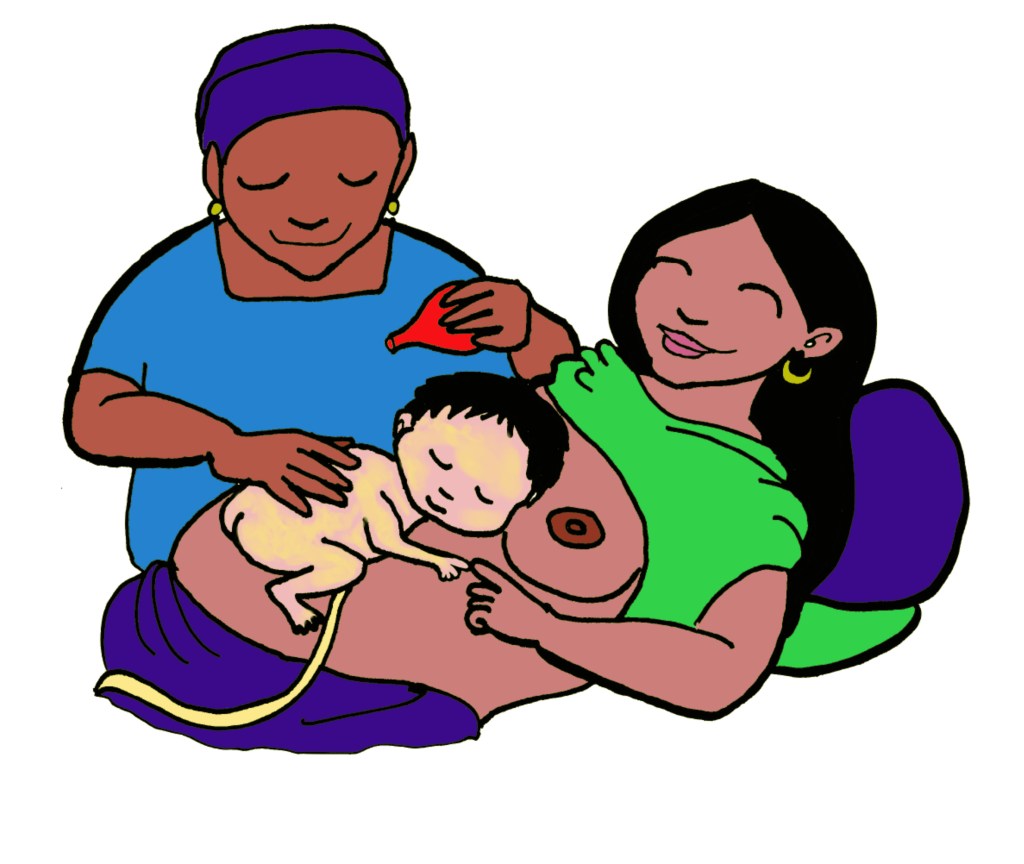
The midwives’ collective Jkanan Kuxlejal commissioned illustrations for their postpartum manual from me. It was a lot of new information and I had to get it right – for example, the advice on what to do if a newborn doesn’t breathe!
The final manual.
I joined one of the group’s workshops to talk to the midwives about what kind of images make sense for them. They had fun watching me sketch high blood pressure indicators!
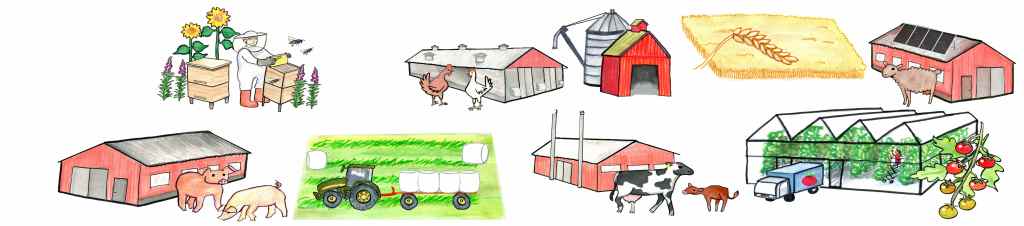
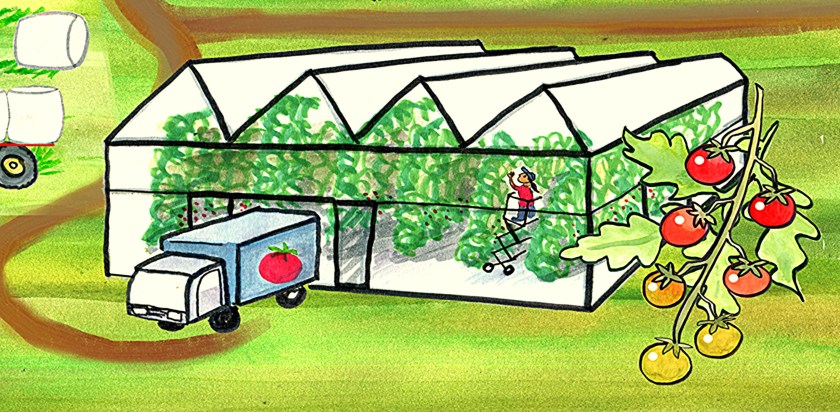
I had a great chance to both deepen my understanding of contemporary farming and help schoolkids do the same when the FarmerTime Finland programme, run by the agricultural advice organisation ProAgria Österbotten, commissioned an interactive image from me for their Thinglink platform.
My brief was to illustrate an Ostrobothnian (a province on the west coast of Finland) rural landscape with crops and livestock, wheat and greenhouses… FarmerTime Finland is a project that links schoolkids to farmers in real time. They also have a bunch of fascinating videos straight from the farms – and now, the interactive Thinglink that contains videos, quizzes and information.
I’d been in touch with FarmerTime earlier to interview them about my other ongoing illustration project, where I want to get away from the almost ritualistically stereotyped images of “countryside” that we usually see in children’s books. So the commission to draw tractors, silage, solar panels and earmarked livestock was also great research.
The Swedish School in San Diego, California, commissioned me to update their logo. Diaspora Swedes (and Finns!) organise these language groups all around the world so that kids growing up abroad can keep their mother tongue active. The school in San Diego has been running since 1999!
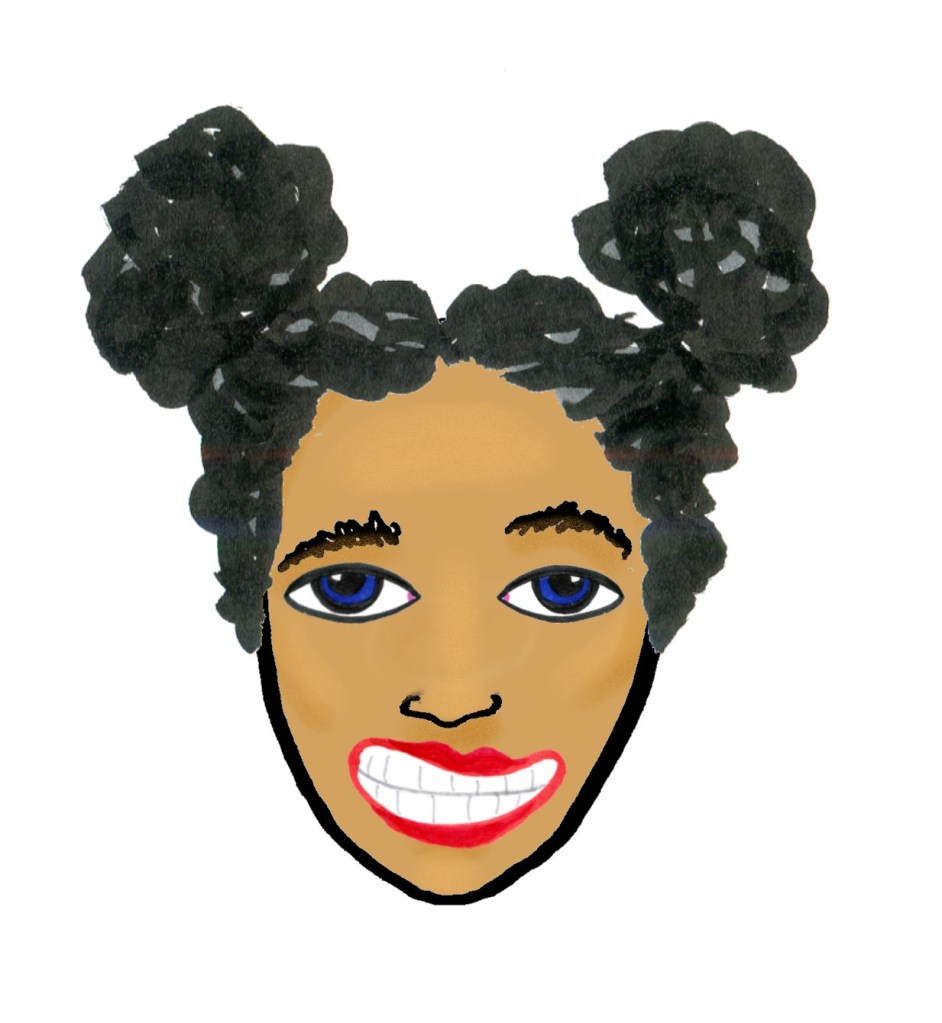
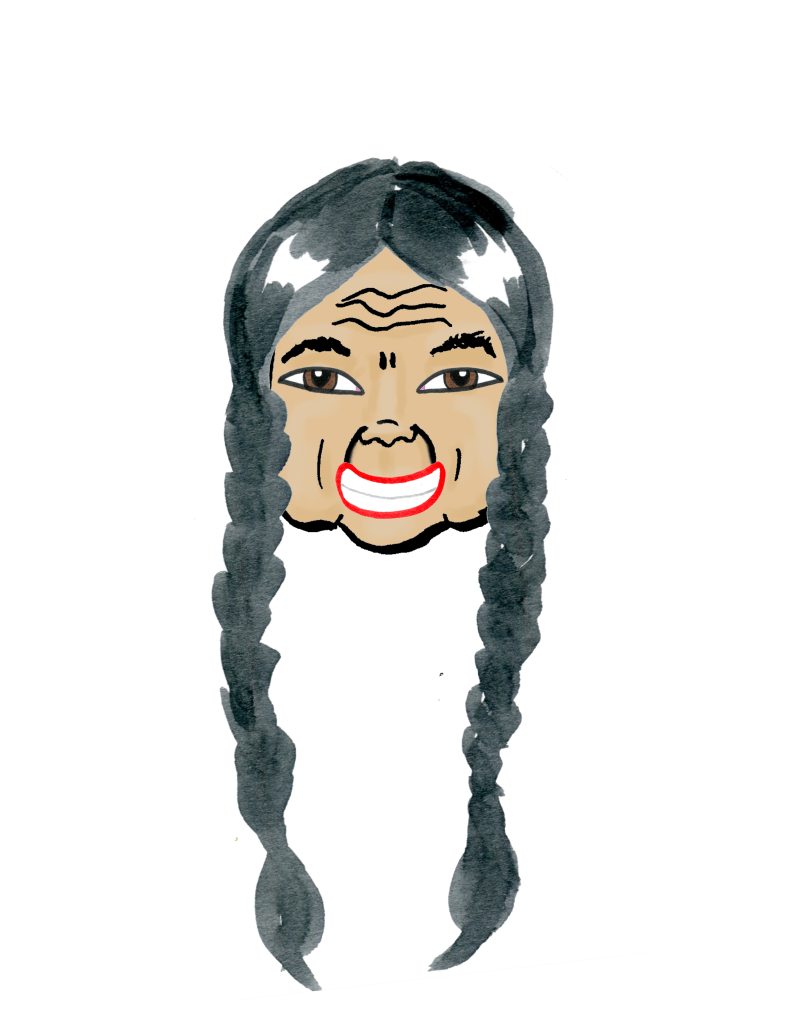
I had a lot of fun before 8M, International Women’s Day, creating a mix’n’match set of women’s features. Ten sets of eyes, ten mouths, ten faces, ten coiffures! I imagined this as a set of stickers celebrating all the ways to be beautiful! In the end it was a bit too much hassle but it gave me a good chuckle.
Another commission for livening up a teacher training manual. This time it’s for peer trainers who want to introduce in-service training in their schools.
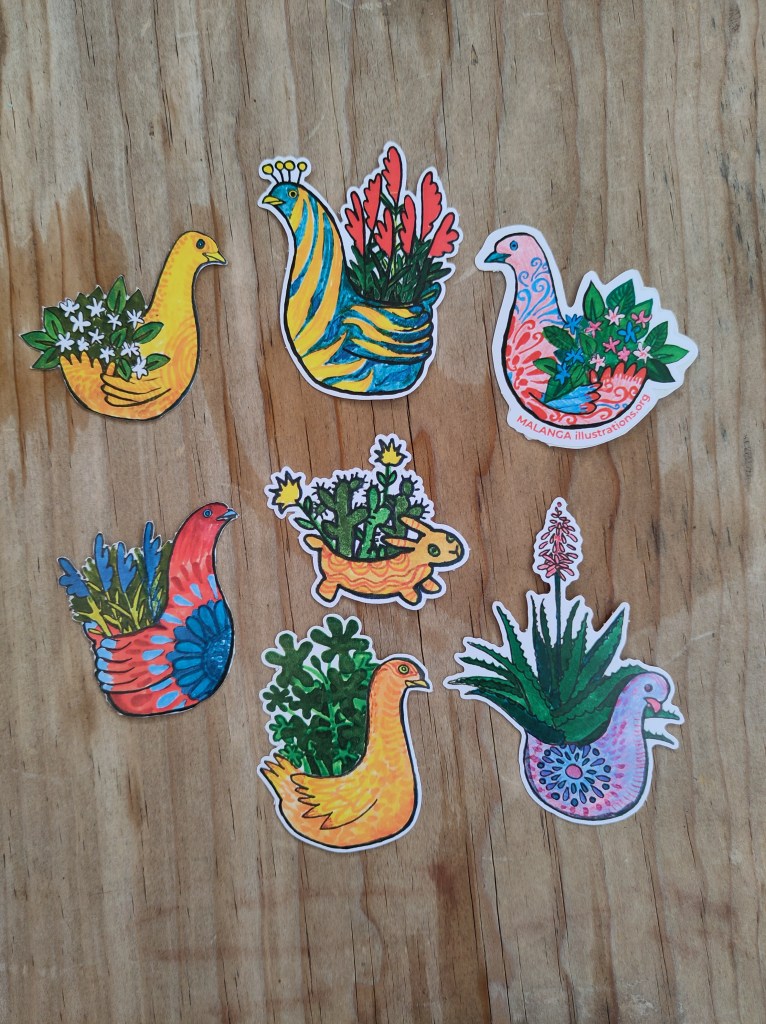
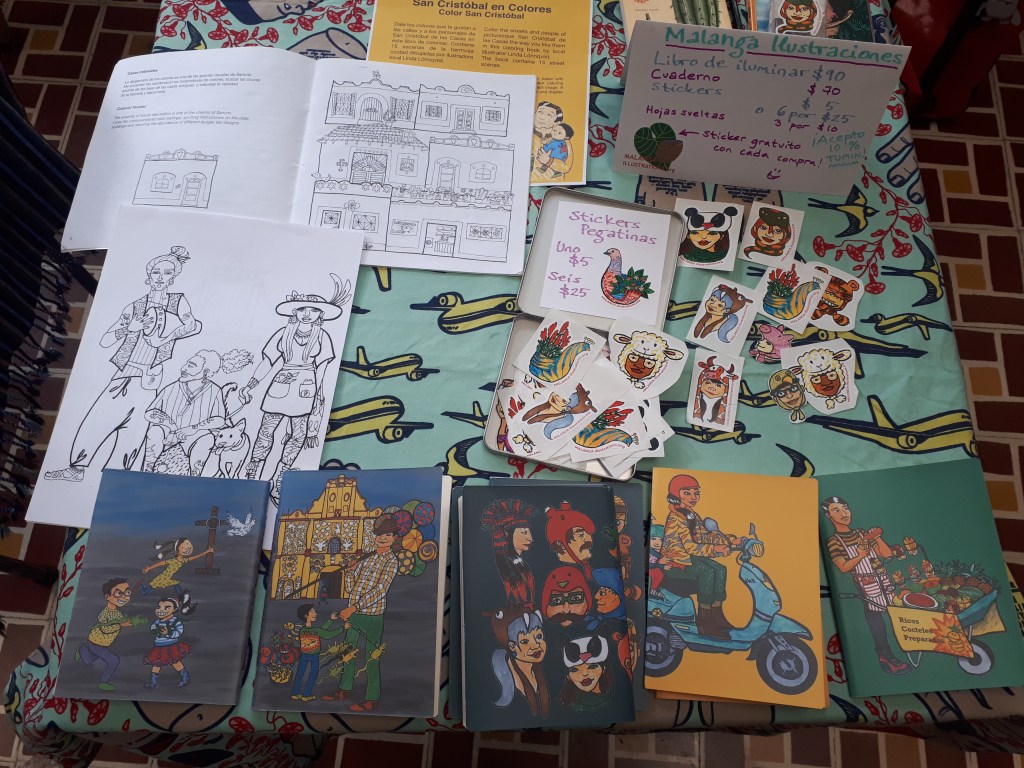
San Cristóbal is a good place to be an economic activist: there are several farmers’ and makers’ markets and shops, veggie basket schemes, independent businesses and neighbours selling each other local produce. I’ve been active in REPASur, a solidarity economy network that also organises a market (known as a tianguis in Mexico) every two months. Malanga Illustrations has been selling colouring books, stickers and notebooks and I ran a collaborative colouring workshop too. Fun!
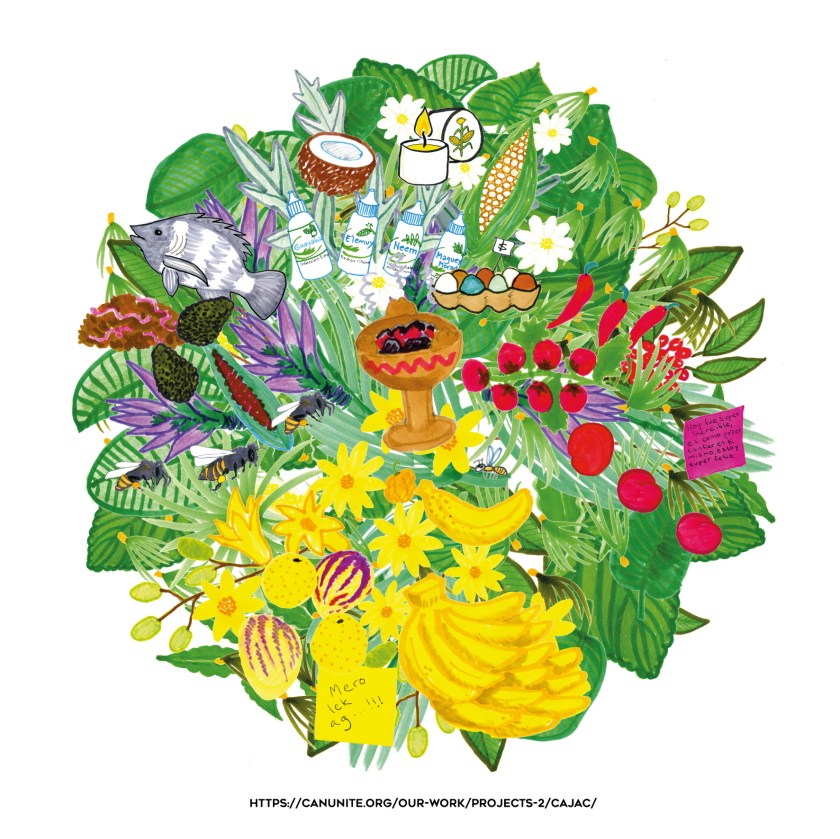
The young agroecologists in our learning community CAJAC made promo videos about their products… but how did we want to spread the word about them? We wanted people would see the videos, and ideally make contact to buy, for longer than the couple of days that a Whatsapp message circulates. We decided to publish a wall calendar, with links to all the videos and their project social media, and with illustrations showing their work. This way people would have the QR codes in front of their eyes, on the wall, for at least the year 2024!
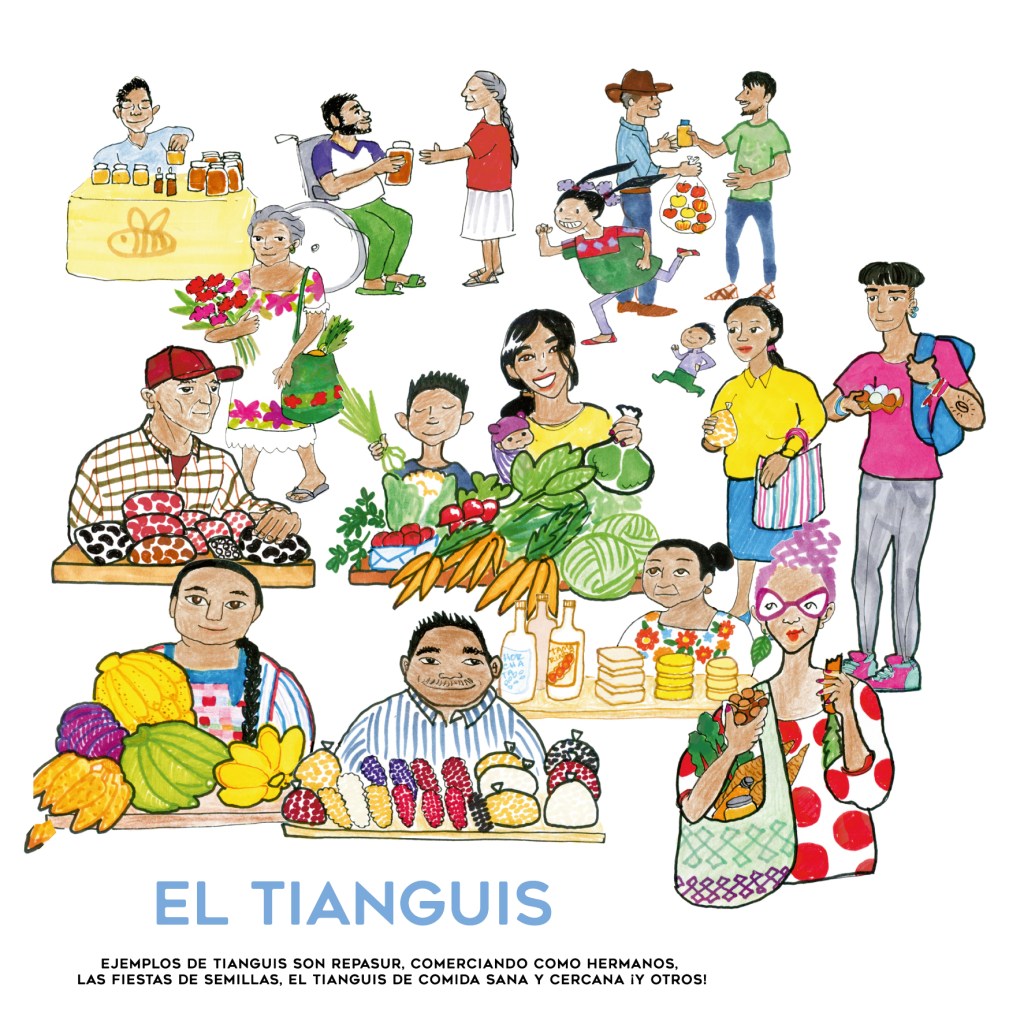
Traditional markets, our April illustration.
A tianguis is a market. In Southeastern Mexico they are often established in one town on certain days, but alternative markets and seed exchange fairs also often organise themselves in this way.
I’d been working as Chiapas coordinator on the learning community and was now also able to illustrate the calendar so, that was a joy! I’d been following the young participants’ progress in defining their product, working out their cost-benefit analysis, building chicken coops and designing labels for beeswax cream… and it was a labour of love to depict them in drawings.
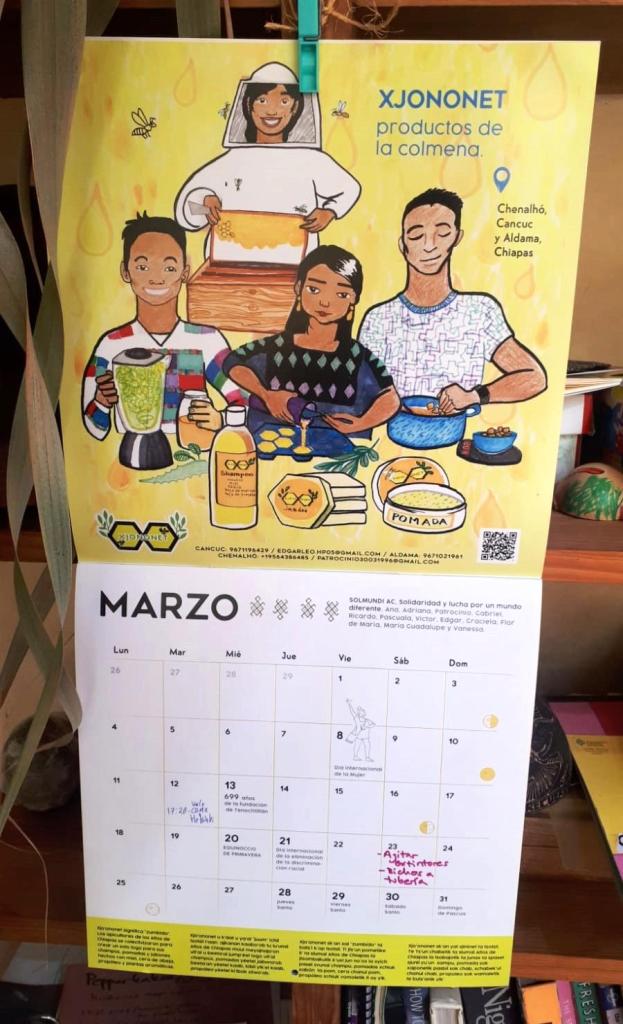
Here’s the February calendar page for the beekeeping group Xjononet – meaning “buzz” in tsotsil!
Here’s the calendar in action…
The calendar in action…
…and Edgar from Cancuc selling Xjononet shampoo with honey and herbs at the REPASur solidarity market.
The December drawing references the Maya altars that we had been using in CAJAC learning events to celebrate Indigenous culture and agriculture. The altars arrange produce, candles, leaves and flowers in the four colours of the compass, but for this drawing I depicted eight of our participants from the four participating states: Yucatan (north), Quintana Roo (east), Chiapas (south), and Campeche (west).
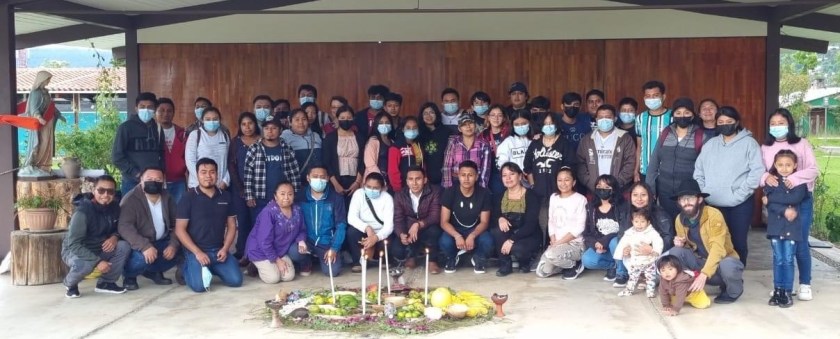
This is what a few of our real-life altars looked like… everyone brings something for the altar, and at the end of the event you get to take something home.
An altar is also the calendar´s January drawing, featuring some of the CAJAC products, too!
It was time to update my illustration business and I had a joyful time brainstorming new names. I listed words I like the sound of, like sopuli (lemming in Finnish), zarrapastrosa (scruffy in Spanish), caxixi (a brazilian maraca), potis (nickname for potato in Swedish)… but weird and unpronounceable doesn’t work when you want people to remember how to write your name. Since I work on a lot of agroecology and sustainability, a plant that embodies agrobiodiversity seemed like a good choice: Malanga, the yam! That delicious hefty root with little purple dots that becomes smooth and silky when cooked in coconut milk on Zanzibar: magimbi.
Or, what yam? The Yanks use this word for sweet potato. There’s taro, in many colours, is it the same tuber I have in mind? Is malanga the huge unwieldy one I thought it is, or the small, round, hairy one with the soapy texture, or is that nyame? I even listened to the Gastropod episode to try to work this out. Plus, the internet is full of confusion and there’s a non-edible version.
But after several rabbitholes of research, here’s my Xanthosoma mexicanum logo. Celebrating this nutritious, indigenous, delicious, world-conquering corm and base of a diversified vegetable garden!
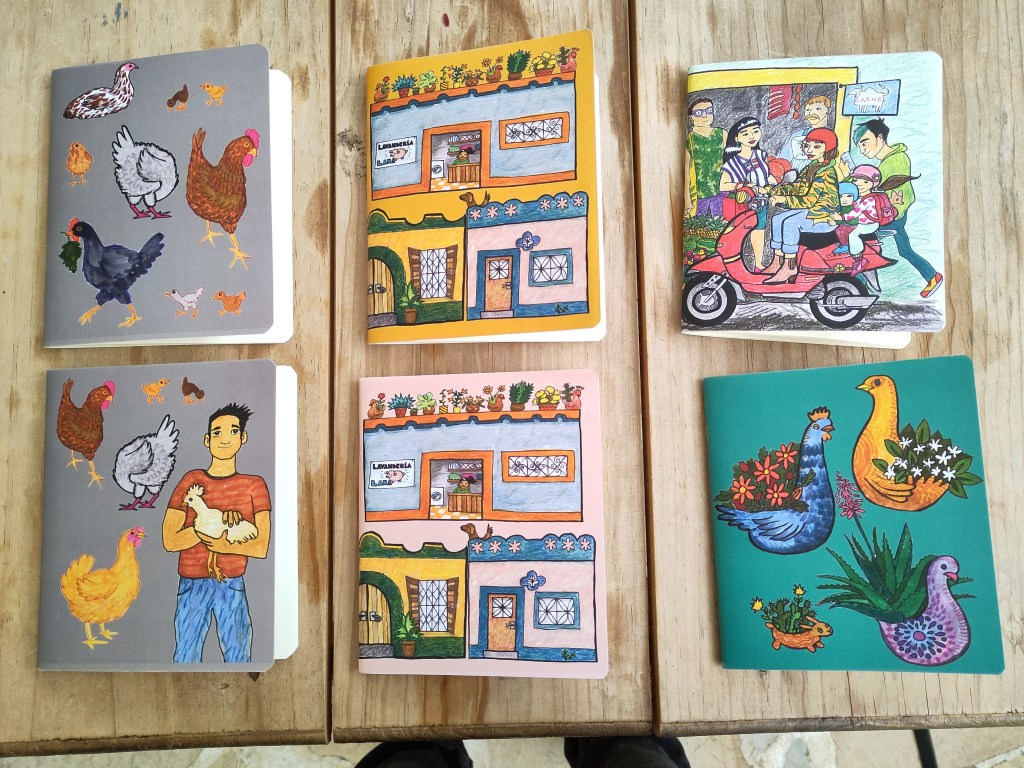
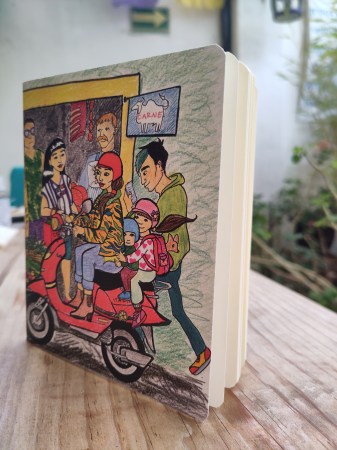
I decided to have my favourite Sancris en Colores drawings printed as notebooks. The handbag-sized, compact (but generous), smooth and tempting notebooks that I personally am a sucker for… the kind that you stroke in a shop and immediately see yourself sketching in while sipping a fancy coffee in a street cafe. Magalí from Jiribilla did the book-binding for me with thread in carefully selected colour combinations.
I’ve been giving them as gifts with inspiring (I hope) writing prompts. They’re on sale at Pitahaya in San Cristóbal!
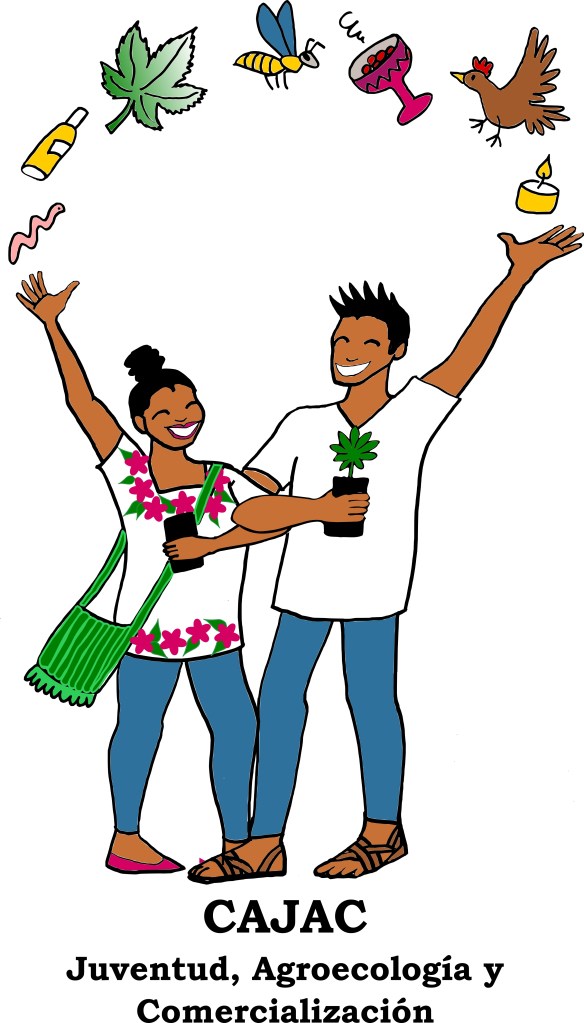
I work as Coordinator for Chiapas state in the learning community CAJAC, where young agroecologists learn about community markets. Part of the job was designing the logo!
All the 45 participants voted for their favourite of three logo drafts and then added details they wanted to see. The biggest debate was about the man’s footwear: should he wear trainers or huaraches? The young guys said that although they mostly wear trainers, the huaraches symbolise what they stand for.
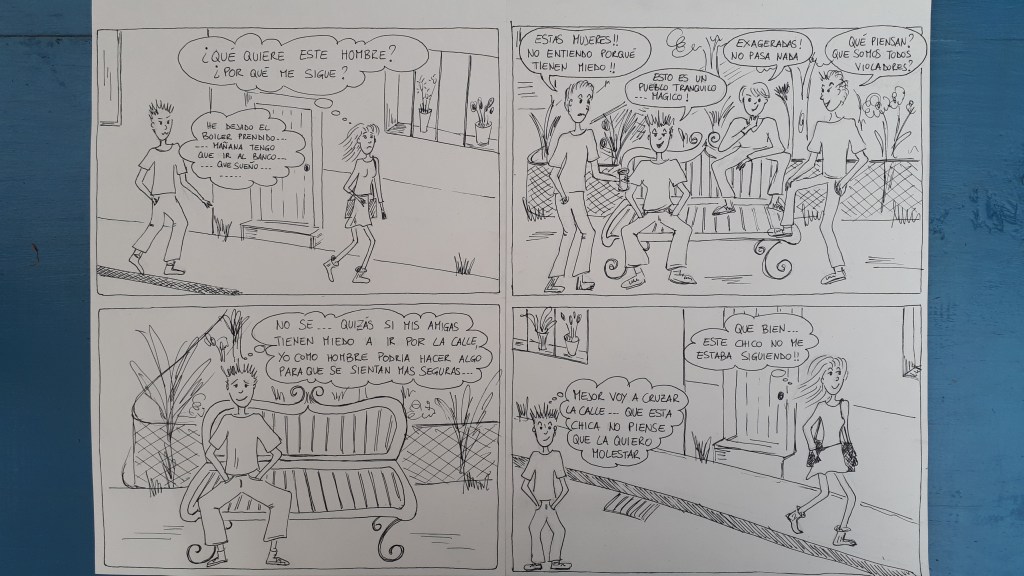
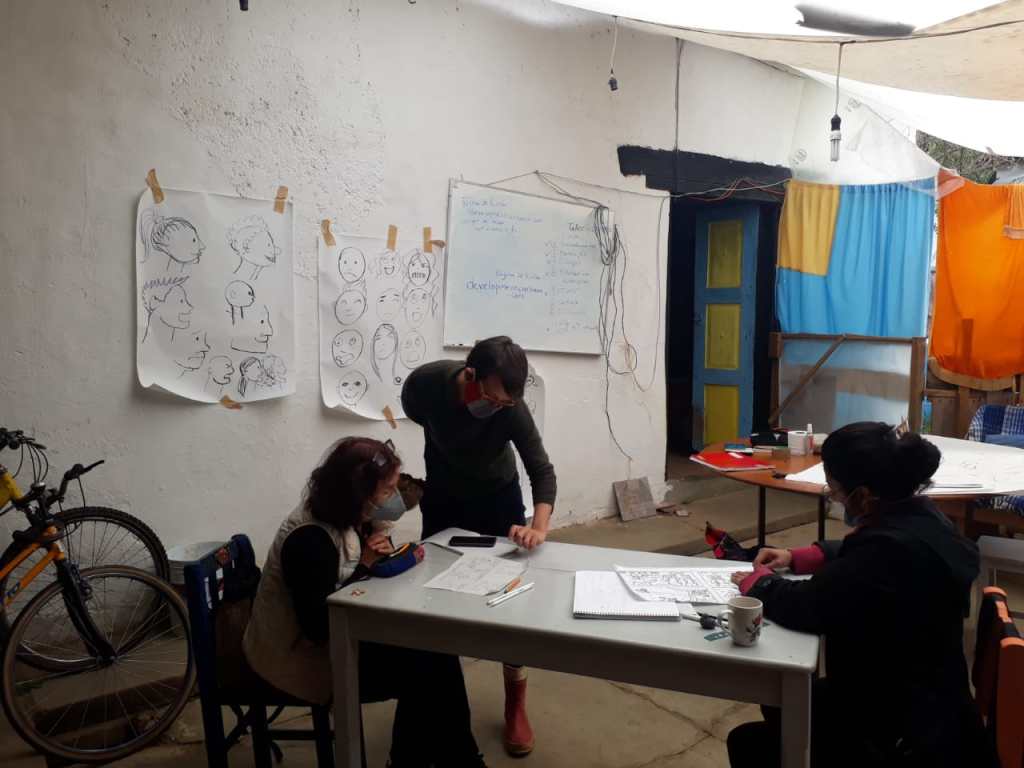
The other day I gave a Grassroots Comics workshop. I admire World Comics a lot and have been wanting to do this for some time and now when our local barter-“shop” El Cambalache asked for people to give workshops, I signed up. We had eight people think about what makes them angry, what gets them into a silent mental “I should’ve said that!” spiral, what message they burn to tell, and how to express that in a comic. We got comics about how people don’t listen to girls, about how it’s scary for women to walk alone at night, and… how your football might fly to the neighbours’ garden when it’s windy. We practised drawing faces, people and spaces. We finished with a “samizdat” wall exhibition of the comics!
I’ve been pleasantly surprised by boys throwing themselves at my Sancris colouring book. “Are you painting???” they might say and of course I offer to share and they take over the “Merry-go-round” or “Zinacantan”picures.
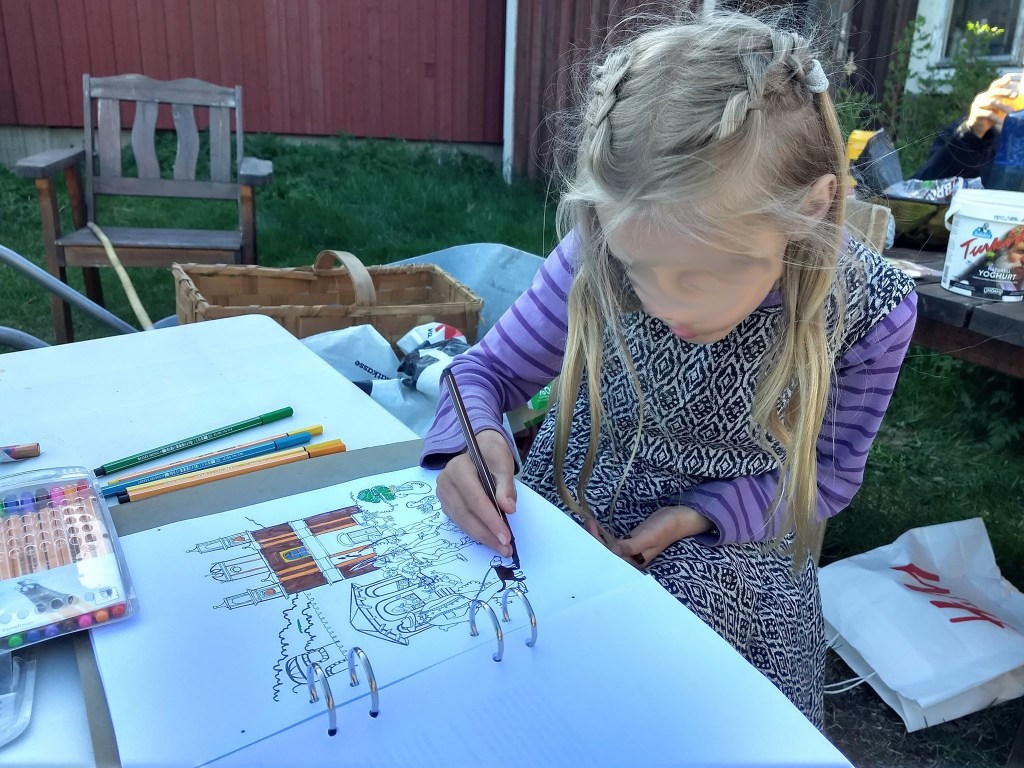
Age 4 colouring in Helsinki! …no colours no problem.
Dad-daughter collaborations
Age 11 in Umeå
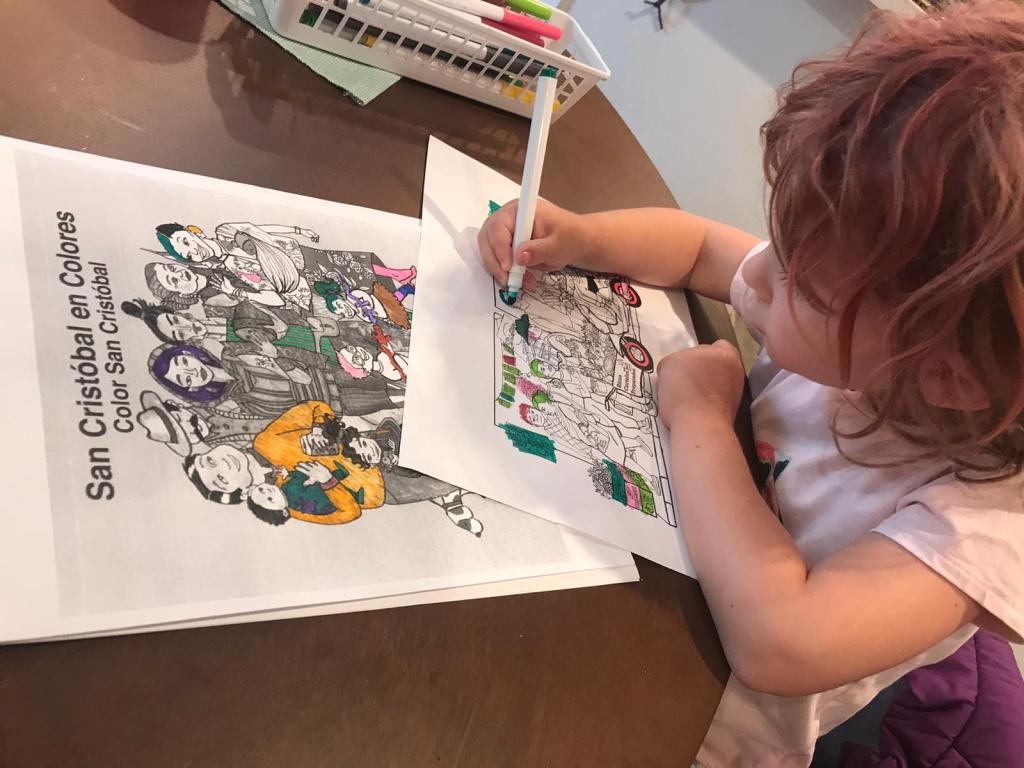
Age 10 in Nepantla
Age 4 in San Diego
Children typically throw themselves at the colouring book – I’m not exaggerating, it’s surprised and delighted me each time. In the case of Luana, age 4, nobody had colouring pens to hand when she received hers… but luckily my partner had a pencil and with this she started happily colouring the merry-go-round picture grey.
Another nice thing is that most kids can find “themselves” in one of the drawings. Buying sweet buns, riding a dolphin, chasing a pigeon, on dad’s shoulders, wearing a silly animal hat or teasing their brother – just look carefully and you’re in there.
In Mexico City, four people colouring “Vespa and fruit”
In Sastamala, colouring “Carrusel”
In Sancris, colouring “Calles Coloniales”
In Sancris, colouring “Felt animals” and “Decorations”
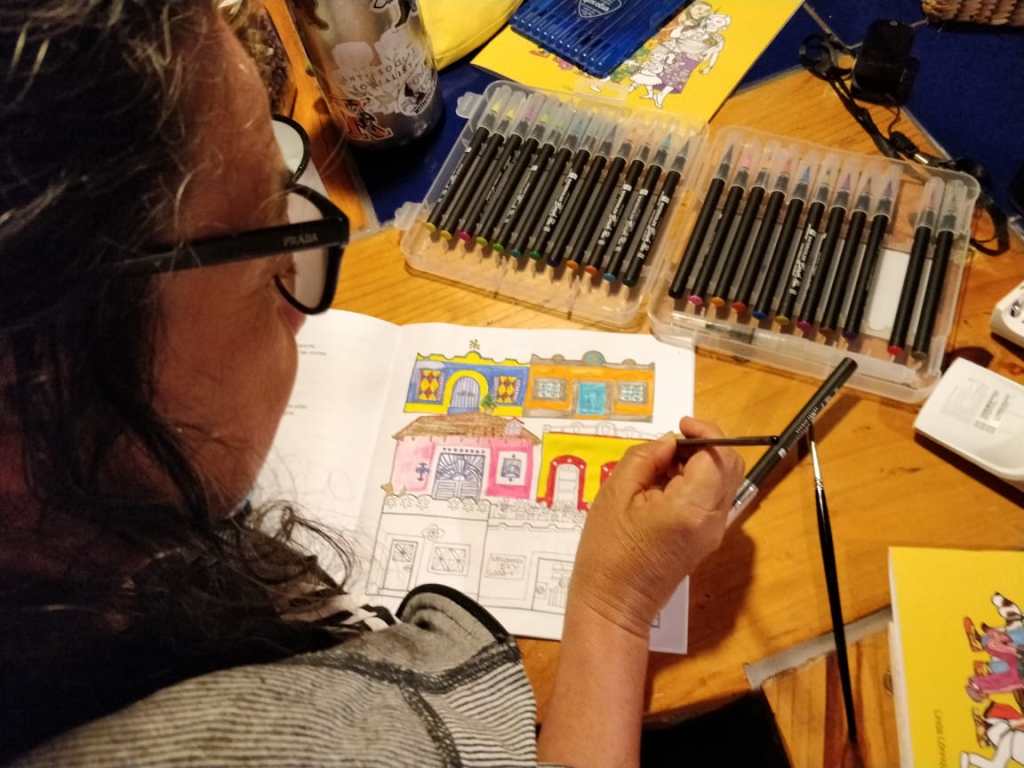
In Borgå, colouring “Colonial houses”.
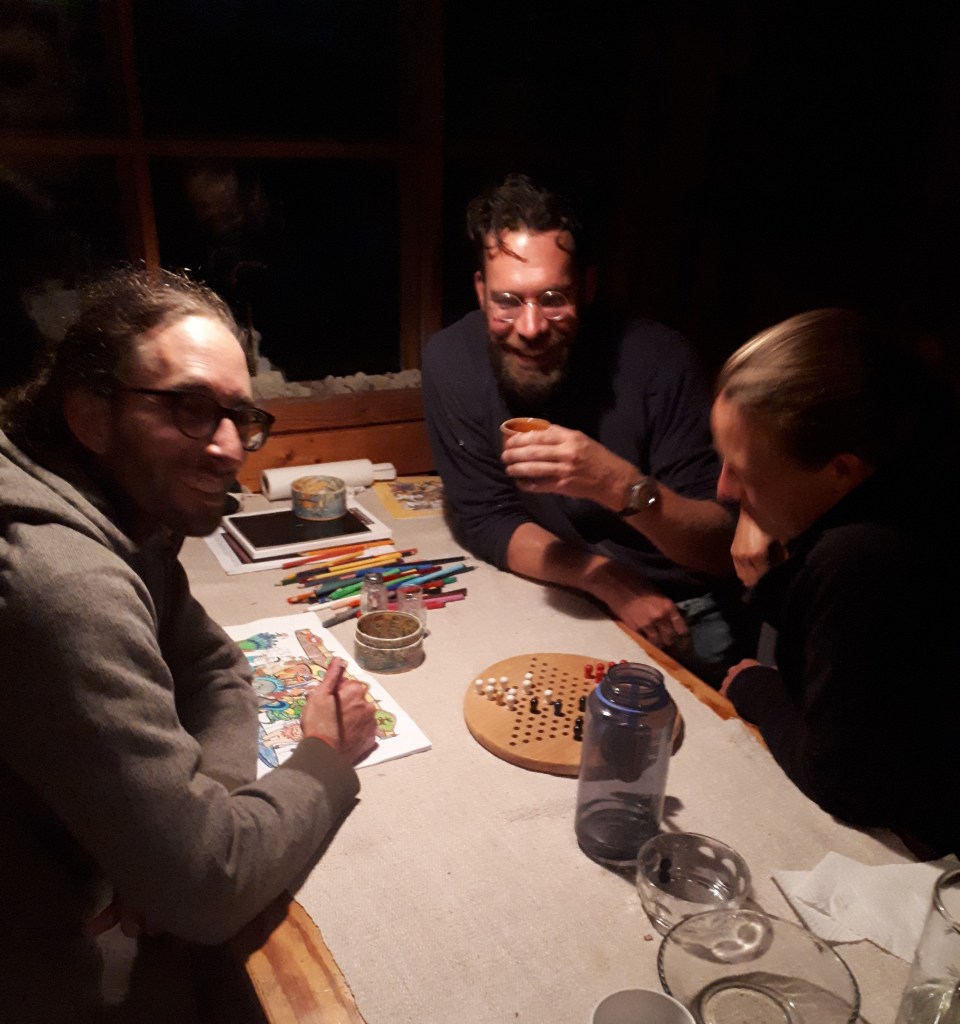
People over the age of 18 enjoying the colouring book “Sancris en Colores”.
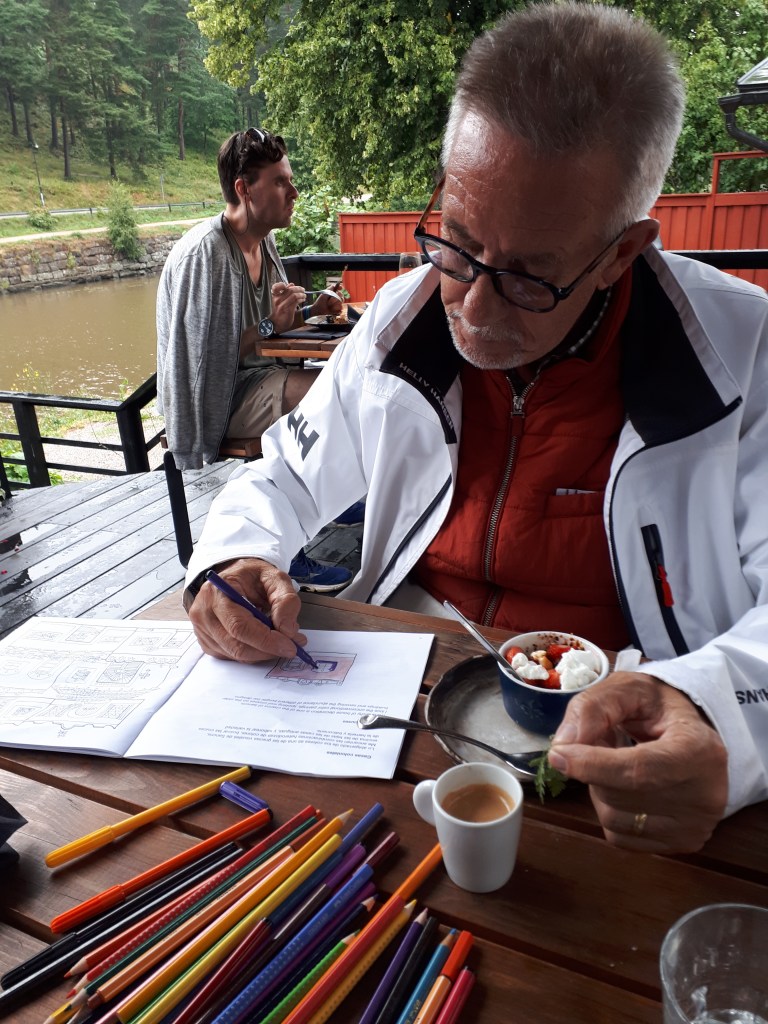
Check this out, grown people from the ages of 22 to 72 having a whale of a time colouring in Sancris street scenes! Accompanied by tea, mezcal, campari, espresso, chocolate and fruit panna cotta, but most importantly by good people!
I have this option for those who want to give “Sancris en Colores” as a gift: cheery yellow envelopes, calligraphy and stickers to seal the deal! (that is, seal the envelope.)
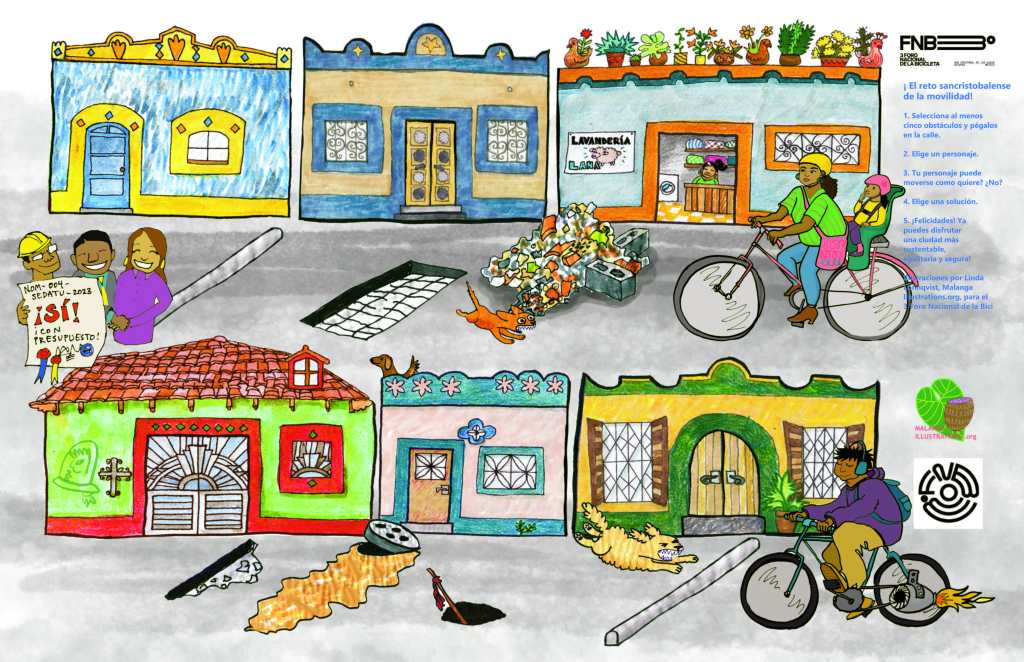
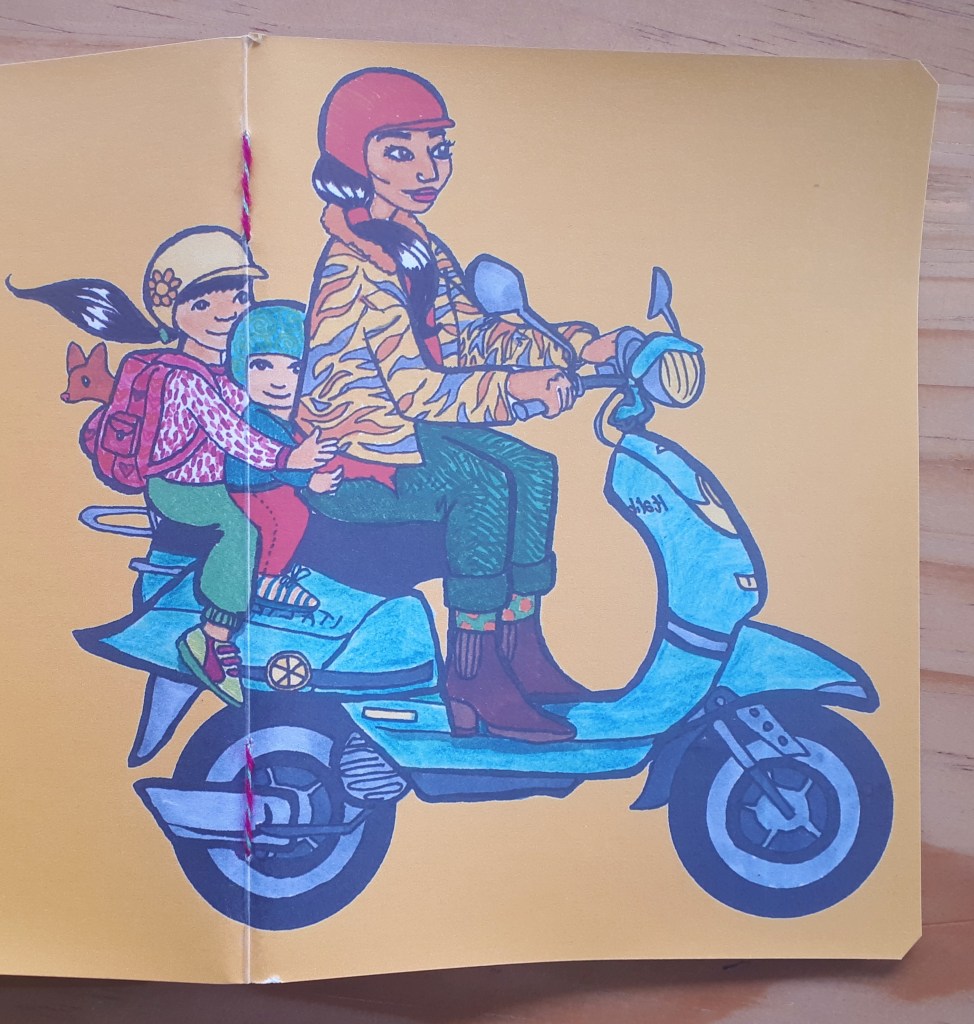
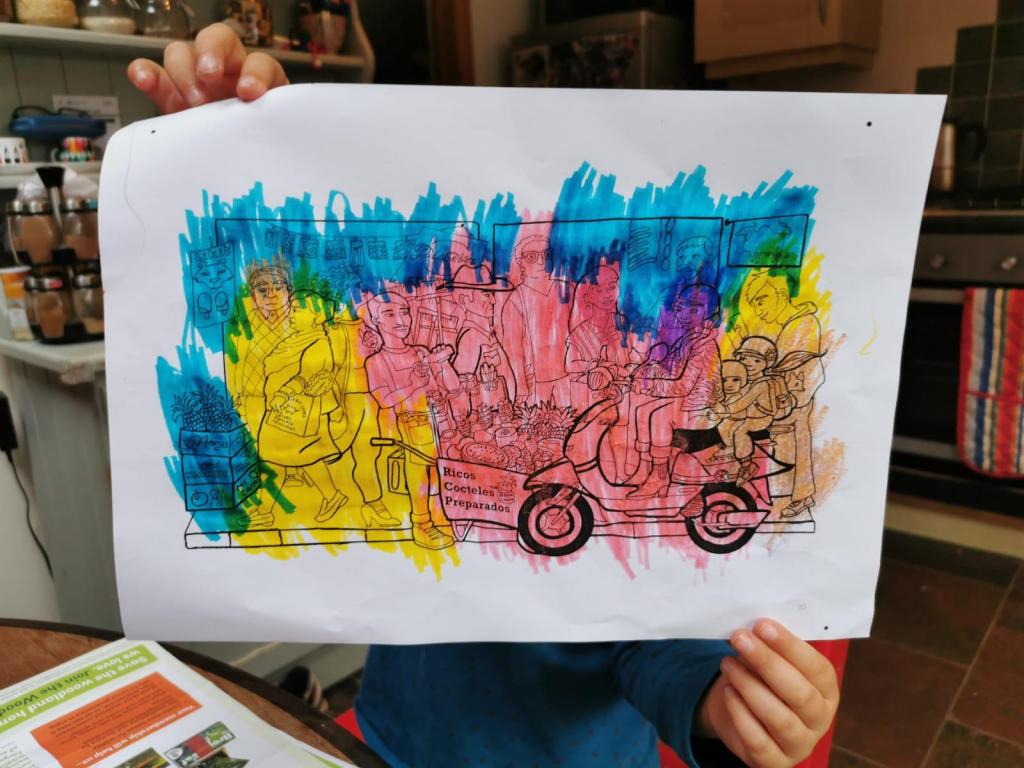
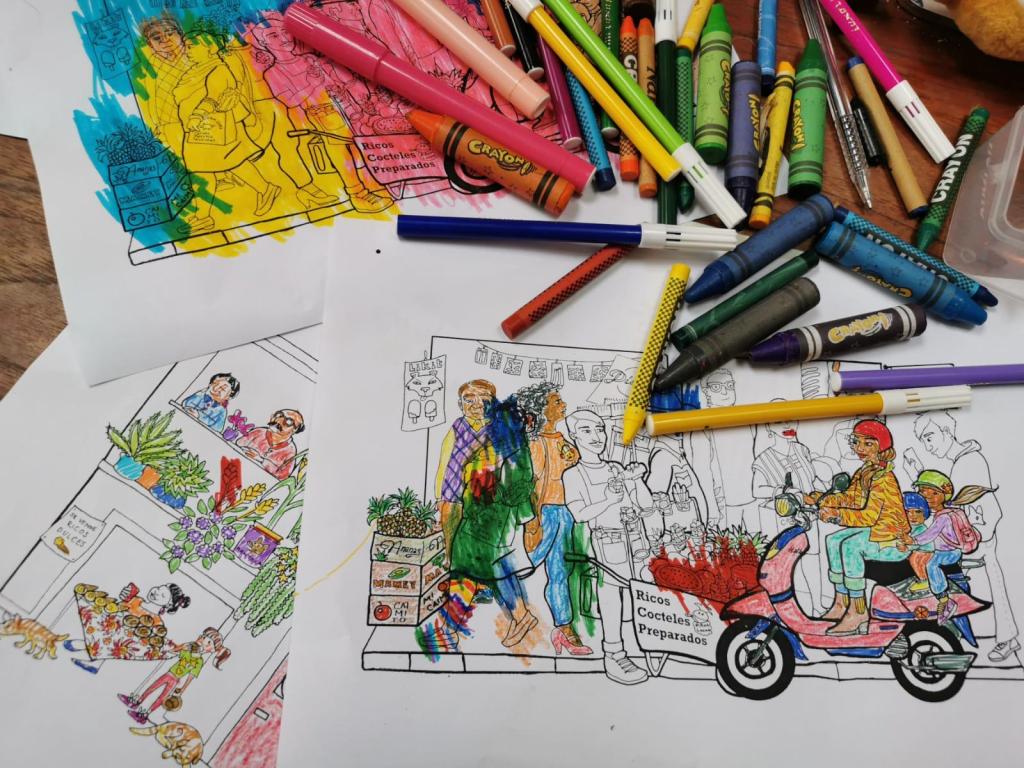
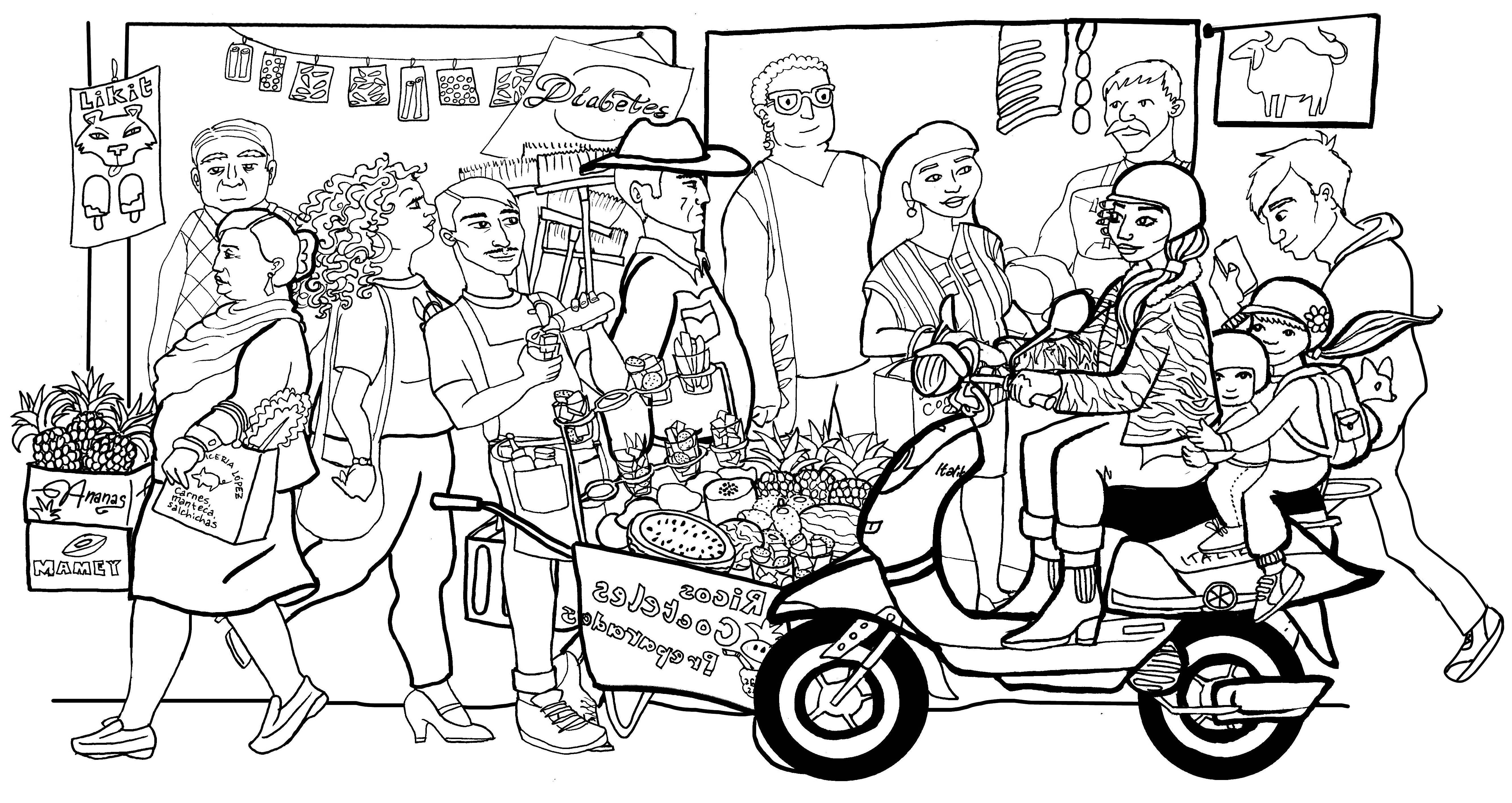
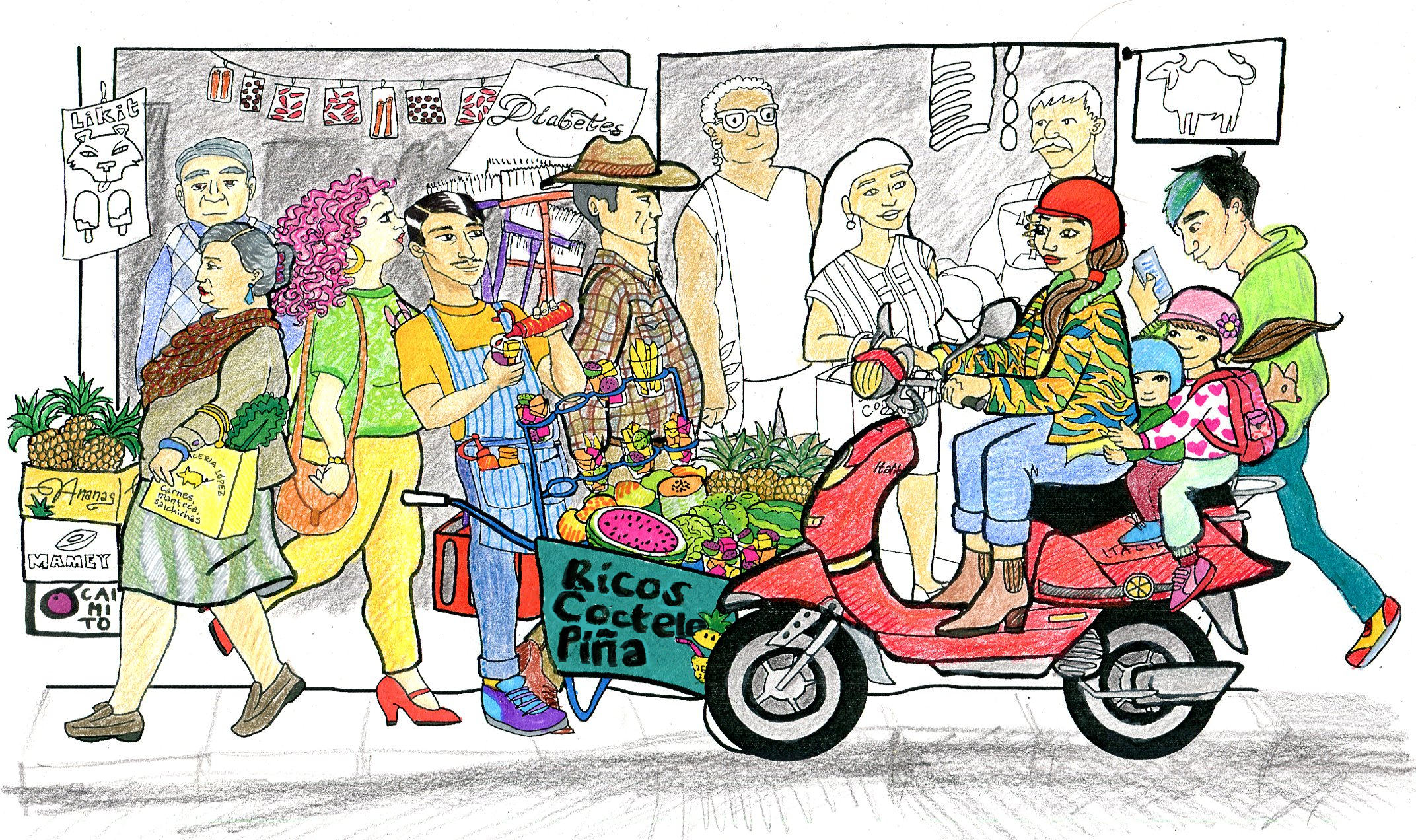
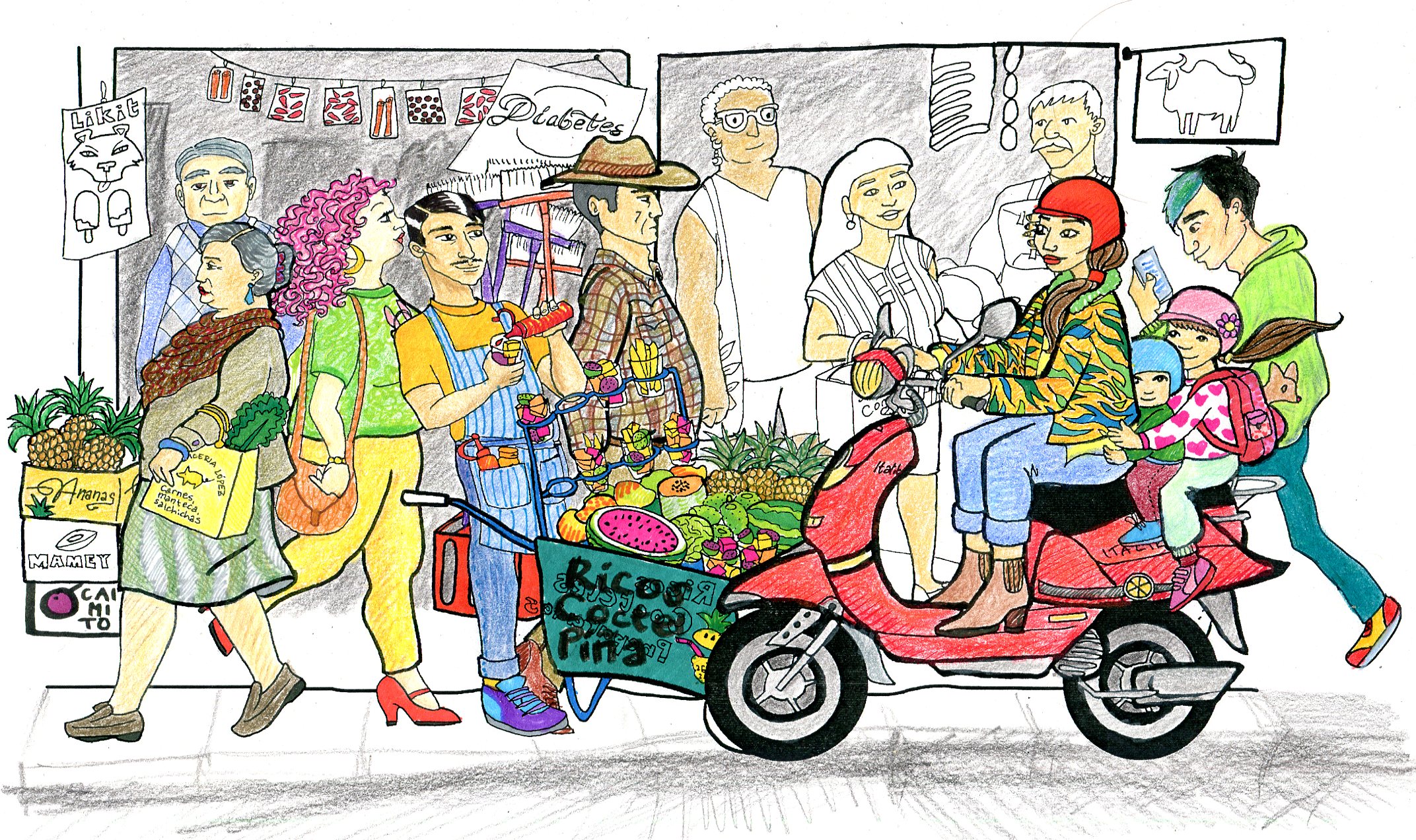
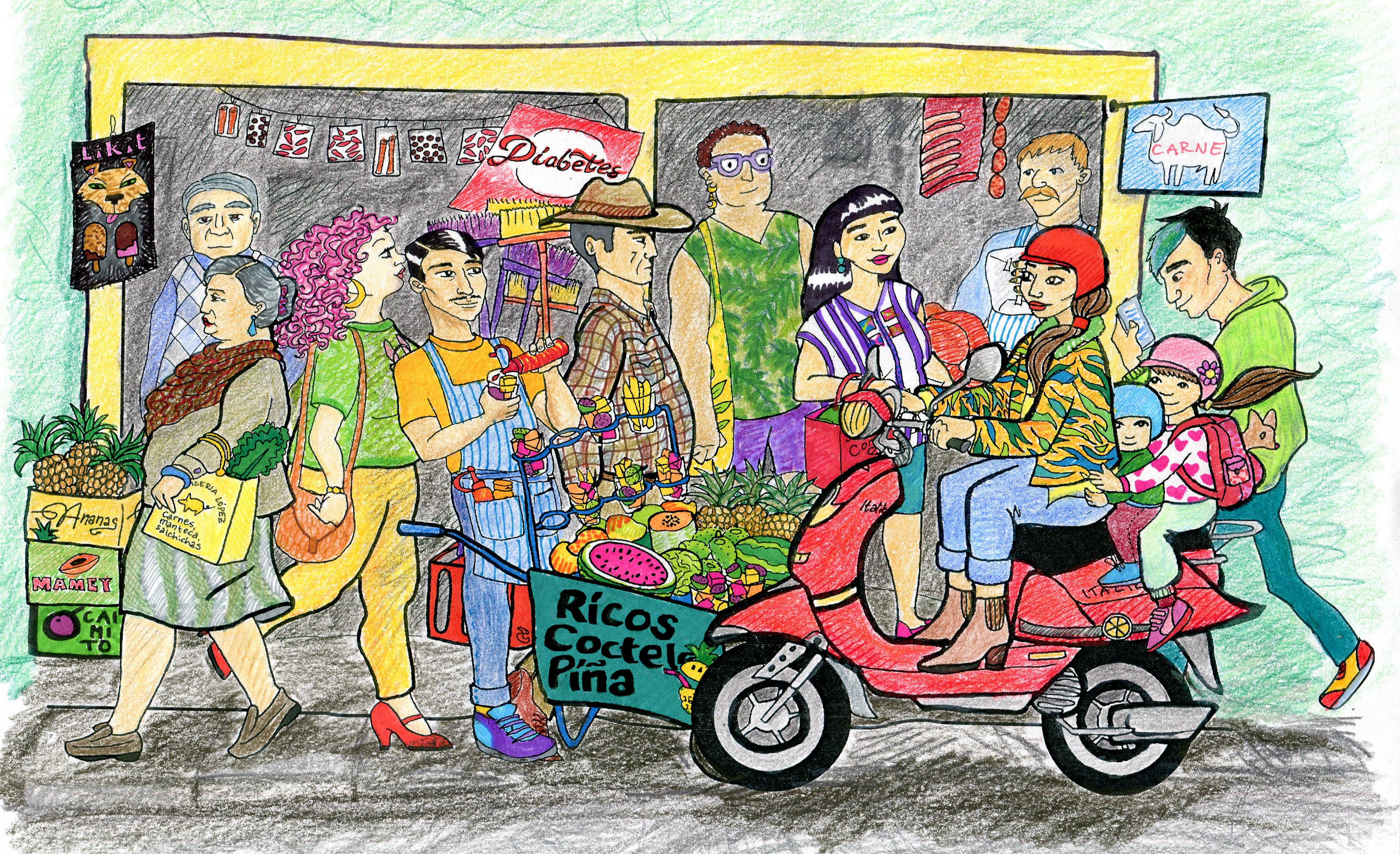
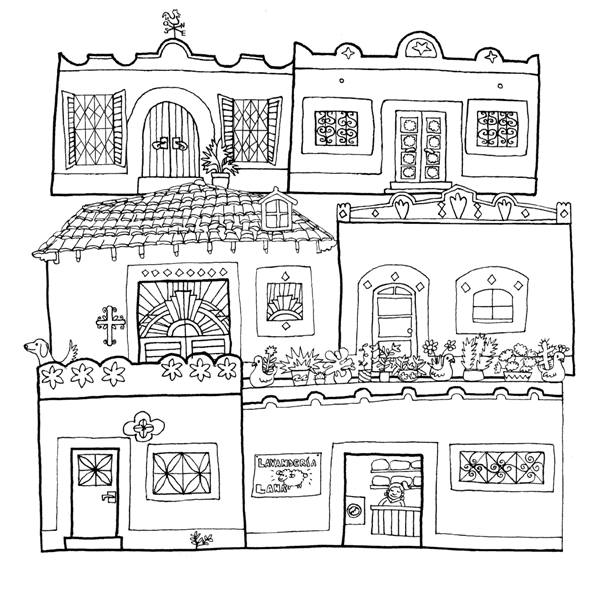
This double-spread image for my colouring book shows a typical street. I had in mind Almolonga here in Sancris, with its verdurerías (greengrocers), carnicerías (butchers) and abarrotes (corner shops). I also wanted to draw someone who pulled up next to me at a red light once: a young mum with her two kids, all on one Italika vespa, all wearing their favourite helmets. It’s typical here to see whole families on vespas but normally the driver is a man and nobody has helmets on.
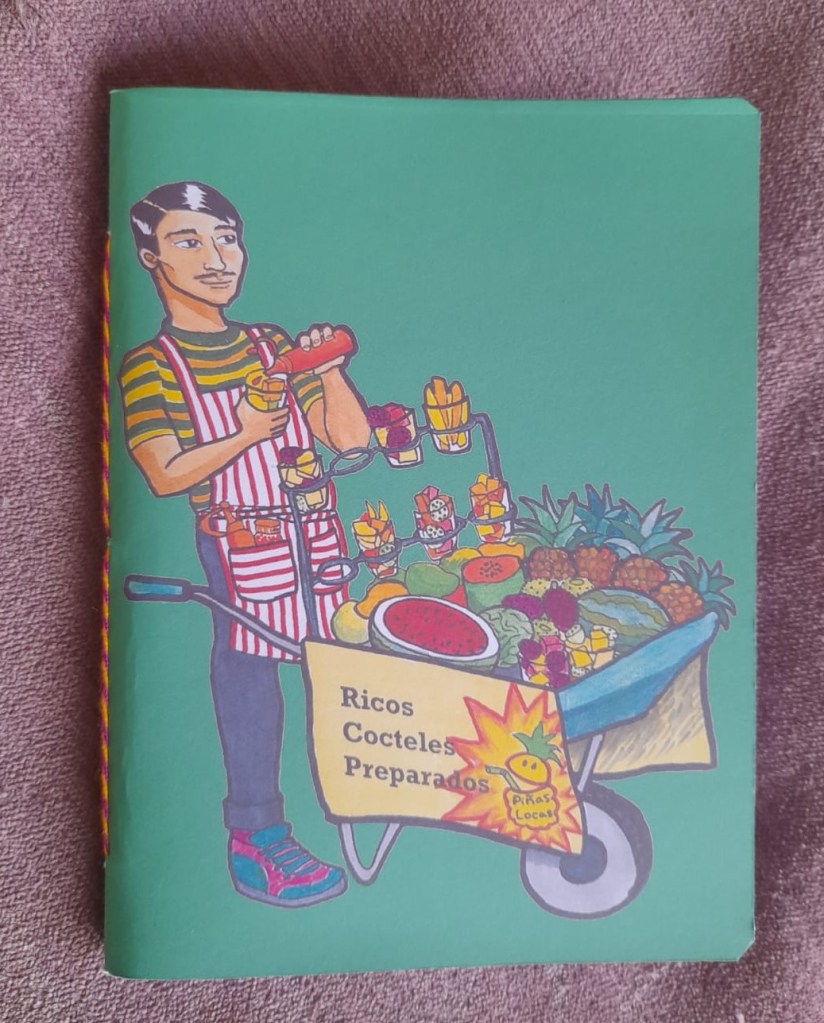
And the third element is the fruit salad guy with his portable stall (a tooled-up wheelbarrow). You see these guys on street corners selling varieties of fruit in a cup. The jicaletas in the picture are slices of jícama on a stick, with a lick of jam or chili. You see juice guys, the orange-juice people with a nifty little orange-lathe for peeling. The mango seller uses a useful no-hands innovation for mango peeling: you stick a sharpened screwdriver into the base of the fruit and peel.
Just because I’m publishing a colouring book doesn’t mean that it doesn’t come with references!
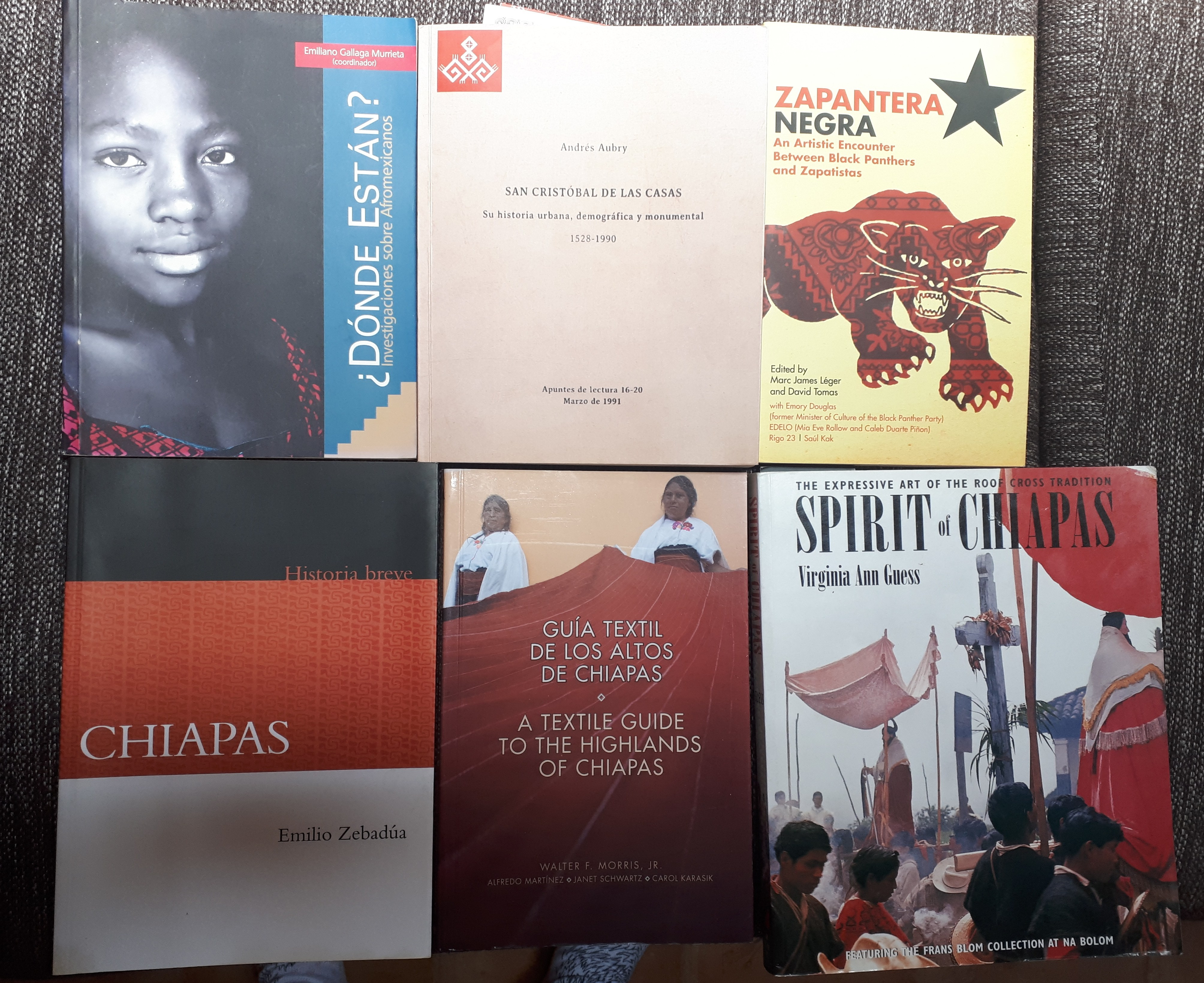
I’ve found in-depth background for my drawings in these excellent books. (You can find many of them at the bookshop La Cosecha.)
Aubry, Andrés: San Cristóbal de las Casas. Su historia urbana, demográfica y monumental 1528-1990.
Segunda edición, Colectivo Bats’il K’op, San Cristóbal de las Casas 2017.
This is a masterpiece about Sancris, covering the city’s history through its architecture, using poetic language and solid sources. Although it doesn’t try to entertain it often does, with anecdotes like the fine ladies’ church strike when the Bishop tried to stop them drinking hot chocolate during Mass. I used it for points about the orientation of the town, San Nicolás being the church of the black residents, the eggs in the stucco of the Cathedral, and la Merced (including the detail about the disturbing-sounding institution for detaining “obstreperous women” that was run on the square in the 1700s.) A lot of the decisions taken here at the city’s initial founding are still relevant today, such as the orgins and crafts of the different barrios. Since Sancris is an old, colonial city (only the second founded by the Spaniards in the Americas) we tend to look around the pretty centre and think that this is what it’s always looked like. But Aubry writes about things like the shifts in colour from the mudejar (Moorish) to the Neoclassical styles, reminding us that nothing is immutable.
Morris, Walter F; Martínez, Alfredo; Schwartz, Janet & Karasik, Carol: Guía Textil de los Altos de Chiapas, A Textile Guide to the Highlands of Chiapas.
Segunda edición, CONACULTA y Na Bolom, Ciudad de México y San Cristóbal de las Casas 2014.
This photo-packed book charts the different local indigenous weaving styles with a tongue-in-cheek commentary that comes from real earned insider knowledge. I especially enjoyed the tidbit about the cardigan being introduced to Chamula by evangelican fanatics trying to bribe their way into peoples’ faiths. I used the book for the information about the embroidery from Zinacantán. Morris et al tell us that the striking Zinacanteco flower embroidery was inspired by Guatemalan refugees who came through in the 1970s. Again, you look at something that looks traditional and assume it’s always been that way…
The flower designs on the Zinacantan family’s clothes in the colouring book are my own improvisations.
Guess, Virginia Ann: Spirit of Chiapas: the Expressive Art of the Roof Cross Tradition.
Museum of New Mexico Press, Santa Fe, 2004.
I came across this scholarly book in Oaxaca and bought it for big money. Guess does a great job of cataloguing San Cris’ roof crosses and talking to their owners and blacksmiths about them, but she doesn’t actually manage to get to the root of where they came from and what they mean.
Montaña Barbano, María M., Huicochea Gómez, Laura, & Mejía Lozada, Diana (2015). Being “coleto”: plants inside the houses of “El Cerrillo”, San Cristóbal de las Casas, Mexico.
Culturales, 3(2), 181-207. Instituto de Investigaciones Culturales-Museo, Mexicali
Here’s an article about Coleta women talking about their houseplants. Coletos is a name for the locals, but it’s fraught with meaning: it refers to the dominant class who’ve lived in San Cristóbal for centuries and claim Spanish ancestry. When the Zapatista rebellion took San Cristóbal in 1994, three civil society movements arose in response: two in favour, and the grouping los Auténticos Coletos, against. Our other neighbours are known as Sancristobalenses, meaning locals who don’t consider themselves coletos, and foraneos, or “outsiders” like me who come from other parts of Mexico and the world. The article about the plants also gives insights into how traditional houses are organised, with their central patio for decorative flowers and their backyard “sitio” for urban farming – and how the subdivision of houses as families grow makes this trickier.
I haven’t read these other books yet but they are very intriguing. Zapantera Negra contains stories by Black Panthers who have visited the Zapatistas in solidarity – the urban-rural clash came out very vividly in one of the testimonies I read, with the aged Black Panther being expected to ford streams and balance on narrow mountain paths. ¿Dónde Están? or Where Are They? is about Afromexicans. You can buy the PDF print-at-home version of the whole colouring book on my Gumroad page.
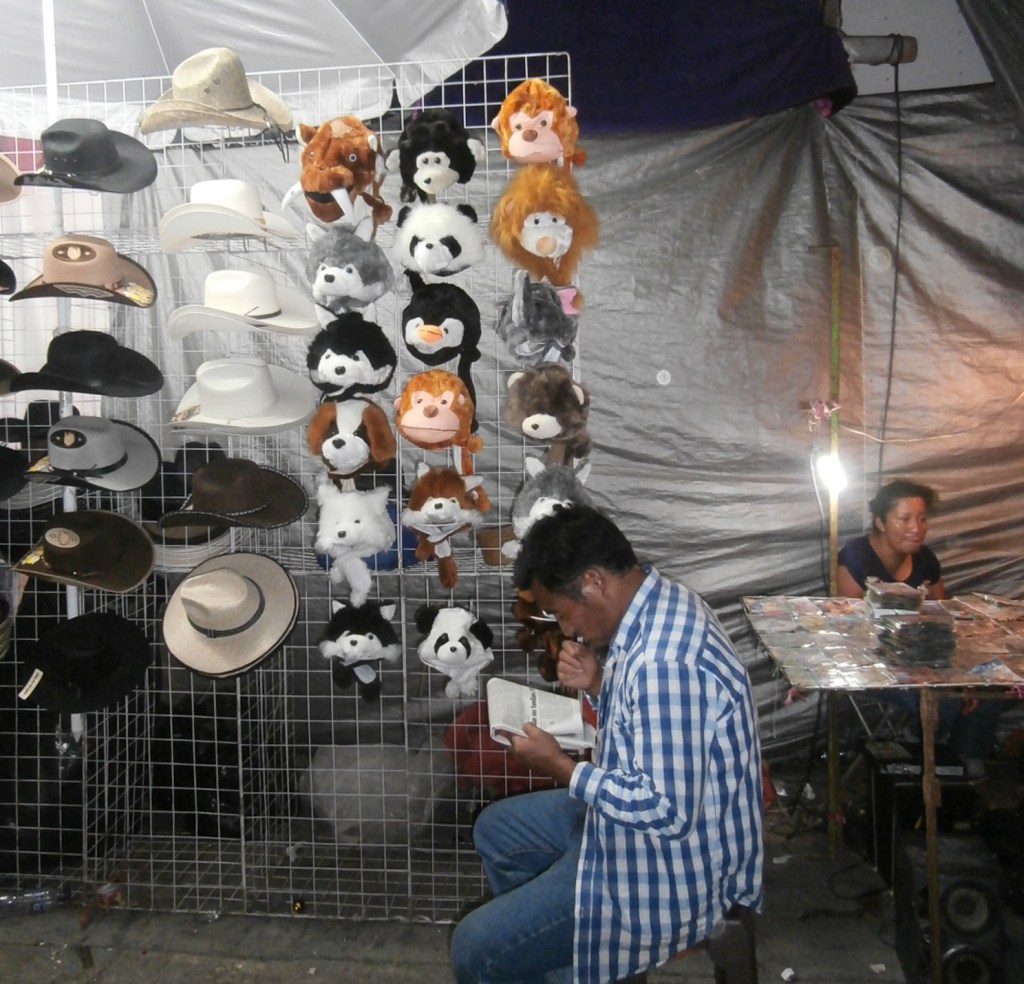
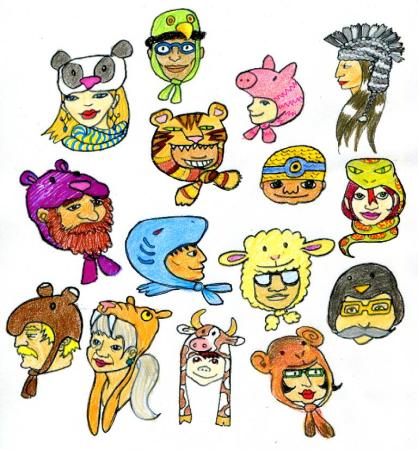
Here in San Cristóbal de las Casas, 2200 m above sea level, when it gets cold it gets cold. The locals seize the opportunity to sell shawls, hoodies and knitted hats to the unwary tourists who left home in the sunny afternoon without enough layers… well, knitted goods and these synthetic, imported animal hats. You sometimes see whole families where everyone’s bought a different hat. Very sweet! I wanted to include this in my Sancris colouring book and now you can also decide which colour the sheep, canary and snake hats will be.
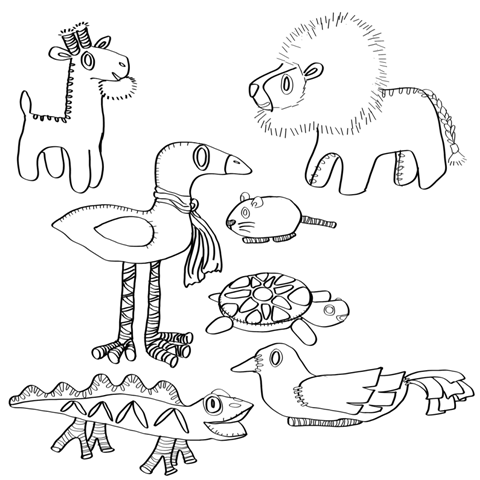
These felt souvenirs, made in neighbouring Chamula, are a ubiquitous sight here in San Cristóbal de las Casas. I find them very cute and endearing, even though they aren’t exactly cuddly. I prefer the ones made from rough woollen felt rather than the bright synthetic felt you see more and more. The animals sometimes have bright red rings around their eyes, giving them a hungover or even deranged look. As part of the great Sancris colour anarchy, you can colour these in any (and I mean ANY) combinations you like, each panel a different hue, and remain totally true to the original style. I wanted to include these animals in my Sancris colouring book – I originally got the idea of the colouring book when I started notcing the subtle differences in the Sancris felt giraffes, and thought that it would be fun to be able to colour them to my liking.
I have a soft spot for La Merced plaza in San Cristóbal: you often see people being free and active there, doing sports and smooching their boyfriends, like in European parks. We in the capoeira group CECA used to train* on the outdoor stage at La Merced, watching the clouds lit up by the setting sun while stretching. In the photos we are practicing a sequence with Treinel Cavera (in the rasta-striped knit hat). The capoeira, breakdancing and dog-walking is what I had in mind when I drew the image of la Merced for my Sancris colouring book.
This is a very exciting project for me – something I’ve been chipping away at for several years – an expression of the visual marvels of my adopted home town, San Cristóbal de las Casas in Mexico. “Sancris” as it’s known has an abundance of picturesque detail just in its streets and squares: multicoloured colonial-style houses, indigenous inhabitants in embroidered dress, dignified ladies in shawls, skilful graffiti, hippies with spectacular clothes and tattoos, imposing churches, two gangs of breakdancers… The more I look the more I want to draw it. This colouring-in book is a way to share the joy over the Sancris street visuals.
My nearest and dearest get to enjoy illustrated presents. If they’re to your liking, I’d be delighted to customise similar things for you too!
1. Mother’s Day paper doll
My siblings and I collaborated on a paper doll of mum, with outfits that she likes in real life… or imaginary ones. This was fun since all of us contributed, siblings, inlaws and nieces. Even though we live in different places, we delivered the PDF files to be printed at home by dad on stiff paper… and my sister-in-law glued the doll to a strong magnet so mum and her outfits can be displayed on the fridge door, as befits kids’ art. This could be taken further by printing everything on a thin magnetic sheet, making it easier to change outfits.
Doubles as a Mother’s Day card…
Party outfits!
Streetwear, some to be coloured according to the model’s tastes
Pride of place
2. Ex Libris stamp
My husband owns many books and he asked for an Ex Libris stamp for his birthday. I made him some sketches and we developed the design together, even though it meant that I lost the element of surprise. The element of satisfaction is more important! I had the stamp made at one of San Cristóbal’s several rubber stamp shops.
The Ex Libris stamp
The birthday card to go with it.
Ex libris design with Mexican plants
The card to go with the rubber stamp.
3. Personalising an online gift
In order to get that element of surprise, I gave my husband another present: an upgrade to Spotify Premium to stop the regular comments by Spotify’s friendly-enough-sounding, yet enervating, adverts guy. To make it a bit more personal than just a pop-up in the app saying “You now have Premium!”, I made him an accompanying card:
Spotify Premium card.
4. Personalised colouring-in pages
Favourites with small girls: colouring-in pages featuring themselves in magical or adventurous situations. I’ve made these for nieces and god-daughters to good effect, and they can be revealed at birthday parties for example, letting everyone colour in the birthday girl/boy…
Sketch of the day: a woman about to start selling deep-fried snacks. She was carrying her stock, hot sauce bottle, trestle and toddler while having a phone conversation. This was in San Cristóbal’s central plaza.
For the past three years I’ve been chipping away at a little project of mine: a colouring book featuring street scenes from San Cristóbal de las Casas in Mexico, the picturesque town I live in. There’s so much detail and colour going on that it’s hard to take much in while we stroll around… apple blossoms peeking over a wall; a house painted in turquoise and peach; Chamula women’s blouse embroidery fashions; a courtyard from the 1500s; a garage opened to sell multicoloured pastries; the breakdance crew at La Merced; street dogs rolled up to sleep; the spectacular piercings of an Argentinian hippie.
With this colouring book, I want to give us fans of Sancris a chance to sit down and contemplate it, one scene at a time. And here we can finally paint a house in magenta and purple.
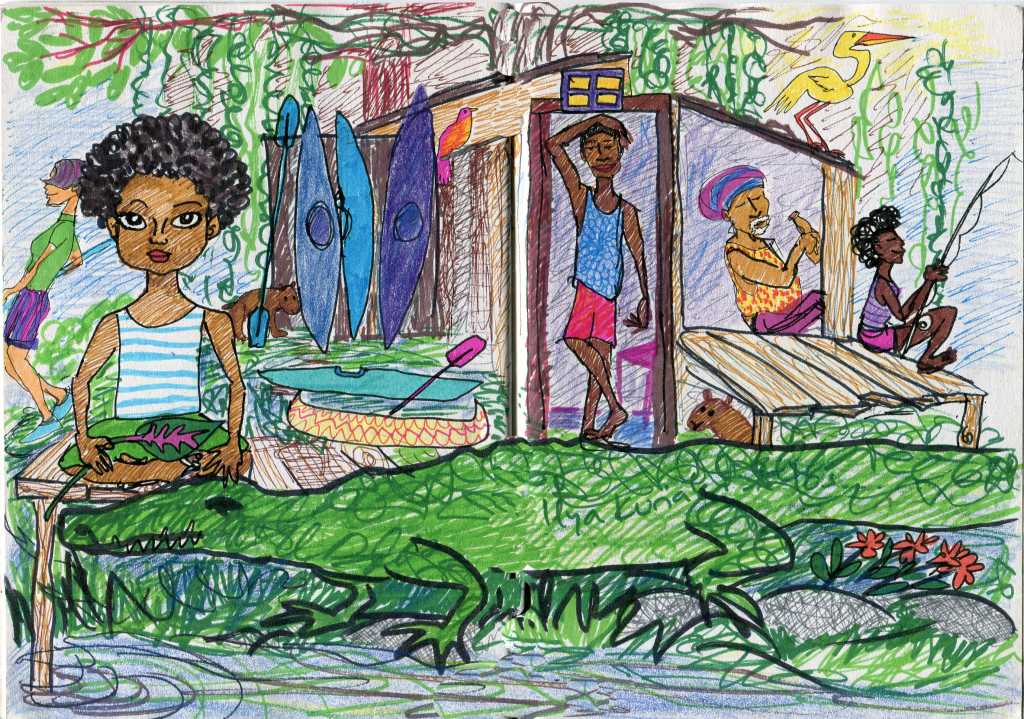
A friend was telling me about the swamps in Argentina and inspired me to draw. Most of the imagery may actually be from the movie Beasts of the Southern Wild.
It’s great to be able to liven up books with illustrations. I’ve illustrated books for NGOs, a Church organisation, and academia.
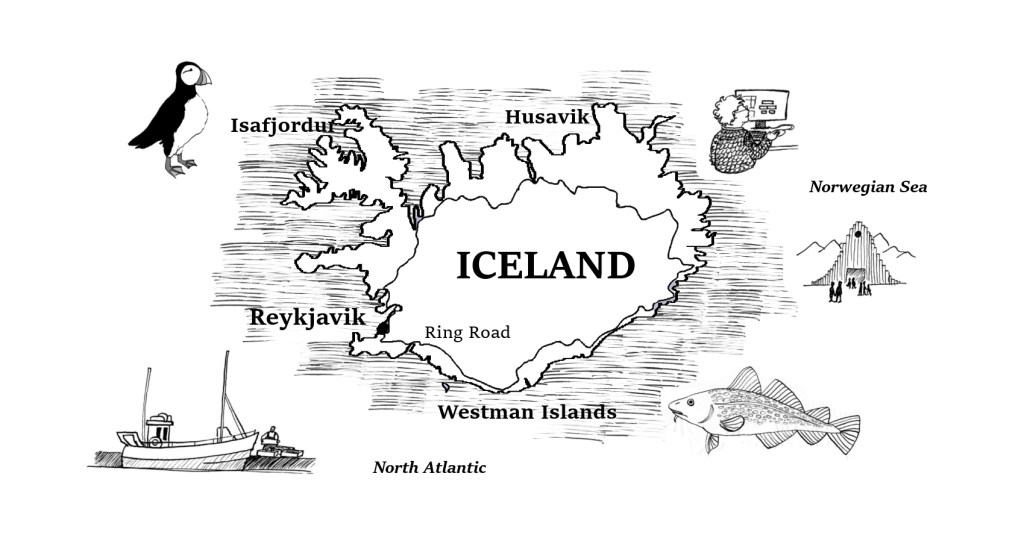
1. Sustainable coasts maps
For the book “Seas of Hope“, ocean researcher Dr Andrea Saenz-Arroyo asked me to draw old-style ink maps showing the places mentioned in the text, and an iconic drawing.
I did these with Victorian-era tools, that is, nib and ink. Andrea gave me photos and ideas of what she wanted; then I presented her with the drawings. Then she selected which ones she wanted on her maps. The other drawings can be sprinkled in the text to lighten up the pages.
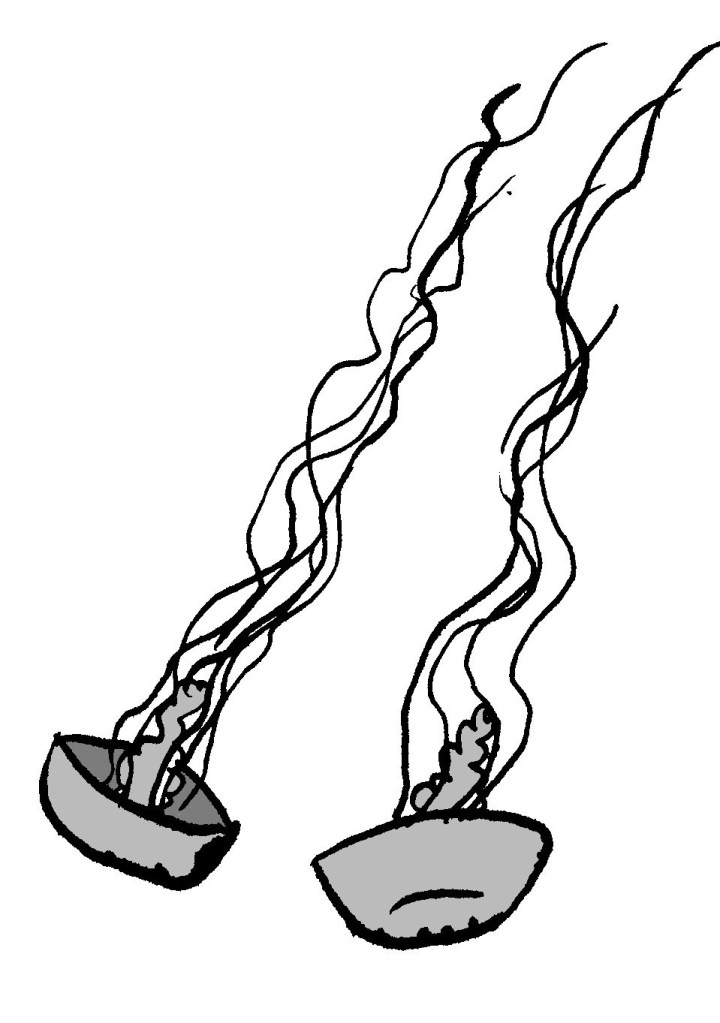
Jellyfish Mussel harvesting in Galicia
2. Abstract concepts for an NGO
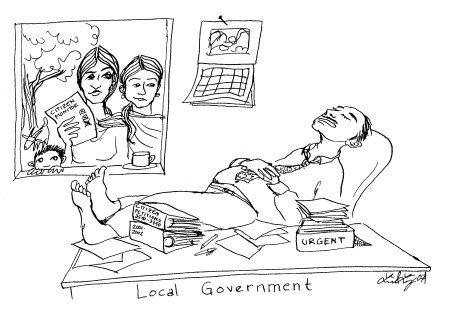
Monitoring and evaluation, or M&E, is a simple concept (working out whether you’re going according to plan, and whether your work is having an effect) that tends to become more complicated the more we try to simplify it. I spiced up INTRAC’s book “Rethinking Monitoring and Evaluation” with some irreverent illustrations in nib and ink. In this case it helped that I was also editing the book – familiarity with the messages makes it easier to come up with striking illustrations.
Citizen monitooring of local government performanceThe struggle for M&E direction
3. Colouring-in pictures for an activity book
The youth section of the Finnish Evangelic-Lutheran Church, Nuorten Keskus, commissioned an activity book to introduce young people to some of the less “famous” Bible stories. They chose ten verses that are relevant to everyday life, to make us think more deeply about forgiveness, exclusion, loss, identity… The activities include games, podcasts, meditation texts and colouring-in images by Development Cartoons. The idea is that the participants could colour during the listening parts of the programmes.
For me some of the images were straightforward to draw – Genesis with its animals, for example – but others like the Good Samaritan or Psalm 139 (about how God knows us) were trickier. My brief was to give a present-day interpretation to some of the drawings, so some feature bronze-age life and others, hoodies and smartphones.
GenesisBeing an outsider: the blind man, and school bullying.
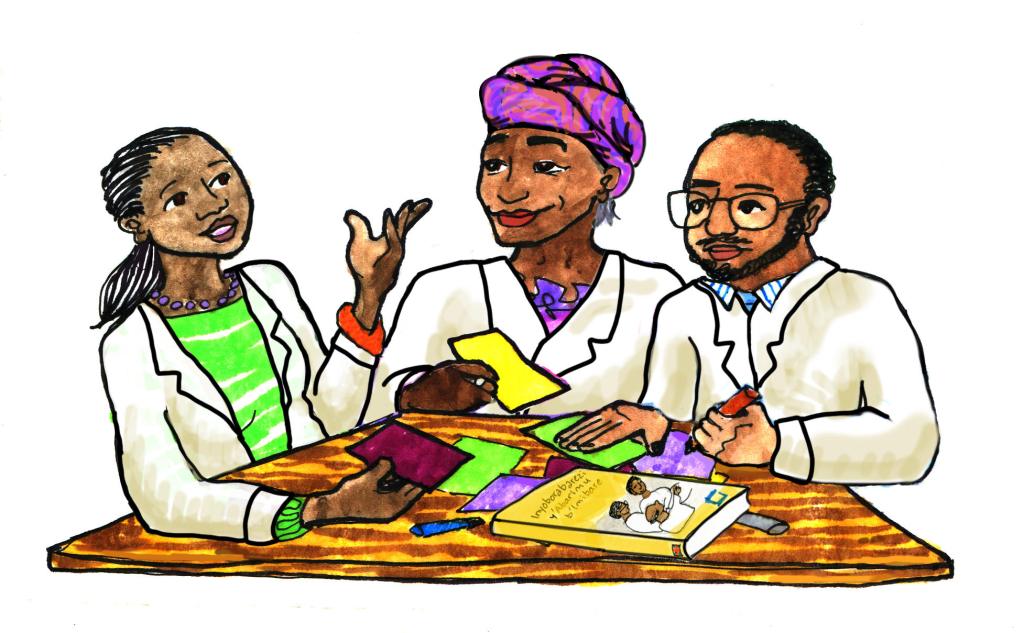
Another enjoyable commission: painting some pictures for the 2020 calendar of the Building Learning Foundations education project in Rwanda. The project is a large operation, running communites of practice and self-study modules for teachers; printing books and ordering mathematics learning aids, and much more, all with the aim of improving the skills of 2.6 million schoolkids in English and mathematics!
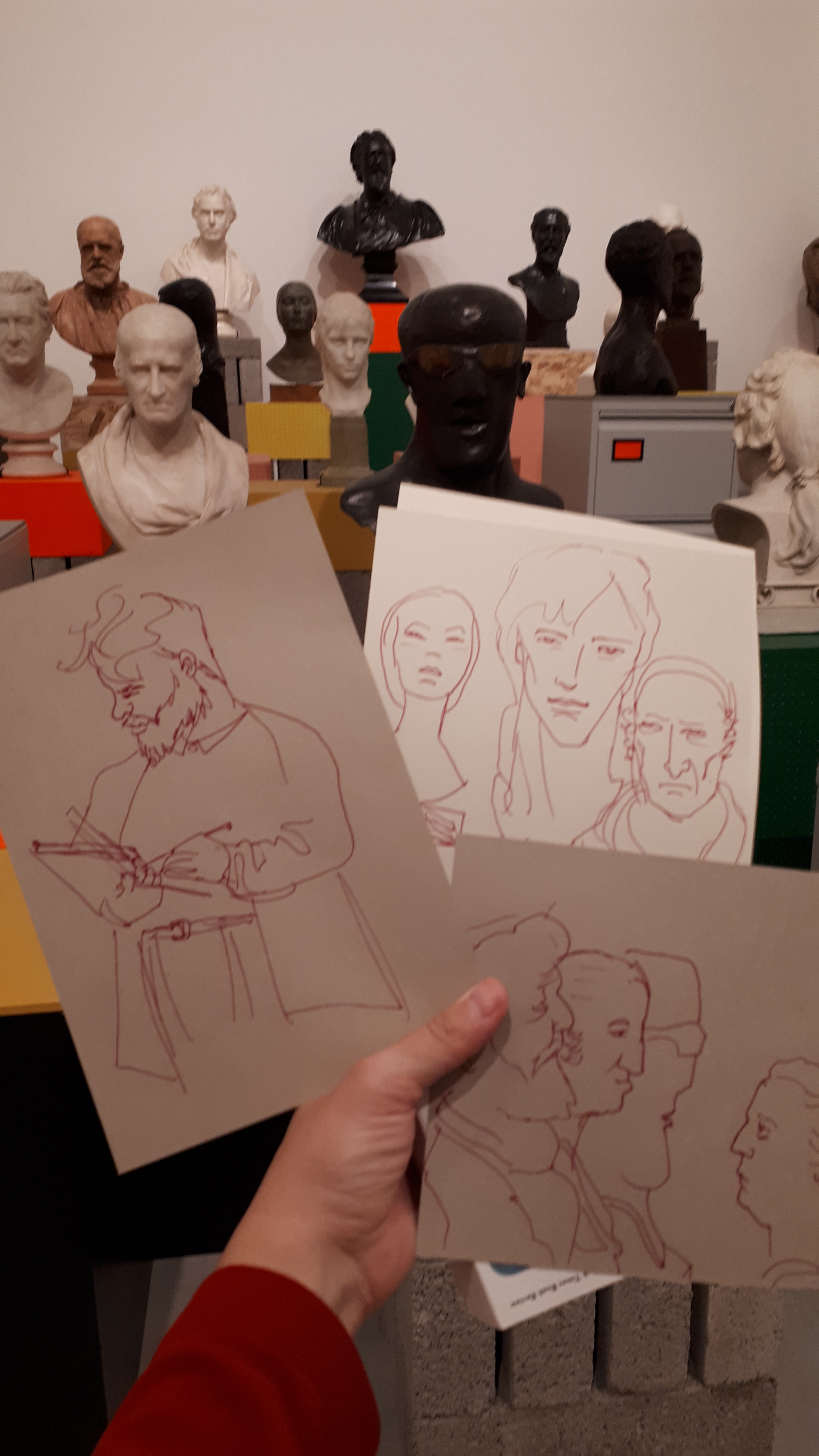
…both marble and plaster busts, of course. The Royal Academy of Arts has a nice feature – a room where they’ve busted out (ha) (sorry) their old …busts, and made them into a pleasure/education feature by adding benches and free paper and pencils. You can sketch the busts and practice drawing. Or if you’re me, you sketch a few busts, and a few sketchers.
The mauve Uni-Ball is a very unforgiving pen for sketching, especially moving tragets like the bearded art lover. But the HB pencils provided by the museum were even less satisfying when I used them for the readers on the bench.
These guys stood still for their portraits… very still.
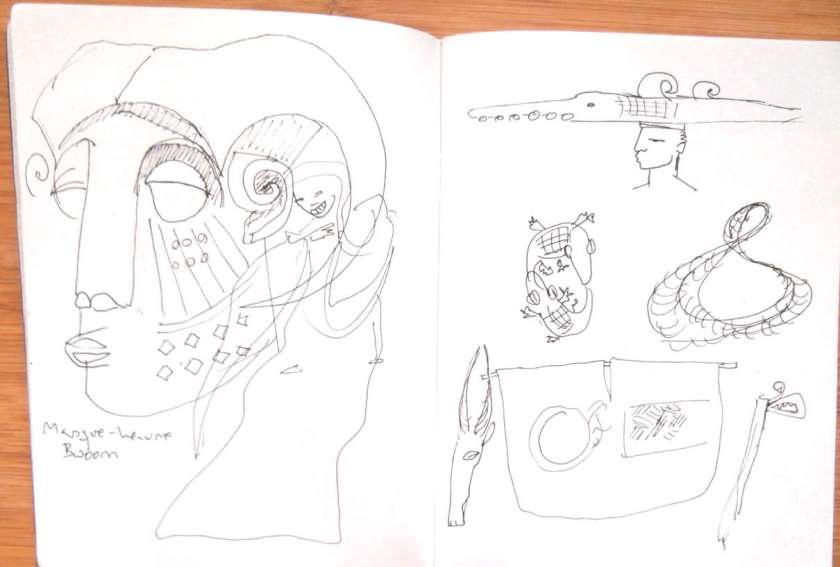
I was lucky enough to see Paris a while ago, and sketch! It turned out to be a fantastic way to appreciate the art on display at the Musée du Quai Branly. When you draw, you have to watch carefully.
Sketching is a brilliant way to really see things in a museum.
The Café Industrial turned out to have a similar colonial vibe…
Palm trees, brass, beautiful waitresses and topless natives in the paintings.
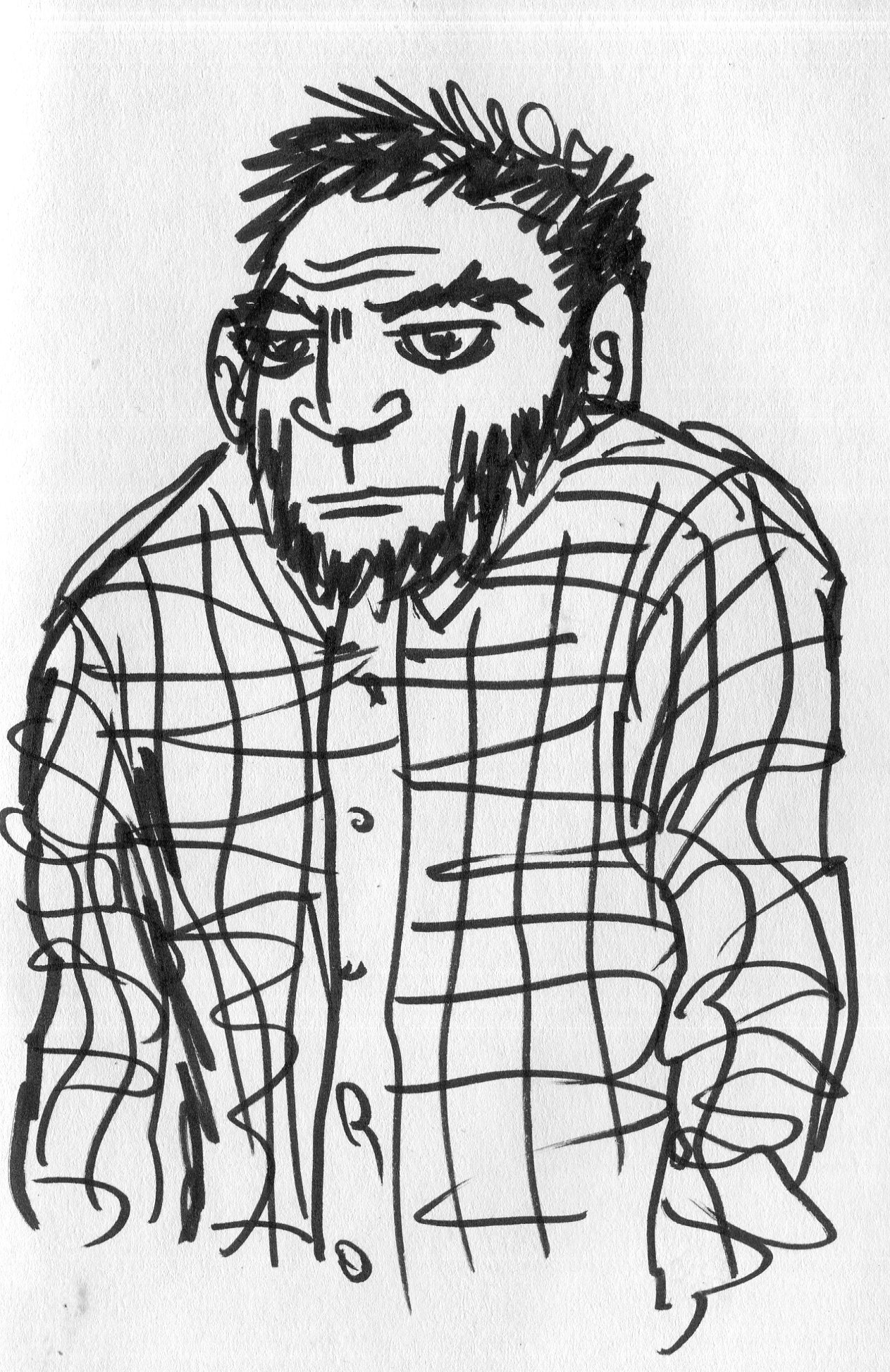
A small and delightful project: drawings for the office swap meet (which I’m also organising). My dayjob office is by far the most diverse place I’ve worked, but there are still subcategories of colleague. So I wanted to draw people who’d look like real colleagues… but not exactly like any one colleague. I think one or two (or three) did end up being very close to real individuals. I’ll see if they spot themselves!
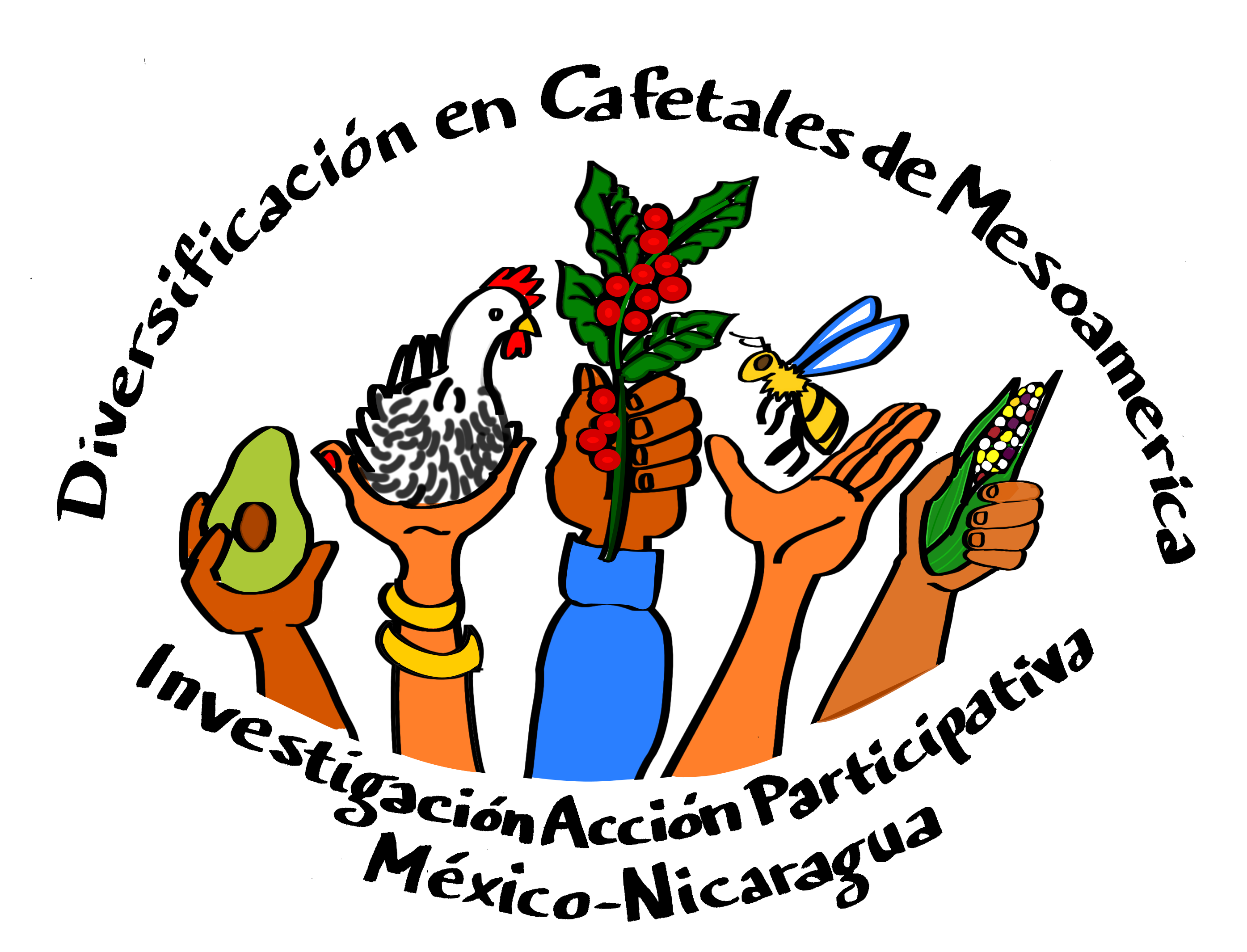
I’m part of the excellent participatory action research project “Diversification strategies in smallholder coffee systems of Mesoamerica” where we find out what Mexican and Nicaraguan coffee farmers live off – aside from coffee. 2018 was a bad year for coffee farmers: the price of a pound of coffee fell below one dollar in August. Considering climate change, volatile prices, competition and rigging of the coffee market by Wall Street, coffee farmers do need other income sources too – and this project is about finding out which ones make the most sense for them. Between four universities, two coffee cooperatives, and my NGO the Community Agroecology Network, we’re asking coffee farmers about their vegetables, apiaries, fruit trees and milpas; what they sell, buy and exchange; during which months they’re short on money and what greens they eat then… It’s fascinating and I’ve certainly developed lots of respect for my coffee grower colleagues who marshal small armies of coffee pickers during the harvest, getting organic, top-quality coffee to the roastery and their clients overseas.
As a welcome bonus my team asked me to design a logo, that could also be printed on the project t-shirts. They gave me a draft:
I made a new version:
I presented the sketch to my colleagues and took comments:
The next version, a vector drawing done in Inkscape, was like this… among other things, I’d forgotten to add an arm representing the milpa:
And after changing the colour of the chicken and, by popular demand hand-lettering the text, we have this:
More croquis from the EZLN International Festival for Women who Fight! (Although the verb luchar in Spanish in this case means “struggle” as in “the ideological struggle” , rather than actually fighting. It also means wrestling, as in lucha libre. Fun with etymology.)
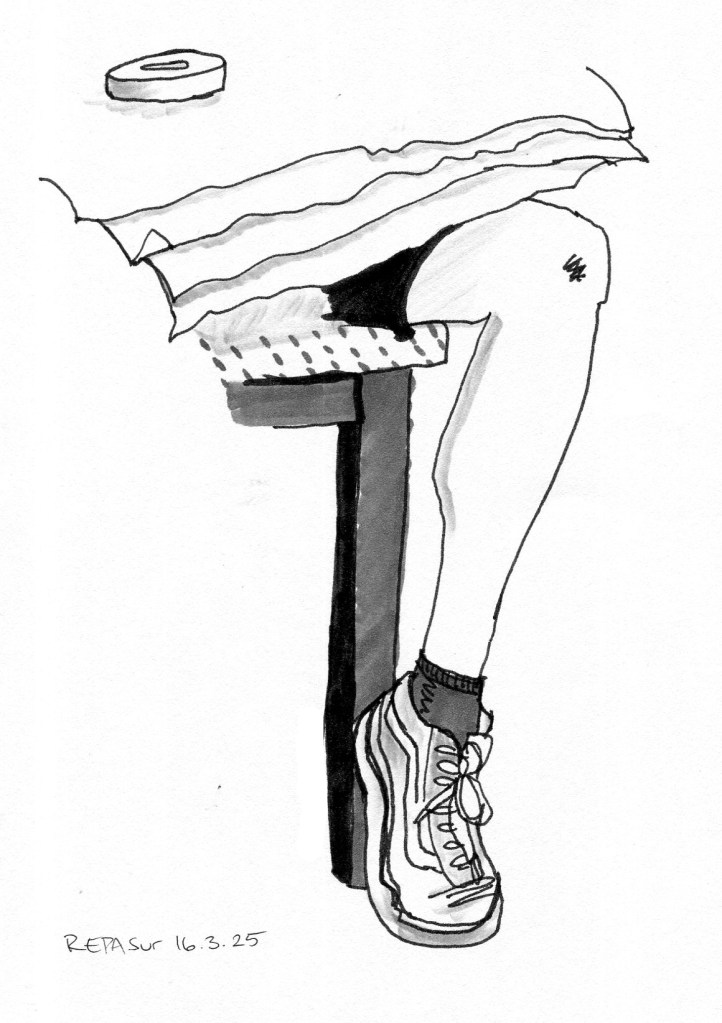
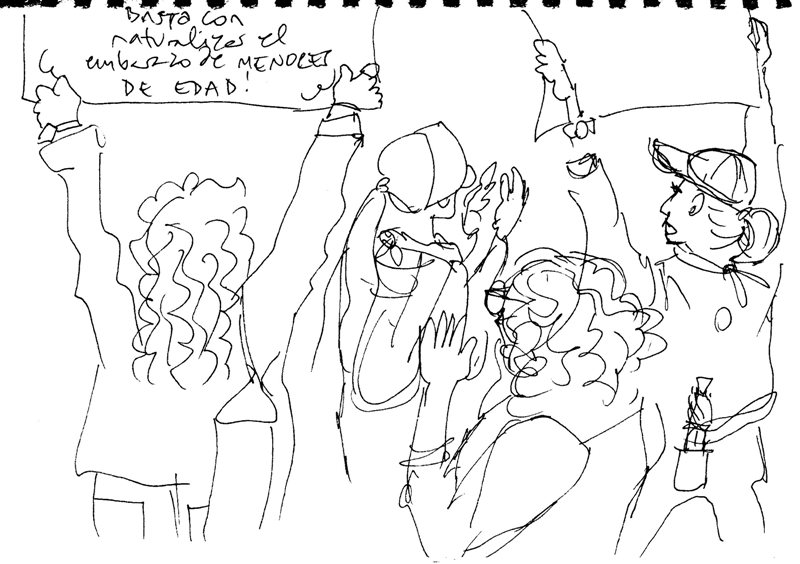
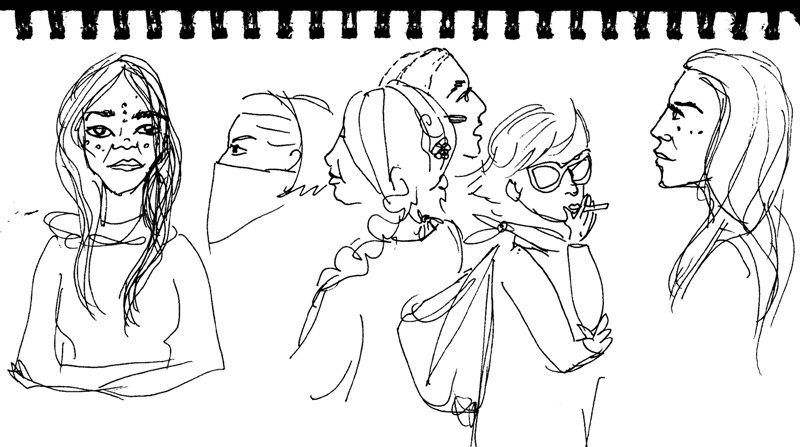
I drew these women during a really confused lecture on “Dismantling The Man into Things”. Hence the sceptical faces.
More sketches from the women´s encounter in March.
I drew these during talks on masculinity in childhood (halfway through which two boys in the audience started shooting us with imaginary pistols) and on social organization as love. There was a whooooole range of talks, some weirder than the rest…
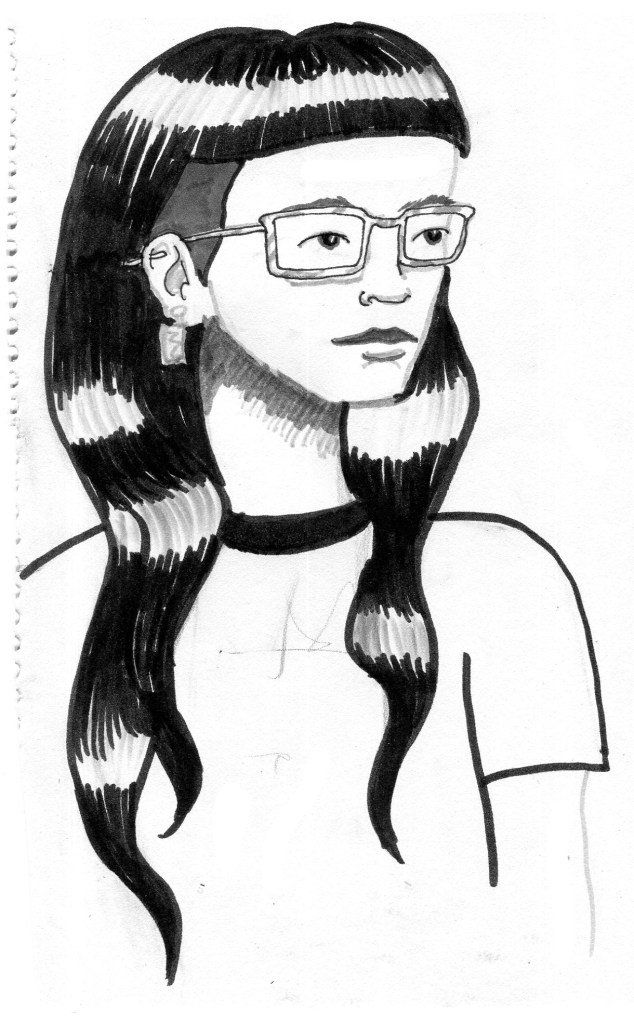
These croquis are of varying quality depending on how still the “model” was and how much time I had to draw her. I chose faces that interest me.
7000 women make a noise like a low-frequency beehive. Every morning when we crawled out of our tents in the freezing, clear air, the hum was already going and it kept getting stronger as more people woke up and started looking for breakfast. The festival was organized by the Zapatista movement and hosted by Caracol 4 in Morelia. Nobody knew quite what to expect. I arrived with a contingent from Ama-Awa, the women agroecologists, carrying tents, food and water for three days. We were pleasantly surprised to find abundant flushing toilets, food outlets (although the queues did stretch out), showers and drinking water taps… all without the presence of a single man. And no alcohol either. My friend’s ten-year-old daughter could attend any session she liked without her mum having to worry. And there was plenty to choose from, ranging from lectures on land rights, Indigenous lesbianism, masculinity in childhood to art, dance and theatre and workshops for making reusable menstrual pads. And a Colombian batucada.
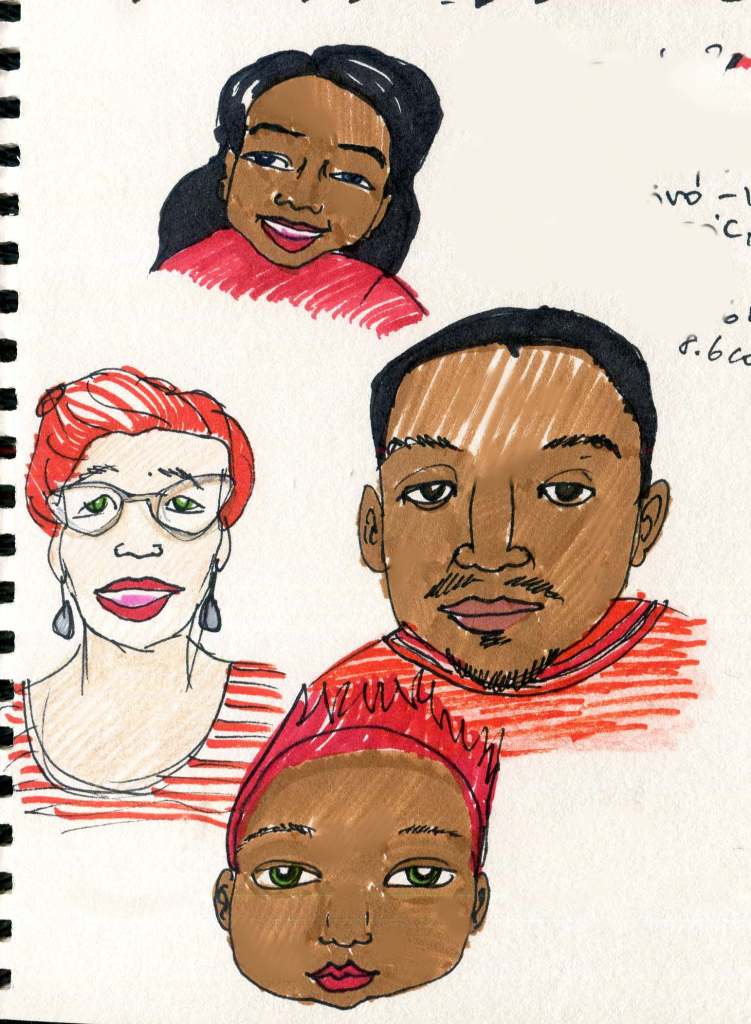
I sketched participants during the lectures, amazed at the sheer range of women there… tall, short, skinny, round, old, young, lawyers, hippies, gorgeous, ugly, of all colours, made-up and rolled-out-of-bed. Here are some of them.
History of the festival: http://luchadoras.mx/mujeres-zapatistas/
This was just one of the hardcore women who brought their babies to the event and stood with them in the hot sun for hours during the first day’s plays. Wearing layers of heavy clothing and knitted black balaclavas.
Would you buy a multi-coloured felt cow with goggly orange-rimmed eyes? Of course! They are endearing! These marvels of creativity are sold by scores of handicraft sellers in San Cristóbal de las Casas in Chiapas, Mexico, and once you start looking, you start noticing how amazing they are. The quality of the felt, the sense of colour combination, the finishing, the creativity… Felt bulls and chickens are classics, and the current fashion is for felt unicorns and Tyrannosaurus Rexes.